BRI provides path to mutual benefits









A chance encounter with a Chinese businessman in Algeria changed Ramdani Abdelhakim's life.
Sixteen years ago, when Abdelhakim, then a taxi driver, was waiting for passengers on a street in Algiers, the capital of Algeria, Wang Jinglian got into his taxi.
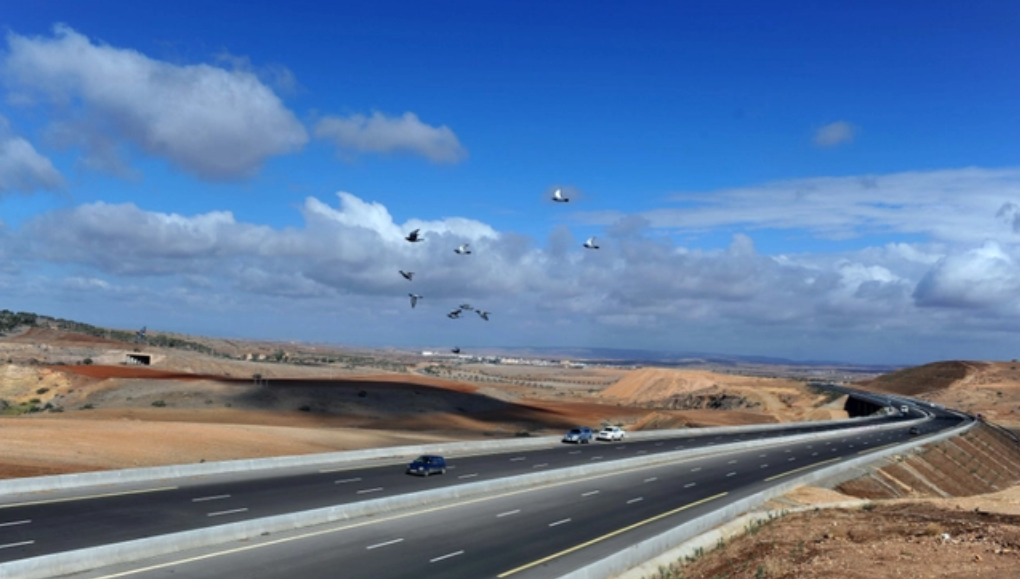
Wang had flown from China to take part in the then-nascent East-West Highway project — the biggest project in the country — which his company, China Railway Construction Corp Algeria, had won the contract to build.
Abdelhakim's kindheartedness impressed Wang, and when his company recruited drivers, he invited Abdelhakim to join.
Through Abdelhakim's hard work and the training that the company offered, he eventually became a human resources manager, and his family moved to a new house from an apartment that he shared with his parents.
The East-West Highway is among projects that have been built under the framework of the China-proposed Belt and Road Initiative, and Abdelhakim is one of many local people who have benefited from such projects.
For Chinese enterprises undertaking overseas BRI projects, engaging with the local people is a priority.
"A major principle is to allow local people to work on the project," said Wang, who is now director of China Railway Construction Corp Algeria. "When locals can't do it alone, Chinese workers should help them until they can do it on their own.
"Locals usually account for 80 percent of total employees," he added.
After the completion of each project, local communities will have not only a new road or a port, but also the education and training needed to move up the skills ladder and earn more.
By working alongside locals and passing on technology and skills, Chinese workers gain the locals' trust and recognition.
Yang Song, director of China Civil Engineering Construction Corp's foreign aid department, said: "People may not believe us at the beginning, but after we work together to finish a project, locals will develop trust in us, which is more precious than anything else. I believe people's hearts are connected, regardless of skin color or nationality."
The Belt and Road Initiative was emphasized in the report delivered by Xi Jinping to the 20th National Congress of the Communist Party of China on Sunday in Beijing.
"As a collaborative endeavor, the Belt and Road Initiative has been welcomed by the international community both as a public good and a cooperation platform," the report said.
As of July, 149 countries and 32 international organizations had signed cooperation documents with China under the BRI framework. More than 3,000 projects have been completed with an investment of nearly $1 trillion.
"Most of the participants are developing countries, and the BRI connects these countries to markets all over the world, not just to China," said Digby Wren, a political analyst at Deakin University in Melbourne.
According to estimates from the World Bank, transportation infrastructure projects under the BRI, if fully implemented, are expected to generate $1.6 trillion in benefits annually by 2030 — accounting for 1.3 percent of global GDP. Of these benefits, 90 percent will go to partner countries, with low-income and lower-middle-income countries being the biggest beneficiaries.
Wang Yiwei, a professor at the School of International Studies at Renmin University of China, dismissed as groundless the accusations by some of a "debt trap", saying that China values long-term economic and social benefits over short-term return.
"What China does is to give a chicken to you, and this chicken will lay eggs. Then there will be more chickens, and as a result, more eggs will be produced. And you will be able to repay the debt that resulted from buying the chicken," Wang said.






- Countdown to 15th National Games: On-site warm-up entertains audience
- Eight missing after cargo ship collides with fishing vessel near Shandong
- Investing in people: a worthwhile investment
- Exhibition commemorating the epic relocation of universities opens in Fujian
- Twelve punished for scaffold collapse that killed 7 in Shandong
- Slovenian official visits whole-process people's democracy practice site of CPPCC committees