Chip ban shows true face of US foreign policy









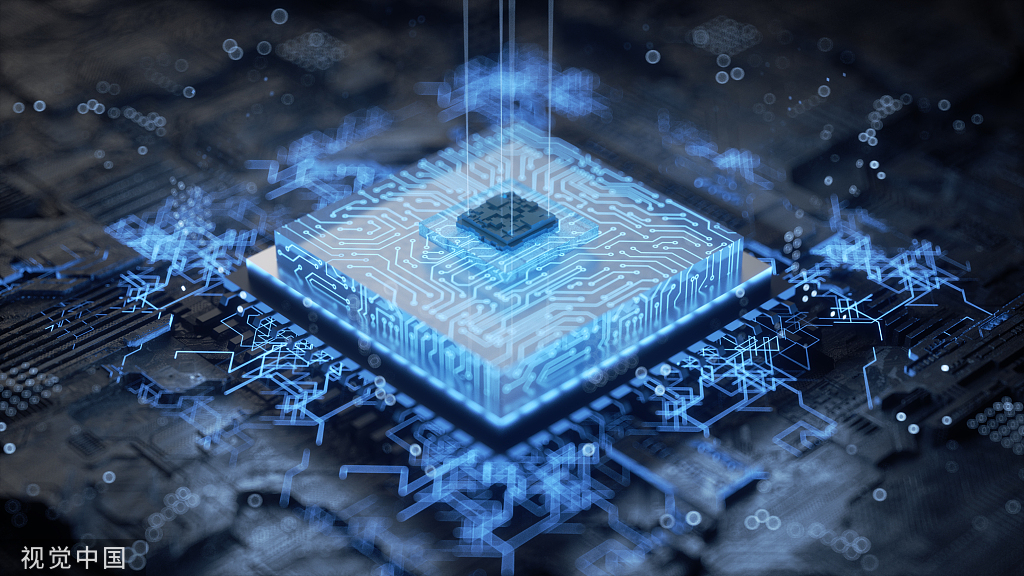
The administration of United States President Joe Biden recently unleashed sweeping new export controls on the sale of advanced semiconductors to China, not just targeting one specific entity, but the country as a whole.
Worse still, the new restrictions made use of the US regulatory measure known as the Foreign Direct Product Rule, an act of extraterritorial unilateralism that not only prohibits US companies from dealing with the target of the controls, but also any third-party company or entity that uses any US intellectual property in its business dealings. Previously, this move had only been used in reference to the Chinese telecommunications company Huawei. As a result, the step is poised to inflict colossal damage on the global semiconductor industry supply chain and is a sign that hard-liners continue to have the upper hand in Washington.
US foreign policy in the post-Trump era is dedicated to destroying globalization when it does not suit US preferences. While for decades the United States was a champion of free markets, free trade and unfettered capitalism, believing that such notions maximized its own ideology and influence, Washington now perceives that this globalized economic system has empowered "rival" states, namely China and Russia — which have grown in stature and have not succumbed to US hegemony after the Cold War.
As a consequence, it's the fundamental goal of US foreign policy to reassert the US' lost influence by exacerbating geopolitical conflict and undermining the economic integration of rival states and US allies. If there is peace and stability, the US will actively create a crisis. In other words, the US perceives that it cannot truly compete, therefore it must hobble others.
In line with former president Donald Trump's "America first "ethos, this process involves tearing up supply chains and economic links that it deems strategic, promoting decoupling and attempting to build new US-centric alternatives.
In respect to both Moscow and Beijing, this process is being pushed in the fields of energy (such as oil and gas), renewable energy (such as solar panels), but also more specifically high-end technology, electronics, artificial intelligence and semiconductors.
Since the Trump era, the US has made it its mission to try and hobble China's technological development and advancement by progressively isolating it from the global semiconductor supply chain. These moves have grown more aggressive, with the latest act being an unprecedented escalation.
While the US attempts to tear down China's chip industry and cut it off from advanced equipment, it is also strong-arming key semiconductor companies to build capacity in the US.
The manner in which this is being conducted also reveals the coercive nature of US foreign policy — that is, if it cannot persuade its allies to join in, then it will impose unilateral force upon them whether they like it or not.
The latest Foreign Direct Product Rule restrictions come amid the failure of the US to form a comprehensive chip-making alliance against China. The US-led restrictions pose a serious risk to the business of semiconductor manufacturers. But the US does not care about their interests.
In pursuing this path, the US is carving up the global economic system to suit itself and is forcibly creating ideological blocs by which it can wield exclusive political and economic dominance. This will be deleterious for the global semiconductor supply chain and for the prosperity of the whole world.
The US is an instigator that will defend its own hegemonic position at all costs. Countries must be prepared to come together to defend the international economic order, which the US is trying to destroy.
The author, a British political and international relations analyst, contributed this article to China Watch, a think tank powered by China Daily.