Easing of regulations heralds new front in COVID-19 battle









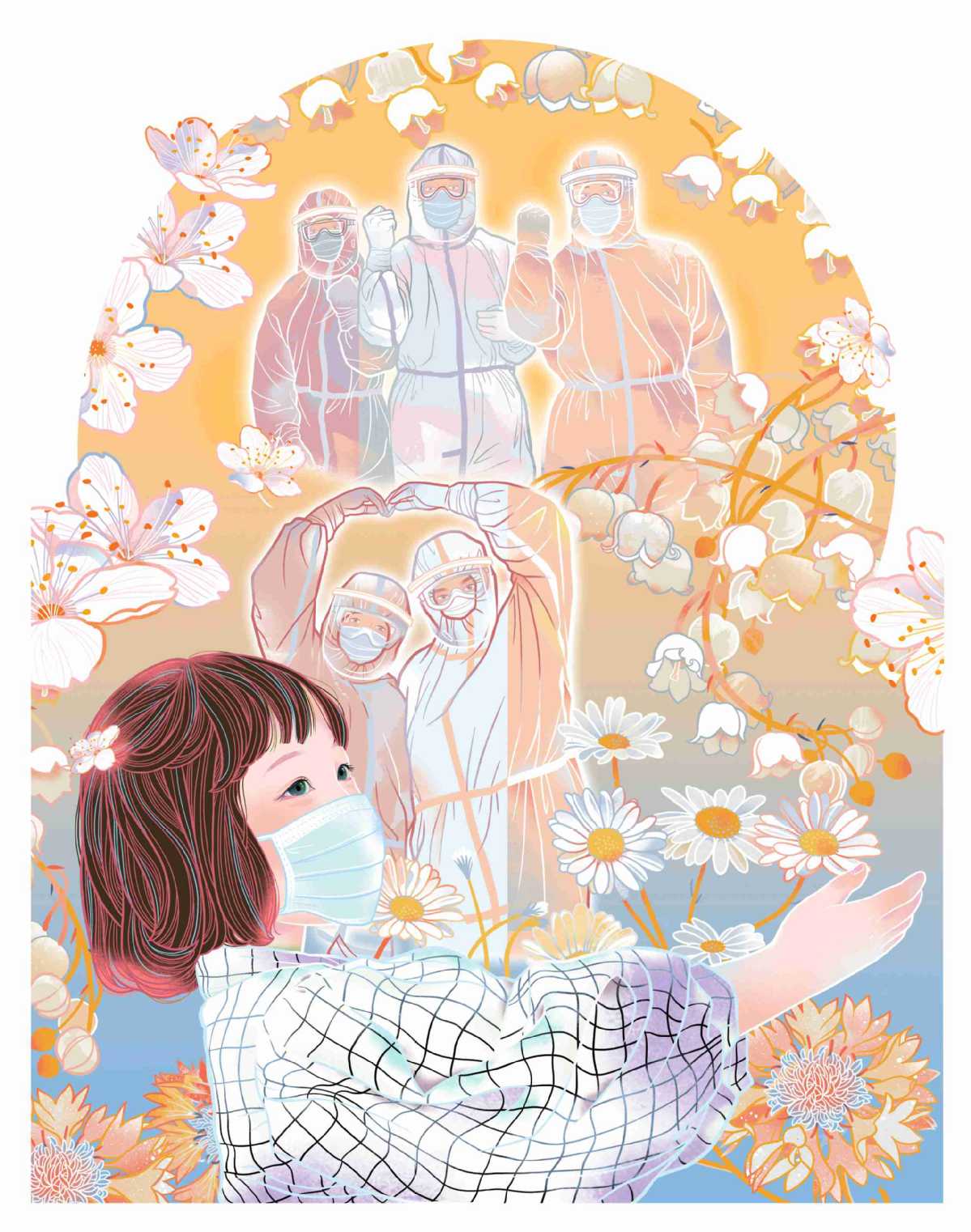
Specialists call for safeguarding country's medical system
After three years of battling COVID-19, experts said China is seeing the light at the end of the tunnel as it continues to optimize measures against the epidemic.
On Wednesday, the National Health Commission unveiled 10 changes to China's COVID restrictions. The move came less than a month after China introduced its first set of 20 optimization rules to deal with the highly transmissible, but less virulent, Omicron subvariants.
The latest rules include removing the need for negative results of nucleic acid tests and health codes for cross-regional travel and to enter public spaces, with the exceptions of nursing homes, hospitals, kindergartens and other places where there is a concentration of vulnerable people.
People with mild symptoms and asymptomatic cases can now choose to quarantine at home instead of at centralized quarantine facilities. Meanwhile, the purchase of over-the-counter treatments for fever, coughs and colds, as well as antiviral drugs, is no longer restricted.
Speaking at a media briefing on Wednesday, Wang Hesheng, deputy director of the NHC, said that over the past three years, China has stamped out more than 100 flareups and has successfully mitigated five waves of COVID-19, while having one of the lowest levels of infections and COVID-related deaths in the world.
In the meantime, China has issued nine editions of epidemic prevention, control and treatment guidelines, as well as two sets of optimization rules, Wang added. "We have effectively tackled the uncertainties presented by the epidemic with strategic stability and flexible measures," he said.
China now has effective diagnostic methods, contact tracing and treatments, and over 90 percent of the population has been vaccinated. These conditions have protected lives and created an environment conducive to socioeconomic growth, Wang said.
However, some foreign reports said that China's epidemic strategy was slow to react to Omicron, and its triumph over the epidemic is a Pyrrhic victory that has come at great socioeconomic cost. The facts show those claims to be untrue, experts said.
Protecting lives
Mao Yonghui, a senior renal doctor at the Beijing Hospital who was tasked with treating severely ill patients in Wuhan, Hubei province, said China's epidemic strategy, although not perfect, has managed to protect the vast majority of people and the economy from the brunt of COVID-19.
According to the World Health Organization, more than 642 million people around the world have been infected with COVID-19, resulting in over 6.62 million deaths.
The WHO data show that despite having 1.4 billion people, a massive elderly population and a relative lack of medical resources compared with developed countries, the Chinese mainland has had only a fraction of COVID cases and deaths compared with countries such as the United States, India, France and Germany.
China's epidemic strategy has been effective, resulting in life expectancy rising from 77.9 in 2020 to 78.2 last year, according to the NHC. This was before the emergence of the Omicron variant, at a time when the early strains of the virus targeted the lungs and had a much higher incidence of severe illness and death.
On the economic front, China was one of the few major economies to see positive growth in 2020, and by last year, its GDP had reached over 114 trillion yuan ($16.3 trillion), registering average growth of 5.1 percent over the two-year period, according to the National Bureau of Statistics.
In May last year, the WHO released a report that highlighted the key global response measures to the COVID-19 pandemic, including building a strong outbreak surveillance system, empowering communities, providing equitable access to tests and treatments, and strengthening the resilience of health systems.
"All these measures are exactly what China has been doing for the past three years," Mao said. "To say China's epidemic policy is rigid and slow is both ignorant and misleading."
Last week, Liang Wannian, a member of the NHC's virus control expert panel, told a media briefing that China has fine-tuned its measures several times over the past three years. "But we must keep in mind that this is a massive, systematic undertaking that requires taking many factors into account," he said.
They include the pathogenic and epidemiological characteristics of the virus, population immunity, the medical system and the COVID-19 situation both at home and abroad, he added.
One of the reasons some Western countries chose to relax control measures earlier was that a large segment of their population had been infected in previous waves of COVID-19 and had therefore acquired immunity. However, this approach cost many lives, Liang said. Another reason was that those countries had high vaccination rates, especially among the elderly population, as well as more medical resources to treat infected people, he said.
However, China has a large aging population, and many of those people have underlying health conditions. Moreover, it doesn't have as many medical resources as Western countries and the inoculation rate among vulnerable citizens, especially seniors, remains low. In addition, China needed time to stock up on medicines and supplies.
Now, many of those limiting conditions have been alleviated or managed, so China has the capacity and resilience to fine-tune its epidemic measures to reflect the changing challenges posed by current variants, thus laying the foundation to overcome the epidemic in the future, Liang said.
Last month, the journal Nature published an article that said vaccinating the elderly, stocking up on antiviral drugs and expanding hospital facilities would help China make the transition to a new phase of the battle against COVID-19.
Xia Gang, an official with the National Administration of Disease Prevention and Control, said in a news briefing on Thursday that the risk of death for unvaccinated people age 80 and older is 14.7 percent, but after three vaccine shots, the figure falls to 1.5 percent.
Xia said China will strengthen medical services to monitor and handle the potential adverse effects for seniors when they receive inoculations, improve efforts to educate the elderly population about the safety and necessity of vaccines, and make it more convenient for older people to receive them.
Jiao Yahui, director of the NHC's Bureau of Medical Administration, said China currently has 138,100 intensive care unit beds, 80,500 ICU doctors and 220,000 specialist nurses for ICUs.
The country also has 106,000 doctors and 177,700 nurses in reserve that can be transferred to serve in ICUs, she said, adding that China will further expand hospital capacity, stock up on medical resources and build more fever clinics.



- Control of precursor chemical exports tightened
- Xi greets Ouattara on reelection as Cote d'Ivoire president
- 'Book of Songs' from Chinese imperial tomb proves oldest complete copy ever found
- Exhibition highlighting the 'Two Airlines Incident' opens in Tianjin
- Average life expectancy in Beijing rises to 83.93 years
- Energy drink overdose sends delivery worker to hospital