Nation mulling future based on cutting-edge tech









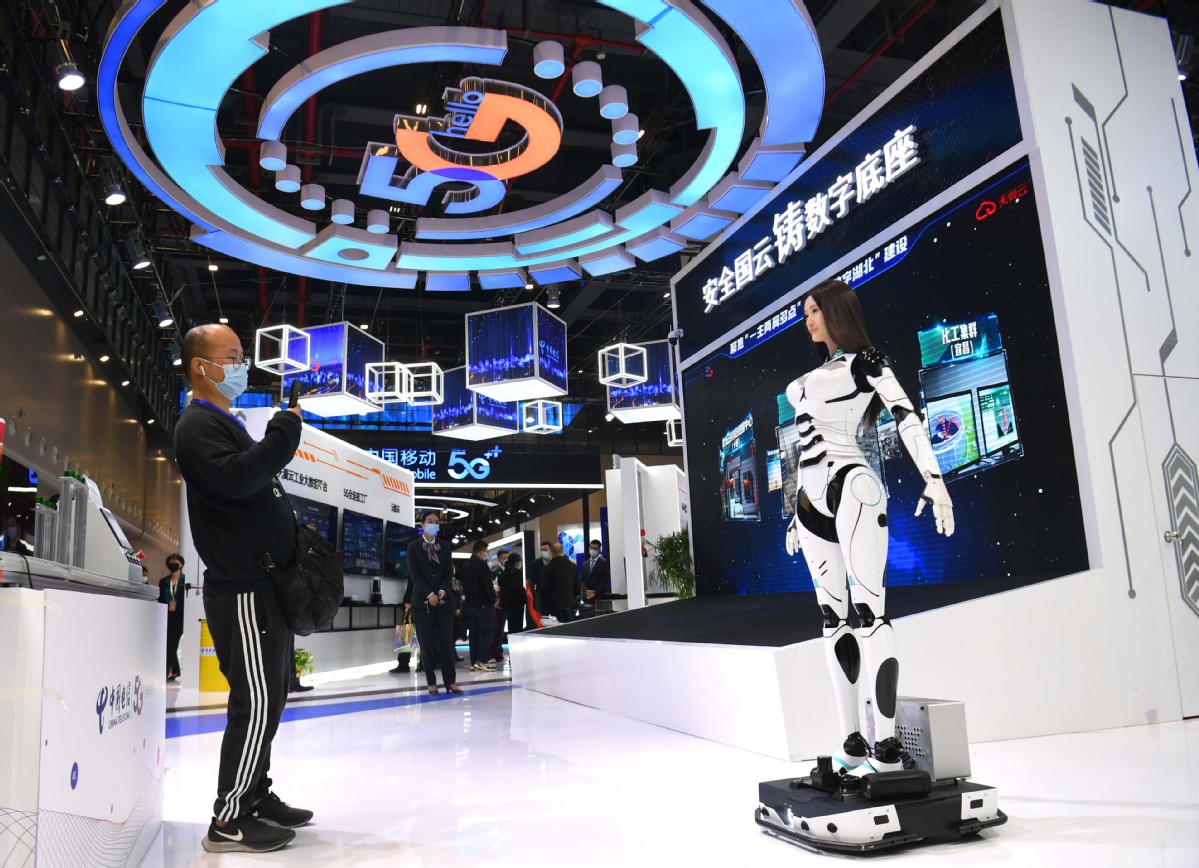
China will step up efforts to map blueprints for future industries such as humanoid robots, the metaverse and quantum technology, as part of its broader push to cultivate emerging industries and build a modern industrial system, the Ministry of Industry and Information Technology said.
The plans come as the top industry regulator said China has the confidence, conditions and capabilities to promote the steady recovery of the industrial economy in 2023.
Jin Zhuanglong, minister of industry and information technology, said, "This year, amid the optimization of COVID-19 prevention and control measures, the existing policies and new policies will work together to support industrial economic growth and greatly boost market confidence."
Accelerating measures to cultivate strategic emerging industries such as artificial intelligence, biological manufacturing and the internet of things will be the ministry's priorities in 2023, Jin said in an interview with Xinhua News Agency.
Meanwhile, he highlighted efforts to do research on and draft plans for the development of future industries and accelerate the planning for humanoid robots, the metaverse and quantum technology.
These technologies are widely seen as the next strategically important frontiers where major countries around the world are scrambling to establish a foothold.
Bloomberg Intelligence, for instance, forecasts metaverse revenue opportunities globally could reach nearly $800 billion in 2024, while international consulting company PwC predicts that virtual reality and augmented reality have the potential to deliver a $1.5 trillion boost to the global economy by 2030.
Jin said the ministry will double down on efforts to safeguard the security of the nation's industrial and supply chains this year, with a focus on tackling crucial technological bottlenecks while strengthening its edge in the global industrial economy.
Efforts will also be made to cultivate a number of national manufacturing innovation centers, actively play the role of key laboratories and strive to achieve breakthroughs in several fundamental components and materials in urgent need, Jin added.
In November, the MIIT and several other ministries jointly released a five-year plan (2022-26) to integrate virtual reality tech, a key part of the metaverse, with industrial applications.
Local governments in China are rolling out their plans to boost the development of the metaverse, which is considered by many to be the next generation of the internet, to bolster the integration of the real and digital economies.
Shanghai has highlighted the metaverse in its 14th five-year plan (2021-25) for the city's electronic information industry, calling for efforts to strengthen forward-thinking research and development of the underlying core technologies and capabilities of the metaverse.
Nanchang, capital of Jiangxi province, said it is building a pilot zone for the metaverse, which will feature a combination of virtual reality software and hardware companies.
Charles Huang, corporate vice-president of HTC, said, "The metaverse is not a slogan or a very distant future."
Huang said there is surging demand for VR devices in a wide range of segments, such as remote conferencing, training, education, healthcare, design and exhibition, with the COVID-19 pandemic propelling the application of VR equipment.
China's telecom industry is also working to tap into quantum computing to overcome the computational bottlenecks for 5G and 6G.China Mobile's research institute has signed a deal with Origin Quantum, a Chinese startup focusing on quantum computing.
"This is the first cross-sector cooperation between quantum computing and the telecom industry in China, which has big value in exploring potential applications of quantum computing in big data as well as complex network construction and optimization in the field of mobile communication," said Guo Guoping, a professor of quantum computing at the University of Science and Technology of China and chief scientist at Origin Quantum.