


A beacon of history at the heart of China









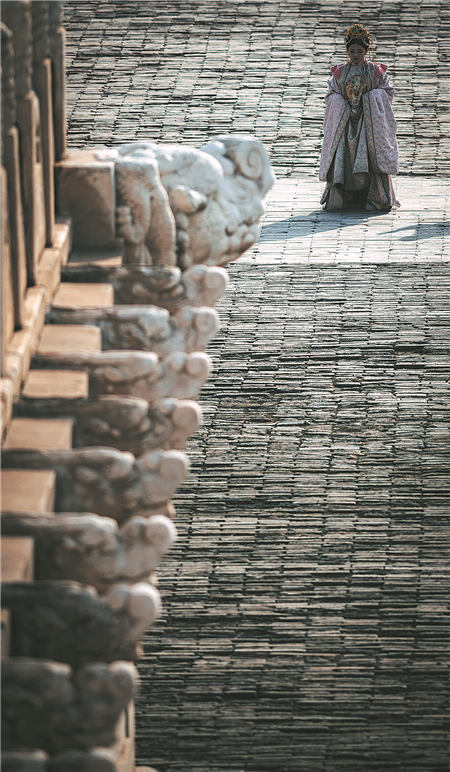
With restrictions slowly lifting in the capital, I took the opportunity to visit the Forbidden City, also known as the Palace Museum, arguably one of the most iconic landmarks in the country if not the world, before the inevitable crowds return in their droves.
Sitting along the city's central axis, the Forbidden City is the literal and figurative beating heart of the capital. Occupying 720,000 square meters, the palace is three times larger than the Louvre in France and was declared as the world's largest preservation of wooden structures from the ancient world, alongside being named as a UNESCO World Heritage Site in 1987.
The long history of the palace is just as enthralling as the building that stands in the city today. The complex was completed in 1420 by Emperor Yongle during the Ming Dynasty (1368-1644) after 16 years of construction, with an estimated 1 million laborers taking part in the building process. The Forbidden City was the seat of power to 14 Ming Dynasty emperors and a further 10 during the Qing Dynasty (1644-1911) over a period of nearly 500 years.

I have visited the palace complex on several occasions in the past, and have always been in awe of its sheer scale and the incredible details of its construction and design, but if I were to have one quibble, it would be the overwhelming number of tourists (14 million annual visitors) scattered throughout the palace grounds. So I was pleasantly surprised, despite the pandemic-related reason behind it, to find the complex was almost empty on this occasion.
This, compounded with the fact that majority of the small number of visitors were dressed in period clothing, led to an interesting visiting experience where it almost felt as if I was walking through the palace in its heyday, when no one could enter or leave the Forbidden City without permission from the emperor himself.
Despite only 80 percent of the palace being open to the public, with the remaining 20 percent, including areas that haven't been repaired, and that are used for special purposes such as the storage and protection of cultural relics, it would take far more than a day to be able to see everything the Forbidden City has to offer, with more than 90 palace quarters and courtyards, more than 1,000 buildings and over 8,700 rooms.
There are countless unique aspects to the Forbidden City that are worth exploring, such as the beautifully crafted ridge beasts on the roofs of the buildings.
Appearing as a common feature on all imperial buildings, the size and number of these creatures played multiple roles in the past, protecting the building from evil spirits and preventing fire, while the total number of creatures on the roof would denote its importance, with the Hall of Supreme Harmony in the Forbidden City having the highest number. And the roofs themselves are designed in such a way to keep birds from landing on them, to allow the palace to retain its magnificence.
The importance of numbers is also prevalent throughout the palace, with each of its gates, excluding the Donghuamen Gate (East Prosperity Gate), being adorned with gilded door studs in a nine-by-nine pattern as the number nine implies supremacy and eternity.
With this quieter and more peaceful visiting experience, it is easy to see why the Forbidden City has the reputation it does, with its grand scale and long and fascinating history, it deservedly sits at the center of China's long story.