Legislative steps being taken to protect elderly









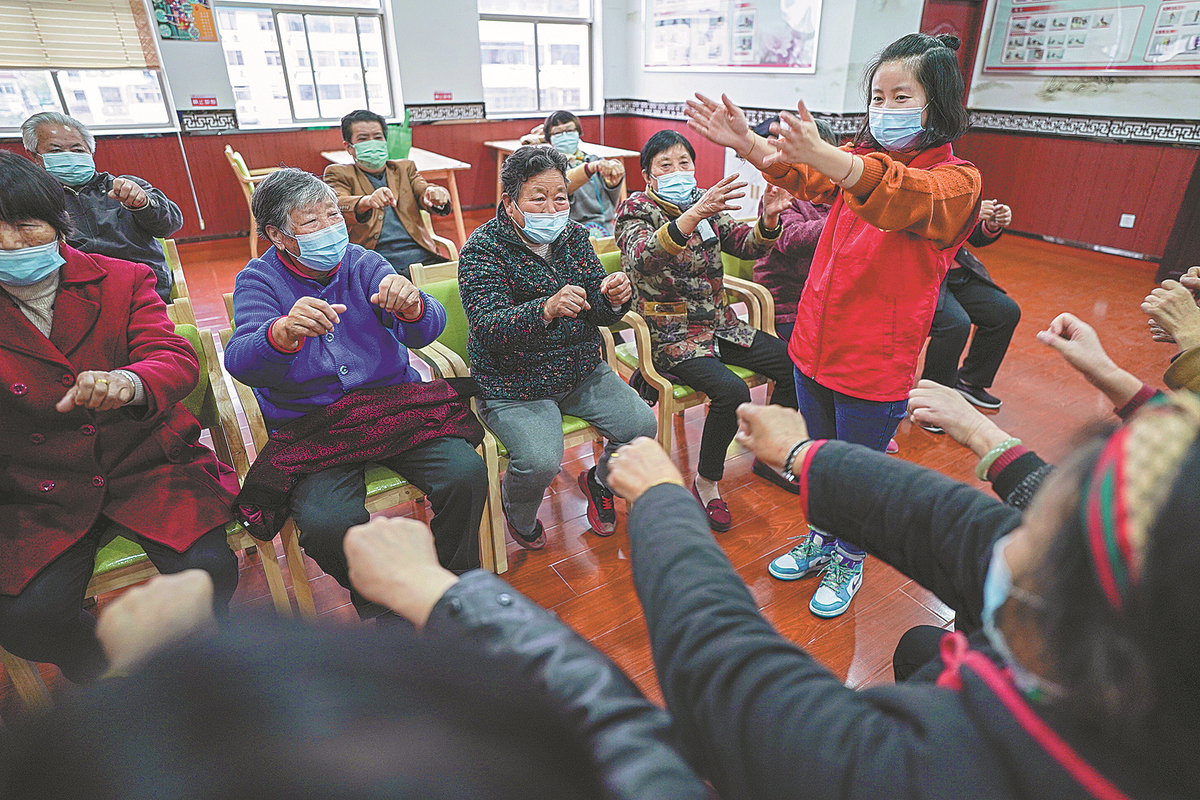
Editor's Note: In the leading up to the two sessions — the annual sessions of the National People's Congress and the National Committee of the Chinese People's Political Consultative Conference, the country's biggest annual political event, China Daily is publishing a series of stories on how national legislators and political advisers perform their duties. Some of the stories will also look at major issues expected to be discussed at the forthcoming sessions.
China's legislature has accelerated the creation of legislation aimed at the elderly over the past few years in a bid to bolster protection and respond to a rapidly aging population.
The latest National Bureau of Statistics data showed that by the end of last year, China's population aged 60 and above exceeded 280 million, making up 19.8 percent of the national total.
The National Health Commission estimates that this figure will grow to over 400 million by 2035, accounting for more than 30 percent of the total, meaning that China's population will have entered a stage of severe aging.
To tackle this issue and offer older people a better living environment, the Standing Committee of the National People's Congress, the country's top legislature, amended the Law on the Protection of the Rights and Interests of the Elderly in 2018.
While requiring the country to provide aid, including for living and healthcare costs for the elderly in financial difficulty, the revised law stipulated that geriatric medical research should be accelerated.
It called for expedited efforts to optimize nursing care, encouraging people to take measures to help improve the elderly quality of life by providing more sporting, cultural and entertainment activities.
To create an aging-friendly society, the NPC Standing Committee also began reviewing a new draft law on accessible facilities last year.
It clarifies the responsibilities and duties of every party involved, including those for building and design, and requires local government agencies to plan to renovate barrier-free facilities and rebuild them.
He Yiting, an official from the NPC's Social Development Affairs Committee, highlighted the importance of the law while explaining the draft to lawmakers, adding that more of the elderly and disabled stood to benefit more from the legislation.
Upholding a people-centered approach, He said the draft specified what services should be provided and where accessible facilities needed to be built. For example, it stated that barrier-free access should be advanced to more areas, including mobile phone applications, telecoms and libraries.
Given that many victims of fraud are elderly, the law on telecom and online fraud, which took effect in December, requires government departments and relevant service providers to help enhance awareness among the elderly, to stop them from being cheated.
Overall protection was strengthened after the top legislature made doing so a priority in the country's first Civil Code, which came into force in 2021.
Local legislative bodies have also stepped up efforts to protect the rights and interests of the elderly in recent years.
In Nanchang, Jiangxi province, a regulation promoting nursing care at home came into effect in January 2020, which requires government agencies to provide public and medical services through the establishment of a long-term home nursing service for the elderly with disabilities.
The legislature in Qingdao, Shandong province, has boosted protection for seniors through a local regulation ordering public nursing services to provide beds to those without income or children.