Young workers forsaking big-city life
More and more youths return to hometowns to find jobs, start businesses









Supportive policies
Second- and third-tier cities want to attract returnees for work, with the aim of boosting economic development locally while relieving employment pressure in metropolises.
In August, a campaign was launched in Jiande, Zhejiang province, to attract people to settle in the city and find work.
The local authorities announced allowances of 10,000 yuan and 30,000 yuan, respectively, for those with bachelor's and master's degrees willing to work in the city. Returnees with a doctoral degree will receive a living allowance of 100,000 yuan.
Home rental allowances and other financial support for entrepreneurial ventures are also available for returning talent.
Hainan is making generous offers to those willing to live and work in the province. New college graduates and those graduating in the next three years can apply for housing allowances ranging from 1,500 yuan to 3,000 yuan per month, depending on the applicants' educational qualifications.
The aim is not only to attract domestic talent but also overseas returnees.
Last month, a campaign to recruit talent was launched in Shaoxing city, Zhejiang, with 150,000 vacancies offered to young people. The city aims to attract 135,000 college graduates from home and abroad this year, and 1,000 recruits with doctorates.
Yuan Huanyi, 29, who worked as an engineer in Beijing, but is now a teacher in her hometown of Fuzhou, capital of Fujian province, said: "It's good for me to return home for work. I don't need to stay up late for PowerPoint presentations, or get up at 6 am to rush for the subway to avoid being late for work."
In Beijing, Yuan felt anxious all the time and continually checked her phone for important messages from workmates and managers.
"I earned about 25,000 yuan a month, but I needed to commute for nearly four hours each day. Work almost ruined my life," she said.
Yuan added that the cost of living and housing in Beijing dampened her enthusiasm, and work pressures finally resulted in her quitting the job.
"I want a more stable and relaxed life with sufficient sleep. I was hesitating about returning home, in view of the less convenient public transportation services and reduced entertainment options. However, I quickly dispelled these misgivings after I stayed in Fuzhou for three months in 2021," she said.
"I hadn't spent this much time in my hometown since leaving for university in Beijing 10 years ago. Fuzhou has developed rapidly, with many changes taking place. Now, I can now be with my parents and friends. This is the life I really want."
Li Qiang, vice-president of Zhaopin, said fast-developing regional economies are resulting in talent moving from first-tier cities to second- or third-tier destinations, adding that these professionals not only fulfill their personal goals, but also contribute to the nation's urbanization.
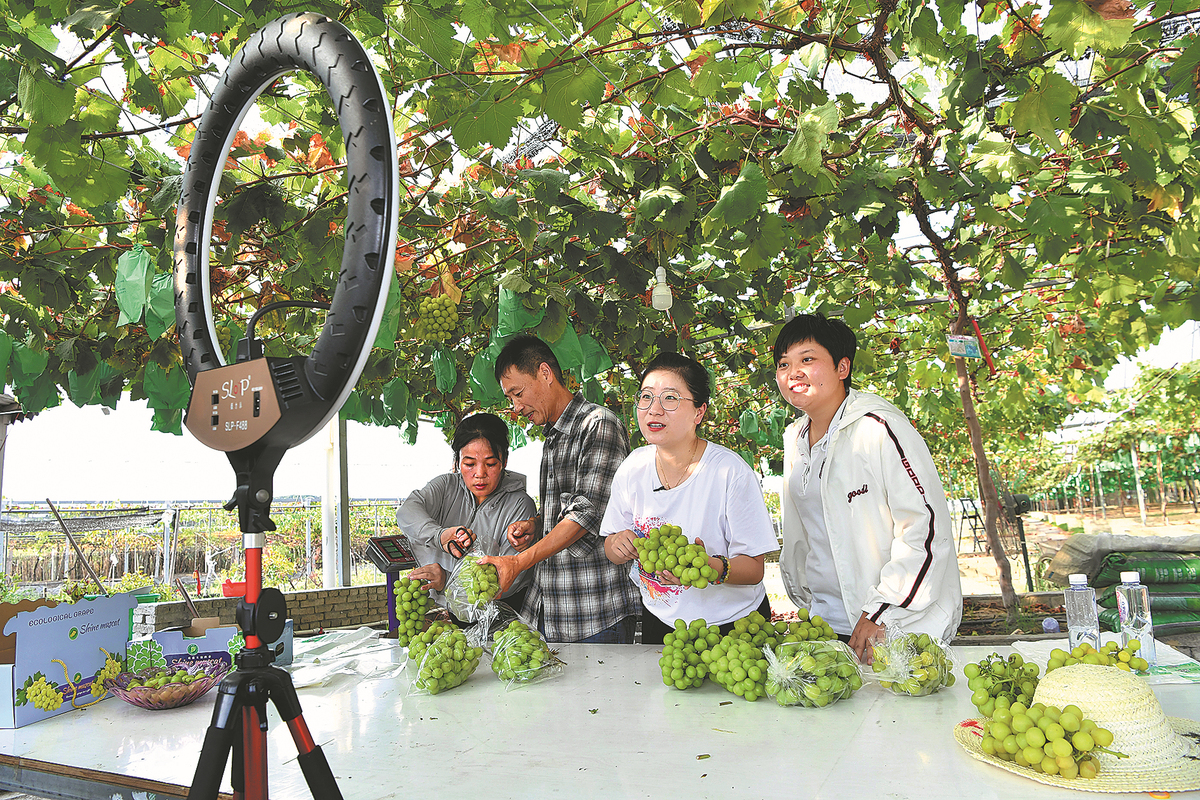
At the two sessions, which ended in Beijing on March 13, Liu Jinxiu, 44, a deputy to the National People's Congress, submitted a proposal to encourage young people, including college graduates, to return home to find work or start businesses in the countryside.
Twenty years ago, Liu led residents in Huang'ao, Huangtian county, Hubei province, in shaking off poverty after she returned to the village to launch a business.
She said college graduates face great pressure in finding jobs in big cities, while the countryside needs talent. Liu added that young people should change their stereotypical views of rural areas, which have developed fast and offer good opportunities for entrepreneurship.
She stated in her proposal that local governments should improve the way in which they support young people returning home to start businesses.
Local authorities should also establish a systematic training process for these people to learn about agriculture and homestay operations, which will help rural areas retain such talent, the proposal stated.





- Eight missing after cargo ship collides with fishing vessel near Shandong
- Investing in people: a worthwhile investment
- Exhibition commemorating the epic relocation of universities opens in Fujian
- Twelve punished for scaffold collapse that killed 7 in Shandong
- Slovenian official visits whole-process people's democracy practice site of CPPCC committees
- China's commercial rocket maker puts two satellites into orbit