Geopolitical alternative taking shape in Asia









The Shanghai Cooperation Organization summit in July in New Delhi, India, is expected to make several momentous decisions. One will be regarding the admission of Saudi Arabia to the organization.
On March 29, Saudi Arabia's King Salman bin Abdulaziz Al Saud signed a memorandum of understanding on dialogue partner status for the country. This status is the first step before granting a country full membership.
The SCO's foundations were laid in the 1980s when the then Soviet Union and China started the final round of negotiations to demarcate their long border. After the disintegration of the Soviet Union, the Russian Federation and the republics of Central Asia became participants in the talks. After they settled territorial issues, the parties decided to deepen regional cooperation and established the SCO in 2001.
The organization has grown rapidly since then. Its current members are China, India, Russia, Kazakhstan, Kyrgyzstan, Pakistan, Tajikistan and Uzbekistan. In addition to Saudi Arabia, dialogue partners are Armenia, Azerbaijan, Cambodia, Egypt, Nepal, Qatar, Sri Lanka and Turkiye. Observers are Afghanistan, Belarus, Iran and Mongolia. The SCO summit in Samarkand, Uzbekistan, last year began the process of including the United Arab Emirates, Bahrain, Kuwait, the Maldives and Myanmar as new dialogue partners.
Saudi Arabia's move to partner with the organization came less than three weeks after a historic Chinese-brokered reconciliation deal with Iran to restore diplomatic ties.
China's role in bringing the two Asian heavyweights together surprised many, given Saudi Arabia's strategic partnership with the United States. But it comes amid a wave of Chinese diplomatic initiatives in the Middle East that have brought regional powers closer to China. Most see the move as another example of the Middle East's gradual shift away from dependence on the West toward deeper cooperation with growing Asian powers.
Saudi Arabia's development priorities have long been closely linked to the interests of the leading SCO members, China and Russia. China is Saudi Arabia's largest trading partner, and bilateral trade in 2021 reached $87.3 billion.
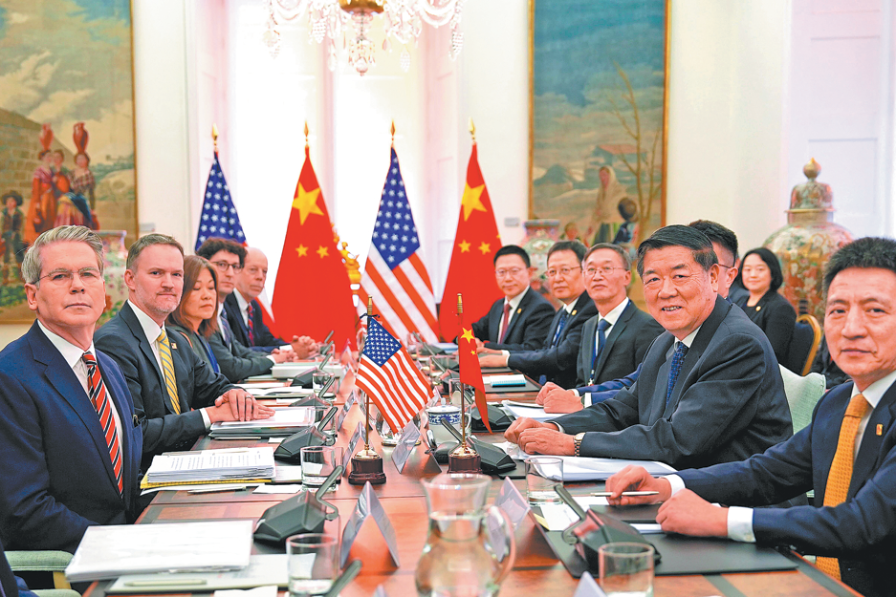
The petrochemical sector is a priority in Saudi cooperation with Beijing. For example, in its most recent move, Saudi Aramco announced on March 28 the acquisition of a 10 percent stake in China's Rongsheng Petrochemical Co, a deal valued at $3.6 billion. The joint venture will build an oil refining and petrochemical complex in Panjin, Liaoning province. It is expected to process up to 300,000 barrels of oil per day, bringing the total crude oil processing between China and Aramco to 690,000 barrels per day. Statistics on Saudi oil shipments to China show that in 2022 they were four times more than shipments to the United States.
Washington has been watching China's activity in the Middle East with great concern and has warned that cooperation with Beijing could weaken US relations with countries in the region. For example, the US has expressed concern about using Huawei 5G technology in the region and has pressured the UAE to shut down what the US says is a Chinese "security facility".
While the Saudi leadership is intensely annoyed by and has shown its dissatisfaction with certain aspects of US policy, Saudi Arabia will not withdraw from the "special relationship" that was established in the early 1930s. US military bases remain in the country, and at the end of March, joint exercises were held to combat drones. A few weeks ago, two Saudi airlines placed a $37 billion order for a total of up to 121 Boeing 787 Dreamliners.
However, the seemingly ordinary political bargaining will have far-reaching consequences this time, since the leading player is China. As it has become more engaged economically in the Middle East, China has seen a strong voice in favor of increased regional cooperation. Is this move a direct challenge to the Western-centric world? Should the collective West think about the reasons for the unwillingness of Asian states to cooperate?
The official US reaction to this development has been cautious. In Washington, State Department spokesman Vedant Patel played down the impact of the Saudi move, saying it was long overdue, which was not entirely intelligible.
The author is a former prime minister of Kyrgyzstan and a distinguished professor at the Belt and Road School at Beijing Normal University.