



Light at the edge of darkness










Unfiltered and intuitive
The fact that Zhang, who knows not a word of English, was able to draw immense inspiration from those Western writers came as a surprise to Liu during her 2018 trip. More than anything, it convinced her of the meaning of her translation, of which she had remained highly doubtful up to that point.
"When I was in university in China, I read the Chinese translation of Henry James' 1880 book Washington Square. Later, after my arrival in New York in 1987, I made a point of visiting the square, located in the Greenwich Village neighborhood of Lower Manhattan. To my great disappointment, not much resemblance were to be found with the book, and, naturally, I blamed the translator and started to distrust all translations," says Liu.
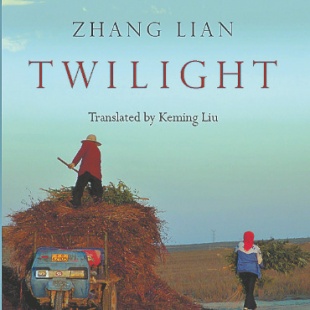
Fully aware of the pitfalls of her task, during what she called "the most intense period" of the three years between 2018 and 2021 that she spent translating Zhang's poems, Liu was engaged in frequent WeChat exchanges with the poet on a daily basis.
"I probably wouldn't have devoted that amount of time to it if not for the pandemic. All that back-and-forth between us has allowed me a deeper look into the mental and emotional worlds of Zhang, who was surprisingly simple and sincere, and was nearly devoid of bitterness or cynicism, despite having overcome great adversities — both as a man and a poet," Liu says, alluding to his poems being interpreted by some literary critics in China as having anti-consumerism and anti-urbanization underpinnings.
"That to me would be their projection. Of course, Zhang wouldn't feel at home living in the city, but that doesn't mean he holds anything against the idea. He loves his land, and that love is passionate, intuitive, unfiltered."
Zhang remembers spending a snowy night at a friend's town center house around 2002. Unable to sleep, he walked onto the streets, only to find muddy vehicle tracks crisscrossing what would have been a thick white carpet. "The snow was being crushed and I could feel its pain," he says.
The reason he was there was to sell his self-published poetry collections, often by knocking on the doors of local cultural organizations. "Believe it nor not, 100,000 copies have been sold this way since 2000," says Zhang. "China, of all countries, has a history of poetry and a respect for poets."
That is something that Liu has always intended to convey to those around her. After the publication of the anthology, she was invited by her neighborhood library to give a lecture on the book. "People came up to me afterwards saying that China comes alive through the lines in the book. Even those who have been to Beijing and Shanghai asked if I could take them to see the country's vast hinterland.
"Throughout its history, China has had its fair share of pastoral poets, yet most were members of the literati class who approached their rural subjects with a sense of escapism, sometimes during forced or self-imposed exile. Zhang is different — he belongs, and therefore constitutes an antithesis to any pastoral idealism," Liu continues. "Unlike Shelley, and his fellow 19th-century English poets, Zhang's relationship with the land is characterized not by romanticism, but by a solid, true love."
The professor, who helped to bring the Confucius Institute to her college at the City University of New York, and served as the program's director from 2018 to 2022, traced Zhang's literary realism all the way back to Shijing, or The Book of Songs. Of its 305 works dating from the 11th to 7th centuries BC, 160 are believed to originally have been folk songs created by peasant-laborers.
For Gismondi, Zhang's depiction of his native land reminded him of the Great Plains of America, where, to use his words, "one has nothing but their surroundings". That sense of loneliness had once owned Gismondi, who spent a large part of his 38-year-long marriage taking care of his wife, who was mentally ill, until her passing two years ago.
"When I was in my 20s, I wanted to be a writer, but then life got in the way and I gave it up. Now it has come back to me," he says. "Zhang and I, we live in our own small worlds and probably will never meet. But it would be great if we do."
Back in February 1972, 12-year-old Gismondi watched in amazement as scenes of Chinese streets, with their endless flow of bicycles, were streamed into every US household during President Richard Nixon's historic visit. For him, Zhang seems to belong to a China that's more distant and more ancient.

And, in a sense, he's right. Today, vestiges of the Great Wall, constructed during the Ming Dynasty (1368-1644), can still be seen rising slightly from the yellow ground of Yanchi, like the scaly back of an armored dinosaur that has fallen into a deep slumber. They are "the tail end of the Great Wall", according to Liu, the markers of a place where Zhang had lived and saw himself "becoming/a speck of twilight/by the tail of each bright day".
Ever since their meeting there in 2018, Liu has been thinking about returning. "He was solidly built with a square jaw and large hands, thick from years of labor," she wrote of her meeting with Zhang at the Yanchi train station. That was before the two sat down to talk in Zhang's living room.
"His voice is authentic. He's a real flower, growing from the cracked earth," she says.
Contact the writer at zhaoxu@chinadaily.com.cn




















