Expert takes pride in nation's environmental progress









Nation has surpassed West in terms of information disclosure, monitoring
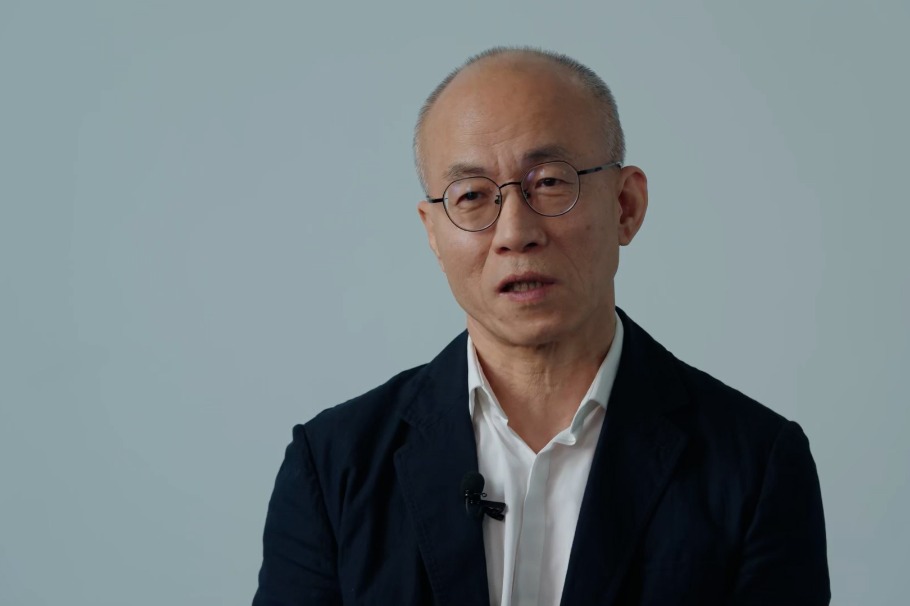
Recounting his over 20 years of experience in the environmental protection sector, Ma Jun, director of the Institute of Public and Environmental Affairs, a nongovernmental organization, discussed his great pride in having witnessed the transformation of China's role in global environmental governance.
He said that rather than mostly borrowing from Western experience, the country has become an environmental solution provider, despite the fact that environmental protection work only began here half a century ago following the first national environmental protection conference, a remark echoed by many other experts.
Ma was speaking ahead of an ongoing national conference on environmental protection, the ninth of its kind since 1973.
Following years of concern about the environment in China, Ma launched his institute in 2006, hoping to tap into the potential of raising awareness about environmental issues to mobilize greater public participation in environmental law enforcement.
This approach was borrowed from the West, he said, noting that it is one of the three stages in environmental governance in developed nations, following government's command-and-control approach, and the use of market tools.
The IPE has since witnessed China make a "historic stride" in developing the mechanism, and in some aspects surpassed Western countries, Ma said.
Sharing information
According to reports from the Pollution Information Transparency Index, which has been compiled 10 times since 2009 by the IPE and the Natural Resources Defense Council, 24,345 pieces of environmental information were made public in 2008, compared to 324,956 in 2018.
Ma stressed 2013 as an important year in the nation's environmental protection efforts, as this was when China made hourly disclosures of six pollutants including PM2.5 and ozone, and then introduced a regulation requiring key polluters to release information from automated monitoring equipment about wastewater every two hours and about exhaust on an hourly basis.
China is a pioneer of this kind of large-scale, real-time environmental information disclosure by companies, Ma emphasized.
He still remembers the reaction of a group of environmental researchers from the United States when he introduced them to the mechanism not long after its launch.
"Some of them sighed emotionally. They said that for a long time, they had come to China to share their experiences, but the mechanism made them feel that it was now necessary for them to learn from China," Ma recalled.
With the support of information technology, China has created innovative solutions in environmental information disclosure, he said, citing the Blue Map as an example.
Launched by the IPE in 2014, the app helps the public file reports about environmental violations, as well as monitor air and water quality and local sources of pollution.
In 2016, the app was connected to a State-developed public supervision platform for the treatment of black, odorous bodies of water, allowing tips from whistleblowers to be sent directly to relevant government bodies.
Following the increasingly large public participation in environmental governance, China has experienced remarkable improvement of its air and water quality, Ma noted.
In 2013, the first year PM2.5 particular matter was monitored in Beijing, for instance, the average concentration was 89.5 micrograms per cubic meter. Last year, the concentration declined to 30 mcg/cubic m.
Ma said China's experience in promoting environmental information disclosure and public participation in environmental governance is increasingly drawing interest from other countries, especially developing nations.
Before the COVID-19 outbreak, he was invited in 2019 on several occasions to share his institute's experience of running the Blue Map through training programs for participants from Asia, Africa and Latin America. He also traveled to Vietnam to share his experience at the country's invitation.
Since the pandemic subsided, he and his team have also received invitations from Thailand, the Philippines and South Africa, he said.
Promoting inspections
Ma stressed that the environmental information disclosure mechanism is just one example of China's environmental governance wisdom that could help many other countries.
Another is the carrying-out of high-profile central environmental inspections, which combines bottom-up and top-down approaches to address thorny environmental problems, he said.
The top-down approach utilizes the authority of the central government to the greatest possible extent.
"Internationally, no such mechanism in which thousands of inspectors devote themselves to grassroots areas to uncover environmental violations has ever existed," he said.
But the bottom-up approach is also used in inspections, as no matter where inspectors go, the first thing they do is publicize their contact information so they can receive complaints, he added.
Working under ministerial-level officials, inspection teams report to a central group headed by a vice-premier.
Wang Yi, a member of the Environmental Protection and Resources Conservation Committee of the National People's Congress, said that China's green transition experience can be especially instructive for countries in the Global South, as many problems China has experienced are ones these nations will face.
"China's experience in the transition can help developing states minimize problems with their development, or help them get onto a development track that gives consideration to both economic development and environmental conservation," he said.
Wu Shourong, a professor from the School of Marxism at Beijing Forestry University, said that China's efforts to promote an "ecological civilization" also offer solutions to problems that developed countries face.
Western countries were among the first in the world to become developed. But they have been plagued by low efficiency and a lack of impetus in their efforts to achieve further development and sustain their current prosperity, said Wu, who has devoted herself to researching the ecological civilization concept.
Promoted by President Xi Jinping, the concept calls for balanced and sustainable development that features a harmonious coexistence between humankind and nature.
Addressing a recent forum in Shanghai, in which China Daily took part, Chen Xueming, a professor at Fudan University's schools of philosophy and Marxism, said that China's endeavors to develop such a civilization may well offer solutions to achieving development while promoting environmental protection.
Chen said that environmental efforts in China have already undergone sweeping, historic and transformative changes, and that the fundamental reason for these changes is the Communist Party of China's people-centered philosophy of State governance and the nation's system of socialism with Chinese characteristics, which ensures the implementation of policies and measures for environmental conservation.
"The process of the Chinese people implementing Xi Jinping Thought on Ecological Civilization is a process of creating miracles in ecological and environmental conservation, and also a process of addressing the dilemma between environmental protection and economic development," he stated.





- International bridge competitions add intellectualism to Qingdao sports
- Chinese vice-premier stresses new significant development opportunities for Hong Kong
- Illegal gold panning resurfaces in Gansu river amid soaring prices
- Astronauts barbecue chicken wings, steaks in China's space station
- China's 'mice astronauts' and their challenging journey to space
- Bookstore manager fosters connections through love of reading