Hong Kong makes bid for greater regional integration









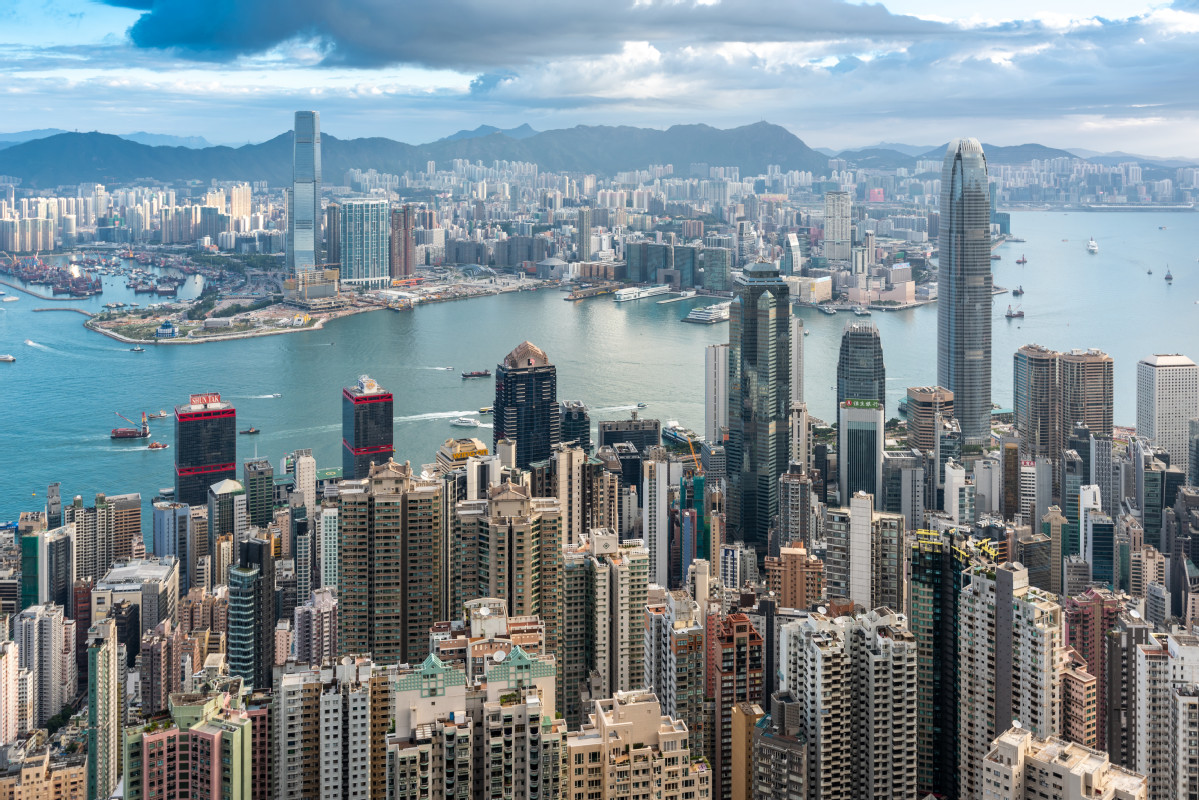
In a global landscape where economic diplomacy often takes center stage, Hong Kong's Chief Executive John Lee Ka-chiu is making strategic moves.
On Sunday, Lee embarked on a seven-day, whistle-stop tour of three member countries of the Association of Southeast Asian Nations: Singapore, Indonesia and Malaysia. This journey, his second to the region within a year, underlines the Hong Kong Special Administrative Region government's strategic pivot toward Southeast Asia, a region whose economic ascendancy is increasingly hard to ignore.
Lee's visit carries the hopes of many in Hong Kong. They believe that the in-person diplomacy could expedite the city's inclusion in the Regional Comprehensive Economic Partnership — a move that would unlock a treasure trove of trade opportunities for Hong Kong.
The delegation accompanying Lee is a testament to the significance of this trip. It included not only heavyweight representatives from the HKSAR government, like Deputy Financial Secretary Michael Wong Wai-lun, Secretary for Financial Services and the Treasury Bureau Christopher Hui Ching-yu, and Secretary for Commerce and Economic Development Algernon Yau Ying-wah, but also a group of 30 representatives from diverse sectors such as finance and technology.
The host countries rolled out the red carpet, a signal of their appreciation of Hong Kong's economic clout. The meetings with Singaporean Prime Minister Lee Hsien Loong and Indonesian President Joko Widodo, along with the high-level official visit to Indonesia, underscored the importance attached to this trip.
Such meetings are not just ceremonial. They offer a platform for Hong Kong's leaders to showcase the city's latest opportunities and advantages. More significantly, they provide a chance to solidify the Hong Kong SAR's cooperation with ASEAN nations in areas of trade and investment. In doing so, they foster a better understanding of Hong Kong's unique political and economic arrangement — the "one country, two systems" policy.
ASEAN is an important trading partner for Hong Kong. With a total trade of HK$1.3 trillion ($166.6 billion), it accounts for 13.7 percent of Hong Kong's global trade. The city also serves as an essential transshipment port for ASEAN's trade with the Chinese mainland.
The economic potential of ASEAN, which boasts a population of 680 million, is second only to India and China. In 2022, its GDP exceeded $3.66 trillion, ranking behind only the United States, the Chinese mainland, Japan and Germany. Given ASEAN's demographic dividend, policy support and significant growth potential, it is crucial for Hong Kong to deepen cooperation with and seize opportunities offered by ASEAN to reinforce its own role as a global financial, trade and shipping center.
The RCEP, the world's largest free trade agreement, is another piece of this grand strategy. The 15 members of RCEP — the 10 ASEAN members and the Chinese mainland, Japan, South Korea, Australia and New Zealand — collectively account for more than 30 percent of global GDP. These members are all significant trading partners of Hong Kong, and their trade in goods accounted for more than 70 percent of Hong Kong's total trade in 2021.
Last year, the HKSAR government applied to join the RCEP, which was a clear attempt to facilitate trade with ASEAN countries. Amid the shifting geopolitical landscape, it is necessary for Hong Kong to step beyond a Euro-American focus and explore wider development spaces. If successful, Hong Kong's inclusion in the RCEP could catalyze its further integration into the regional industrial chain, reducing trade costs and enhancing competitiveness.
The potential benefits for Hong Kong joining the RCEP are manifold. Hong Kong's goods, enterprises and service industry could reap tremendous gains from a range of measures under the RCEP, including rules of origin, tariff reductions, open market access and streamlined customs procedures.
Furthermore, Hong Kong has the opportunity to make commitments to open up various sectors. The allure of such openness could tempt companies from RCEP economies to invest in Hong Kong or tap into its high-quality professional services. This would promote bilateral and regional service trade and e-commerce exchanges, spawning even greater business opportunities.
Chief Executive Lee's visit to Singapore, Indonesia and Malaysia is a gambit that could pay off handsomely for Hong Kong. By deepening ties with ASEAN nations and pushing for inclusion in the RCEP, Hong Kong is positioning itself at the heart of the economic dynamism that is Southeast Asia. In doing so, it is creating a promising future filled with new opportunities for its businesses and residents.
The author is a member of the Hong Kong Legislative Council and a member of the Central Committee of the New People's Party. The views do not necessarily reflect those of China Daily.



- 'Book of Songs' from Chinese imperial tomb proves oldest complete copy ever found
- Exhibition highlighting the 'Two Airlines Incident' opens in Tianjin
- Average life expectancy in Beijing rises to 83.93 years
- Energy drink overdose sends delivery worker to hospital
- GBA and Hainan deepening cooperation to boost innovation and sustainable growth
- Beijing mulls including the costs of embryo freezing and preservation in medical insurance