Trippers charmed by immersive tourism offerings









TIANJIN — Walking along an old flagstone street and holding a special sightseeing map, a kind of "passport" in Chinese ancient times, tourists can stroll through the quaint opera stage and down long corridors, enjoying the traditional culture in an immersive way in Yangliuqing township, North China's Tianjin municipality.
Immersive tourism has become a new hot topic within China's cultural and tourism industry, gaining popularity among the country's consumers.
"The ancient town has successfully combined traditional folk culture with trendy experiences. We love it," said a college student who had just finished traveling. His sightseeing map stamped with dozens of red seals marked the scenic spots he had visited.
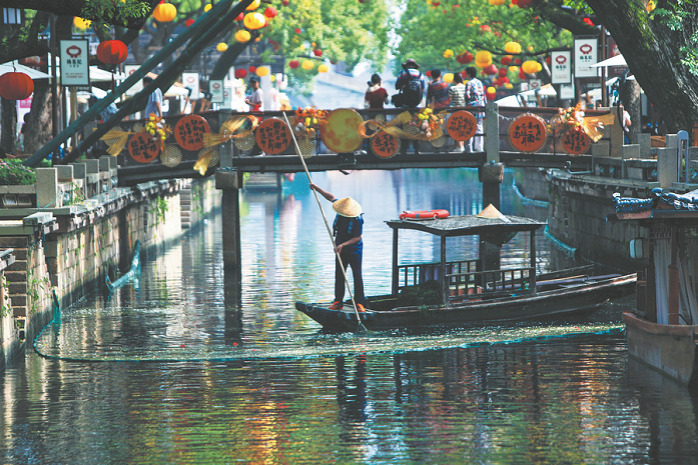
In addition to the creative idea of ancient passports, many tourist attractions in China make good use of their unique architectural, industrial and cultural resources to provide immersive tourist experiences for consumers.
An ancient town in Southwest China's Chongqing municipality provides screenplay scripts for visitors before their vacation. After dressing in costumes, visitors begin their travel experience based on the scripts as if they were ancient people who lived in the old town.
Immersive tourism is also popular in Xi'an, a city with more than 3,100 years of history, which served as the capital for 13 dynasties in Chinese history, in Northwest China's Shaanxi province. At Huaqing Palace, one of the cultural landmarks in Xi'an, tourists can wear special costumes and have an immersive experience of a day in the Tang Dynasty (618-907).
"Nowadays, more and more tourists are willing to pay for immersive tourism, because they can have a better experience and create stronger memories of their travel. It has gradually become a hot demand in the tourism market in China," said Xu Hong, dean of the College of Tourism and Service Management of Nankai University.
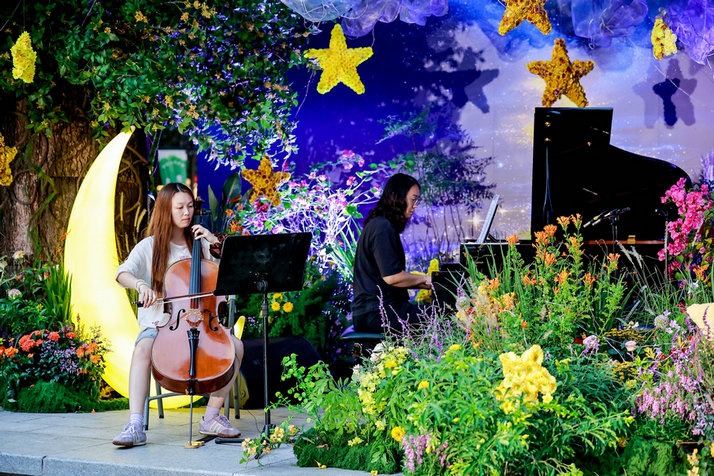
In addition to tourist attractions, museums, art groups and entertainment venues in China have also adopted digital technologies such as augmented reality, virtual reality and artificial intelligence to help visitors have an immersive experience.
"Sunflowers" swaying in the wind, and the "stars" and "moon" twinkling in the "night sky," the paintings of Vincent van Gogh, one of the most famous and prolific artists of his time, seem to come alive in the giant immersive areas in the Tianjin Digital Art Museum. Tourists seem like they are standing in the paintings when they admire the artworks thanks to digital technologies.
"Staring at the painting in the immersive areas for a long time may make you feel a little bit dizzy. The audiences can imagine and feel how Vincent van Gogh created his works in the later stages of painting, and truly understand the charm of his artworks," said Huang Lijie, a lecturer in the museum.
Jin Peng, curator of the museum, said that presenting the classical artworks in an immersive way can bring the art closer to ordinary audiences and provide them with new experiences.
"In the digital interactive painting zone, children can freely create their artworks which can be instantly transformed into digital pieces. This inspires their curiosity about artistic creation," said a Tianjin resident surnamed Liu, who brought her 9-year-old daughter to have an immersive tour in the museum.
Data released by the China Tourism Academy in February this year estimated that in 2023, China's domestic tourists will reach about 4.55 billion visits, an increase of about 80 percent year-on-year. China's domestic tourism revenue will top about 4 trillion yuan ($560 billion), an increase of about 95 percent year-on-year.
"Since the beginning of this year, China's cultural and tourism industry has shown strong recovery momentum, which cannot be separated from the increasingly diverse cultural and tourism experiences and more abundant consumption choices," said Dai Bin, president of the China Tourism Academy.
Immersive tourism satisfies the needs of customers for new and unique tourism experiences and reflects the yearning of urban and rural residents in China for a better spiritual and cultural life, Dai added.
XINHUA