When porcelain was the original 'made in China' sensation










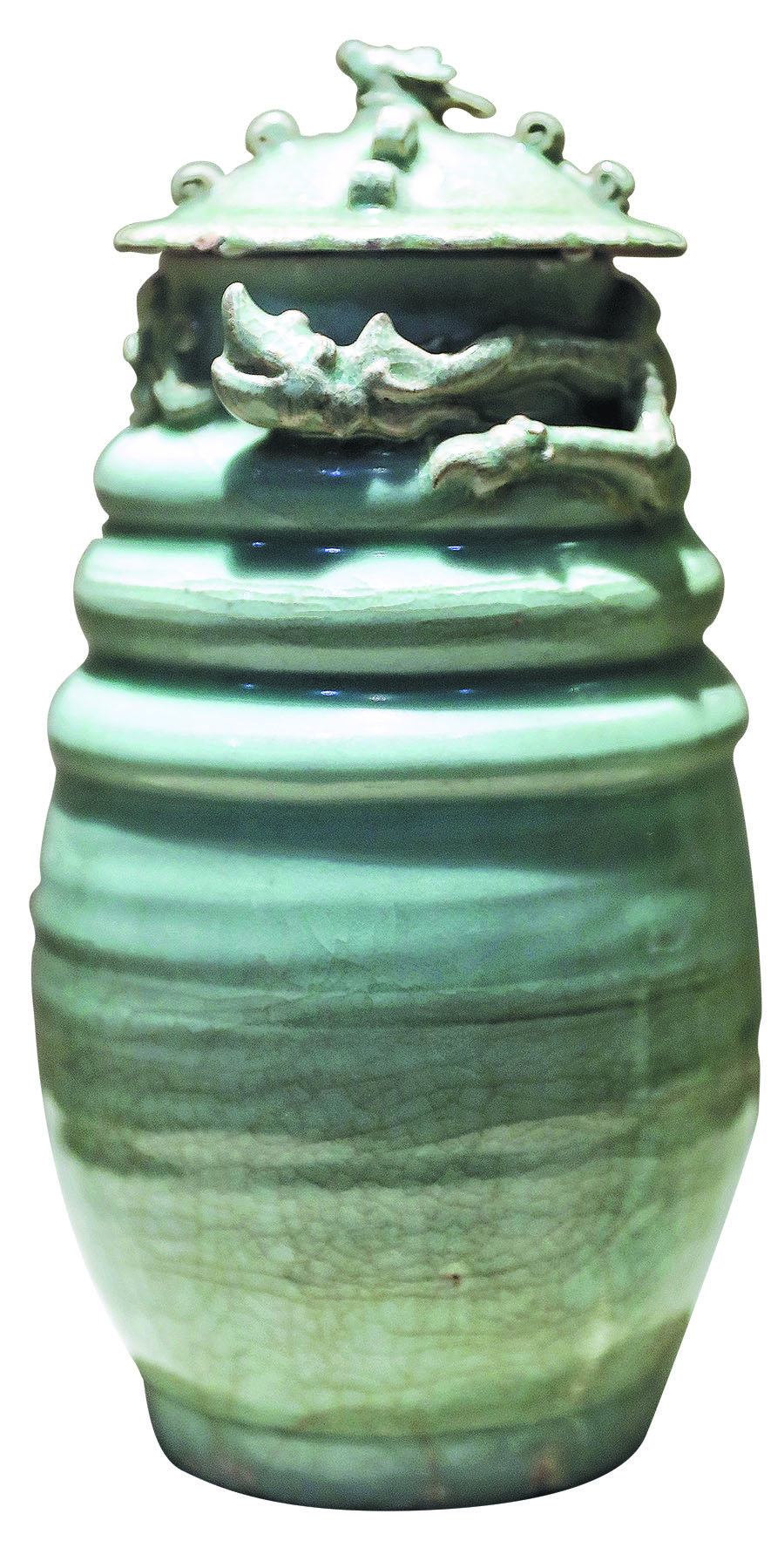
Before the 14th century, China controlled the production of high-quality porcelain and was a seller-oriented market. Finds unearthed from Taicang, an ancient port in Suzhou, Jiangsu province, show that celadon from Longquan was transported without being taken out of its firing boxes.
During the process of firing, celadon pieces were placed in pottery boxes which would protect them from the ashes. Usually half of the products were usable while the rest broke or were defective.
"Whether they were good or bad, merchants took them all. This reflects how much demand there was on the market then," says Liu.
From the Ming Dynasty (1368-1644) onward, the export of blue-and-white porcelain sparked a global fascination with these precious treasures from the East. Chinese porcelain makers began to produce pieces tailored to tastes in different countries after noticing a preference for kendis, a kind of water pot with a curved spout, in Southeast Asia, and began to produce for markets in places like Malaysia and Thailand.
"It was a phenomenon of cultural exchange, with merchants from the Middle East flooding into China," says Wang.
In fact, blue-and-white porcelain was itself influenced by the Islamic world's taste. Several emperors in the 15th century are known to have supported Islam, and the Muslim favoring of blue and white influenced the whole porcelain industry.
Wang says the materials used to produce blue-and-white porcelain was imported from Persia during the early stage of its development.
From the 16th century, Kraak porcelain, a blue-and-white porcelain tailored for overseas markets only, was fired on a large scale in kilns in Fujian province. Though the word kraak is Dutch, it is believed to derive from the Portuguese ships (carracks) that transported it. Kraak ware was made in the shape of deep bowls or wide dishes, whose surfaces were divided into segments and painted with motifs.
The 18th century saw increasing orders for blue-and-white armorial porcelain from the royal families and aristocrats of Europe. They usually bore the crests of the families painted at the center and were used on special occasions.
"On porcelain, you can find all the popular elements and trends from around the world," says Wang.
For instance, the blue-and-white porcelain production in Jingdezhen, Jiangxi province, featured technology from different parts of the world, which was then evolved and eventually spread across the globe.