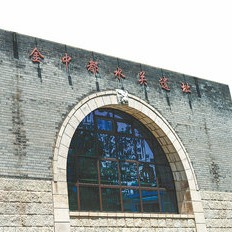



Findings shed light on capital's impressive past









City dating back 800 years unearthed near new business area.
The Lize Financial Business District in southwestern Beijing is home to numerous glass-walled high-rises, which stand as proud sentinels keeping watch over this new landmark in the Chinese capital.
The district only opened at the end of 2021, but under the ground nearby lie the ancient city walls and moat of Zhongdu, which in 1153 became the capital of the Jin Dynasty (1115-1234). It was the first time that Beijing had been the capital city during a Chinese dynasty.
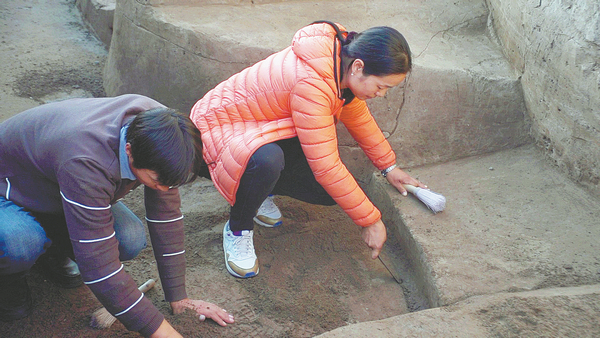
More than 2,900 square meters of the Zhongdu city wall ruins were unearthed in 2019 and 2020, and a section of the western wall, which is 24 meters wide at its thickest point, is the best preserved.
The old city ruins, together with the kitchen tools and ornaments used by residents in ancient times, have been preserved at the site or in museums.
An exhibition commemorating the 870th anniversary of Beijing becoming the capital, which opened at the Beijing Archaeological Site Museum on June 10, runs until Sept 30.
A total of 187 cultural relics from six Jin Dynasty sites are exhibited at the museum, including architectural pieces from the Jinzhongdu ruins, porcelain, gold and silverware, jade, pottery and murals reflecting daily life.
The imperial palace, lanes and hutong, or alleyways, in which residents lived, as well as city gates, moats, streets and the tombs of imperial family members, are depicted in the form of objects and other traces left by the Jurchen and Han people who lived in Zhongdu.
Well-known scenic spots in Beijing, such as Yinshan Pagoda Forest in Changping district and Lugou Bridge in Fengtai, which were built when Zhongdu was capital of the Jin Dynasty, are also highlighted at the exhibition.
Ding Lina, a researcher at the Beijing Archaeological Research Institute, who focuses on studies of the Liao (907-1125), Jin and Yuan (1271-1368) dynasties, said, "We can observe the communication and integration between the Jurchen and Han people through cultural aspects of the tomb artifacts from the Jin Dynasty.
"For example, at a Han ethnic burial site, we discovered not only the Buddhist copper ornaments that Han people believe in, but also a small copper figurine, which is generally thought to represent a ritual object used in the Jurchen people's primitive shamanistic religion.
"In the tombs, we also found that ethnic cultural integration between the Han and Jurchen people was a two-way process, with the two ethnicities influencing and promoting each other."