Right steps in Sino-German ties hailed









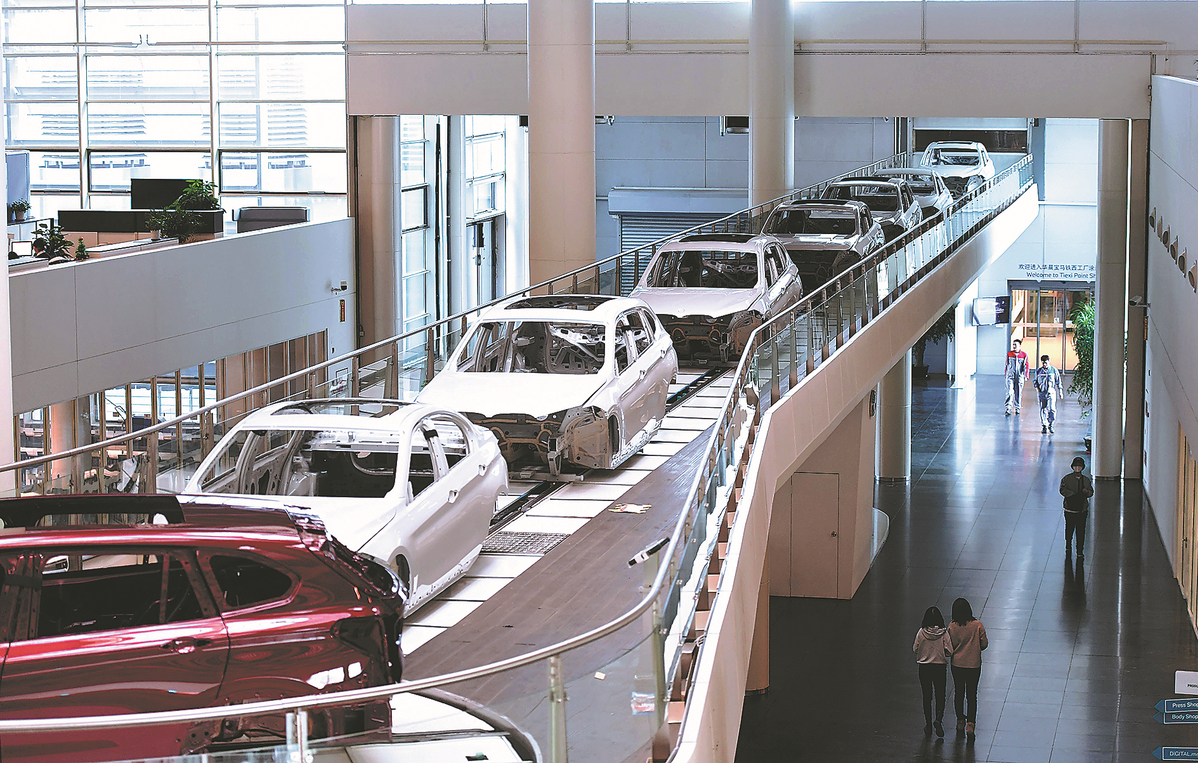
Closer Sino-German cooperation will foster synergies across technologies, markets, supply chains and innovation networks for mutual success, business leaders and experts said, against a backdrop of rapid transformation in the global automotive industry.
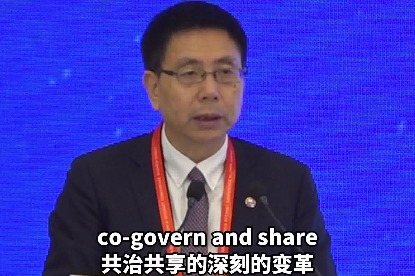
The automotive industry serves as a prime example of Sino-German collaboration with vast potential for further growth, said Chong Quan, president of the Beijing-based China Society for World Trade Organization Studies and former deputy China international trade representative.
He was speaking at the 2023 China-German Automobile Conference held in Changchun, capital of Northeast China's Jilin province, earlier this week.
"Both sides should join hands to drive innovation of new energy vehicles, leading the future of the global automotive industry," Chong said.
Together, they can promote industry transformation, ignite collaboration in emerging areas like artificial intelligence and digitalization, and further propel energy conservation, emissions reduction and green development, he added.
Highlighting that China's automotive industry has consistently been on a path of continuous growth, particularly in battery manufacturing, Ferdinand Dudenhoffer, director of Duisburg, Germany-based Center for Automotive Research, said the European Commission's recent move to launch an anti-subsidy investigation against Chinese electric vehicles may potentially have some negative impact on cooperation between China and Germany in the automotive sector.
"Many policies within the European Union do not seem very justifiable in principle," he said. "In the long term, the collaborative relationship between China and Germany in this regard is bound to suffer."
Dudenhoffer called for closer Sino-German cooperation in the automotive industry.
German companies, such as Mercedes-Benz AG, BMW AG and Volkswagen AG, need China's car batteries, and also wish to jointly develop autonomous driving technologies with Chinese partners.
Eager to secure more market share in China, German automotive companies have further expanded their investments in the nation's new energy vehicle industry.
For instance, Volkswagen AG has reinforced local supply chain integration by means of mergers, acquisitions and other forms of collaboration. This approach encompasses factors from core components to complete vehicle production, leading to comprehensive localization and intelligent manufacturing in China.
The endeavor also serves as a new benchmark for other companies looking to develop their presence in the Chinese market, said Liu Yan, deputy secretary-general of the Beijing-based China Association of Automobile Manufacturers (CAAM).
In addition to launching 17 new conventional fuel vehicle models by 2030, Volkswagen AG will accelerate the development of pure electric products in China.
The company has set a target to have no fewer than 30 EV models in both Chinese and global markets by 2023. Its first majority-owned joint venture for all-electric vehicles — Volkswagen Anhui — will commence production in Anhui province by the end of this year.
"We will further deepen our commitment to China's growth by focusing more on local technological development, harnessing local innovation and responding more agilely to the demand of local consumers," said Chang Qing, CEO for China at Cariad, a Volkswagen subsidiary.
China FAW Group — a Changchun-based State-owned automaker — plans to sell more than 1 million electric-powered vehicles globally in 2025.
Lei Ping, China FAW Group's vice-president, said that with new energy vehicle markets booming across the world, the group must rely on innovation to remain competitive in the new energy automobile business.
German premium carmaker Audi AG is building a plant with partner China FAW Group in Changchun, Jilin province. The first model, the Q6 e-tron, is scheduled to roll off the assembly line soon after construction is completed in late 2024.
The plant is owned by the Audi FAW NEV Co, which is the first Chinese joint venture in which the German carmaker has a majority stake. With a total investment of 2.6 billion euros ($2.74 billion), the JV is expected to be a key milestone in Audi's deepening localization in China in the era of electrification.