


The taste of a more fulfilled life










One of the sections, The Way of Tea Reserves Harmony, illustrates the philosophy through paintings, documents, tea sets and even the recreation of an imperial teahouse.
The Chinese character for tea comprises three parts. The top represents grass, the middle indicates a person and the bottom radical depicts a tree. A person standing between grass and trees involved in making tea.
"The Chinese character for tea is a demonstration of people's relationships with nature. From leaf to brew, we transform nature's gift into a source of spiritual enjoyment," says Wang.
The art and practice of drinking tea is about much more than soaking leaves in a cup of hot water. The ancient Chinese used the word chadao, the way of tea, to honor their pursuit of living a life of grace and gratitude, as well as of keeping a balanced and harmonious relationship with nature and the world.
"The Chinese pursue a harmonious existence with nature, and this can be seen from how they drink tea in daily life," adds Wang.
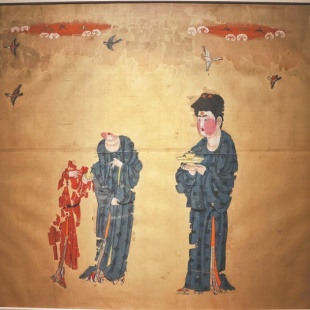
In some ancient scrolls painted by ink masters, literati, an upper echelon with a long history in China, meet peers at well-decorated teahouses to enjoy tea, appreciate calligraphy or paintings, and chat.
The teahouses are built either in gardens or hidden in the mountains.
"The literati preferred to enjoy tea in natural places to purify their mind. From the Song Dynasty (960-1279) onward, building teahouses was a fashion among the upper classes," says Shan Yingying, an assistant researcher at the Palace Museum, adding that tea parties were often held at teahouses with scenic views.

The exhibition has replicated a teahouse belonging to Emperor Qianlong of the Qing Dynasty (1644-1911) from a painting by the emperor, to allow visitors to experience ancient tea culture. Tea-god figurines, porcelain cups, blue-and-white pots, antique jade from the Neolithic period and antique bronzes are neatly displayed and the round table is designed in the Western style.
A die-hard tea lover, Emperor Qianlong built more than a dozen teahouses in Beijing at different scenic locations.
"The emperor's teahouse is an integration of various cultures. It also reflects the openness and tolerance of Chinese culture," says Shan.