


Up close and personal









In a narrow lane about a kilometer away from the bustling commercial area of Xidan in downtown Beijing, where young people gather to dine at new restaurants and buy fashionable clothes, Star Theaters, a popular venue among drama fans, is a hub for audiences looking for smaller theatrical productions.
Behind its giant red door, it is home to three performance areas — each with a seating capacity of about 200. Pioneering theater talents try their bold ideas with a diversity of productions, allowing audiences to enjoy a fresh experience.
Now, Star Theaters is offering something old, yet experimental.
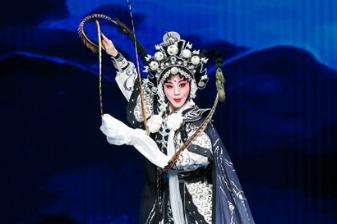
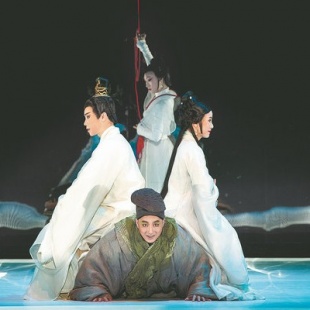
From October to November, the 10th Xiqu Opera Black Box Festival brings 21 performances covering nine kinds of traditional Chinese operas, such as Peking Opera, Kunqu Opera, Cantonese Opera and Qinqiang Opera.
"Traditional Chinese operas are ancient, mostly established centuries ago. Incorporating singing, poetry, acting, and martial arts, they are performed in local dialects, depending on where they originate, with librettos composed according to a strict set of rules that highlight form and rhyme," says Zhou Long, artistic director of the organizing committee of the festival. "Works of traditional Chinese operas tell stories of history, society and daily life. Traditionally, stage settings and props are kept to a minimum.
"During the past 10 years, some artists of traditional Chinese operas broke the frame of the old art forms, trying to present new and creative productions. The essence of traditional Chinese operas remains the same but they experimented by altering traditional conventions of space, movement, mood, tension, language, and other elements," says Zhou.
On Oct 11, to unveil the monthlong festival, eight award-winning actresses and actors of traditional Chinese operas gathered at Star Theaters to perform excerpts from classic pieces.
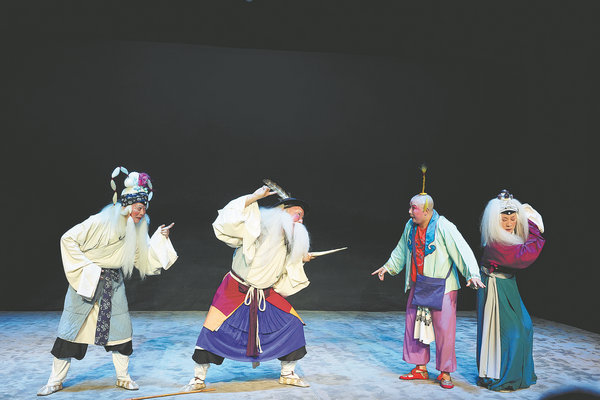
The following day, the festival premiered a one-act Peking Opera production, titled Waiting. Adapted from Waiting for Godot, Samuel Beckett's classic play, the production was directed and performed by Peking Opera actor Liu Dake.
Jingju, also known as Peking Opera, was listed as an intangible cultural heritage by UNESCO in 2010.
Within 90 minutes, four Peking Opera actors played multiple roles, breaking down the barriers of the characters and raising a lot of philosophical questions.
The production is open-ended, unlike traditional works of the genre. Since the space of the theater is small, there is little distance between actors and the audience, allowing the actors to build a conversation with viewers.
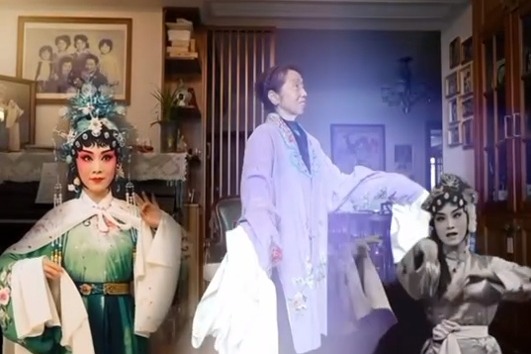
According to Liu, who performs with the China National Peking Opera Company and specializes in hualian roles (literally translated as "painted face", referring to actors playing male roles with striking looks and high social position), the idea of adapting Waiting for Godot into a Peking Opera production has been in his mind for years. He didn't figure out a way to present it onstage until he met Peking Opera actress Zheng Ziru, who is known for playing laodan, or older female roles.
"As the Beckett play's title indicates, the central act is waiting, and one of the most salient aspects of the play is that nothing really seems to happen. That part inspired me, especially after we experienced the COVID-19 pandemic. It seemed that all of us were waiting for something," says Liu.
From there, he started to adapt the play in early 2023 and with the support of three other performers, they finished the adaptation.
"Nearly all of the work was done in the rehearsal room. We improvised a lot, which is totally unlike the usual process of rehearsing a traditional Peking Opera," recalls Liu, adding that because Zheng lived in France for years, she also added French to parts of the dialogue.
On Sunday, the production will be staged at the recently reopened Beijing People's Theater.