


Towering determination of pagoda chronicler
Telling the stories of ancient structures is a passionate undertaking for enthusiast, Yang Yang reports.










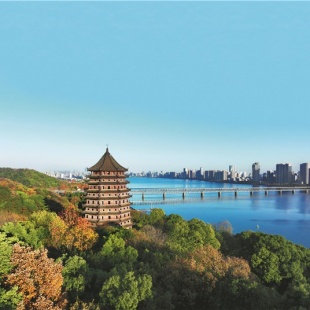
Initially for Buddhist purposes, pagodas were later built to mark the graves of eminent monks or common people, for auspicious purposes or to enhance the landscape.
In addition to the wooden structure at the early developmental stage, there are later pagodas made of brick, as well as a mix of brick and wood, even metal. In modern times, people employ reinforced concrete and steel structures to build antique pagodas.
Apart from wood and bricks, ancient people also used colored glaze, rock, soil, iron, copper, gold and silver in pagoda construction.
It is estimated that there still exist more than 10,000 ancient pagodas across the country, but nobody knows the exact number, since many are anonymous and in disrepair or even just ruins hiding in obscure corners or in the remote wilderness.
To visit hilltop or cliff-top pagodas, or those hidden in deep forest requires fortitude, physical strength and even luck, so, few people get to see them in person. For those that do, there is the added difficulty of taking good-quality photos, especially those suitable for print.
More than a decade ago, blogging was popular in China and many enthusiasts loved to share stories of their visits to ancient pagodas. Through their blogs, they gradually got to know one another.
Wu's plan was applauded by his fellow enthusiasts, many of whom generously offered their photos of pagodas and related materials they had collected.
In the last 10 years or so, Wu has also spent a great deal of time traveling around the country to see pagodas and take photos, systematically collecting and organizing the information about these ancient buildings. In that time, many pagodas have been damaged, moved or lost, so that the photos taken by Wu, or those he got from others, have inadvertently become their final portraits.
After a decade of persistent effort, he has organized firsthand textual and visual materials for nearly 5,000 ancient pagodas.
In 2019, he published his first book on the subject. In the tome, which exceeds 500 pages, Wu includes more than 300 ancient pagodas in Beijing. In addition to archival information, the book also provides maps and more than 800 recently taken high-definition photos, old photos, rubbings, architectural drawings and paintings, making it, to date, the most comprehensive book about ancient pagodas in the region.