Nation's proactive role puts the lie to 'China threat' myth









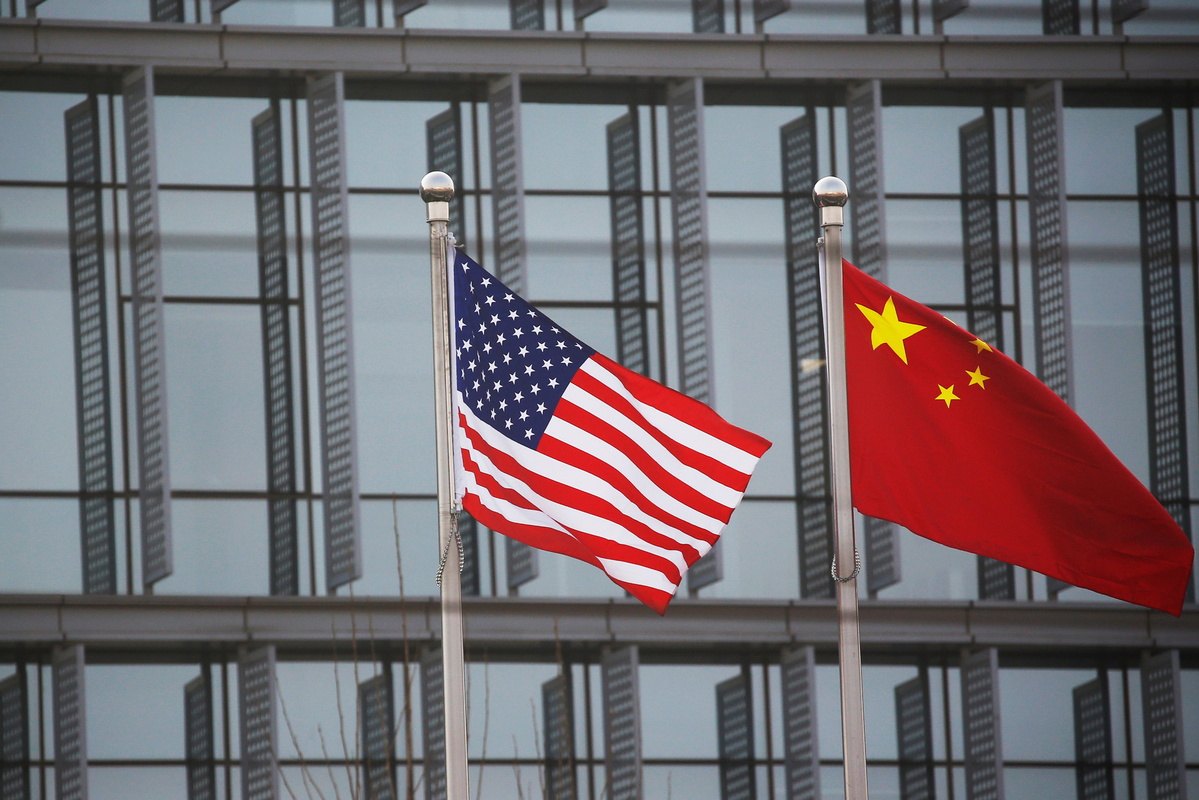
US President Joe Biden's recent Beijing-friendly overtures notwithstanding, the looming United States presidential election is expected to heat up the "China threat" narrative, with both major political parties likely to try to outdo each other on China-bashing.
According to a Dec 26 report in The New York Times, former president Donald Trump's election campaign is mulling a plan that would phase out all Chinese imports of essential goods, along with proposing new rules to stop US companies from investing in China and to inhibit Chinese purchases of US assets.
Western media and bookstores are brimming with smear narratives related to allegations about China supposedly planning to dominate the world, perceived trade and intellectual property transgressions, alleged human rights violations, including so-called "Xinjiang genocide", military expansionism and territorial ambitions, among others.
In contrast to the predominantly one-sided Western discourse, Joseph Solis-Mullen, a relatively lone political scientist, economist, journalist and author, calls these allegations "the fake China threat "and outlines how the depiction of China has dramatically changed from "responsible stakeholder" to US public enemy No 1.
He lists a barrage of works by prominent authors and intellectuals, including Michael Pillsbury's The Hundred-Year Marathon: China's Secret Strategy to Replace America as the Global Superpower (2015); Graham Allison's Destined for War (2017); and Hal Brands and Michael Beckley's Danger Zone: The Coming Conflict with China (2022).
Solis-Mullen boldly says that these highly respected intellectuals invariably work for or are affiliated with powerful think tanks of the US or its allies, and are funded behind the scenes by the US military-industrial complex.
The "China threat" narratives ignore China's historical developmental struggle under the tutelage of the Communist Party of China, emerging from two centuries of decline, backwardness, internal turmoil and foreign subjugation to become the world's second-largest economy, and lifting 800 million Chinese out of abject poverty, with rising living standards as well as technological and military capabilities to safeguard territorial integrity and other national interests.
These narratives omit the reality that China has neither the capabilities nor the inclination to replicate the US' global hegemony, supported by 800 military bases across the globe, world-leading science and technology, dollar dominance in the world's financial markets, global media influence and a plethora of Western allies, as Michael Beckley enumerates in Unrivaled — Why America Will Remain the World's Sole Superpower (2018).
The so-called "China threat" has so permeated US politics that a record level of US residents (58 percent of those surveyed) said they view China as a critical threat to the US, the highest level recorded by the Chicago Council Survey dating back to 1990.
Views about China have severely plummeted, according to findings in July by the Pew Research Center.
However, China is strengthening measures to address issues of concern in China's relationship with the West, such as improving market access, leveling the playing field and protecting intellectual property protection with a view to creating, in President Xi Jinping's words, "a market-oriented, legal and international first-class business environment".
Foreigners, including students, are increasingly welcomed in China. Recently, Alipay partnered with travel service providers to launch special tour packages for international tourists traveling to China. Xinjiang is now becoming the hottest tourist destination. The more that foreigners visit Xinjiang, the more the world will see through the West's manufactured delusion of "genocide".
At the annual work conference on Dec 29, Xi told China's envoys to other countries that they should tell the China story well and build more bridges, not only with governments but also with ordinary people.
Additionally, dialogue between nonstate actors such as think tanks and influential businessmen and individuals could work wonders in dispelling or mitigating some of the anti-China hyperbole. The extremely valuable work of the Beijing-based think tank Center for China and Globalization is a trailblazer.
At the end of the day, what counts in international relations is whom other countries turn to for economic livelihood and development. In this context, China is the world's largest trading partner to 128 out of 190 countries, the largest manufacturer, and is central to global supply and value chains. Seven of the world's top 10 container ports are in China, including Hong Kong. Even when not marked "Made in China", most products have China embedded in terms of materials, spare parts, components, processes or logistics.
It's telling that over 40 countries have expressed interest in joining the BRICS grouping. Similarly, multiple countries wish to become full-fledged members of the Shanghai Cooperation Organization, which covers more than 40 percent of the world's population. China has an oversized influence in both groups.
Under President Xi, China is starting to play a more proactive and constructive role in bringing about better lives, peace and stability to the world, regardless of ideology, creed, race or size of economy. At the third Belt and Road Forum for International Cooperation in Beijing in October, an event attended by 140 countries and 30-plus international organizations, President Xi vowed to bring about a multidimensional, high-quality, green and integrity-based BRI, benefiting every participant.
Supported by the China-proposed Global Development Initiative, Global Security Initiative and Global Civilization Initiative, China is starting to actively broker peace and development across the globe. The historic rapprochement between Saudi Arabia and Iran and the efforts to resolve the Ukraine and Gaza crises come to mind.
China is showing the world by action and outcome that instead of being a "threat", it is actually offering the solution for achieving shared prosperity for mankind.
The author is a former director-general of social welfare for the Hong Kong Special Administrative Region and former chief representative of the SAR for the United Kingdom, Eastern Europe, Russia, Norway and Switzerland.