Food security to feature prominently at meetings










In September, I was given a tour of the China Agricultural University campus in Beijing shortly after the success of a three-year trial in which homegrown genetically modified corn and soybean crops were planted.
A researcher shepherded me through half a dozen labs packed with bulky machines that hummed as they analyzed genetic samples. Operators in white lab coats sat back to back, bending over test tubes and culture medium pads loaded with genetically modified corn cells.
The cells are candidates for the next-generation corn varieties, with all the traits a farmer could dream of: nutritious, higher-yield and drought-tolerant, with stronger resistance to diseases, pests and herbicides. A poster in the corridor touted an innovation that is key to developing homegrown GM crops. Lai Jinsheng, a CAU professor, and his colleagues have developed two pairs of "scissors" for editing crop genes.
I was told that prior to their work, 17 such scissors had already been developed in Western countries. Using those scissors to engineer crops for mass production would result in hefty fees due to copyright. My guide said though our own scissors might not be as "sharp", they can do the same job, but the job would take longer. Having them in our toolbox means a lot, given the technology blockade initiated by some Western nations as China races to modernize from farming to manufacturing.
China has long resolved to be self-reliant in terms of its food security. It is increasingly turning to cutting-edge technology underpinning game-changing innovations to make that happen. Lai's gene-editing scissors are just one example.
The laser-focus on absolute food security partly stems from the country's long history. In the Spring and Autumn Period (770-476 BC), the Qi state was one of the largest and most powerful in ancient China. Its ruler, Duke Huan, adopted a scheme proposed by his famous adviser, Guan Zhong, to inflate the price of silk products and persuade its rival states, Lu and Liang, to abandon food crops and switch to mulberry trees, an important source of silkworm feed. In just three years, the two states descended into chaos due to food shortages and were later subdued by Qi.
In another example during the Spring and Autumn Period, Gou Jian, king of the Yue state, urged food production and worked with his queen in the fields to serve as a model for his people. Meanwhile, he gifted boiled seeds to Yue's powerful rival state, Wu. As the cooked seeds couldn't be planted, a famine ensued, leading to Wu's eventual demise.
As China steps up its modernization drive, agriculture and related work in rural areas are said to be among the thorniest tasks. Technology has been deemed a solution to address the challenges. "The socialist modernization won't be complete without agricultural and rural modernization," President Xi Jinping told the annual rural work conference in 2022. "We need to rely on science and technology as well as reform to speed up the building of strong agriculture," he said.
At the latest central rural work conference in December, the "dual drivers of technology and reform "were listed as a crucial avenue in building a strong agriculture. The No 1 Central Document, an important annual policy statement released last month, reiterated the strategy as China works to promote self-reliance in high-level science and technology, foster new growth drivers and develop "new productive forces" — an emerging catchphrase in policymaking — that can drive strategic emerging industries.
Agriculture has dominated political talks and legislative efforts given its importance as the foundation of a healthy economy and national security. State Council Information Office data showed that from 2020 to 2022, about one in every 10 suggestions made by legislators and political advisers at each year's two sessions — the annual gatherings of the National People's Congress, the top legislature, and the Chinese People's Political Consultative Conference National Committee, the top political advisory body — were forwarded to the Ministry of Agriculture and Rural Affairs.
In December, the NPC Standing Committee passed the Food Security Law after three reviews in just six months, proof that food security is a priority for the legislature.
At the two sessions this week, more rural-themed suggestions are expected. Hu Peisong, a member of the 14th National Committee of the CPPCC, told me that he would submit a proposal seeking to bolster farmers' income through methods such as the promotion of enhanced food crops.
Deng Qianchun, a deputy to the 14th NPC, suggested stepping up technology aid to Africa to increase the yields of oil crops such as sesame, an arrangement that will not only help raise the income of Africans, but also meet China's own crop needs in the short term.
As China charges ahead with its socialist modernization goals, agriculture is bound to receive unprecedented political attention this year.




- National Games vibe is everywhere in Guangzhou
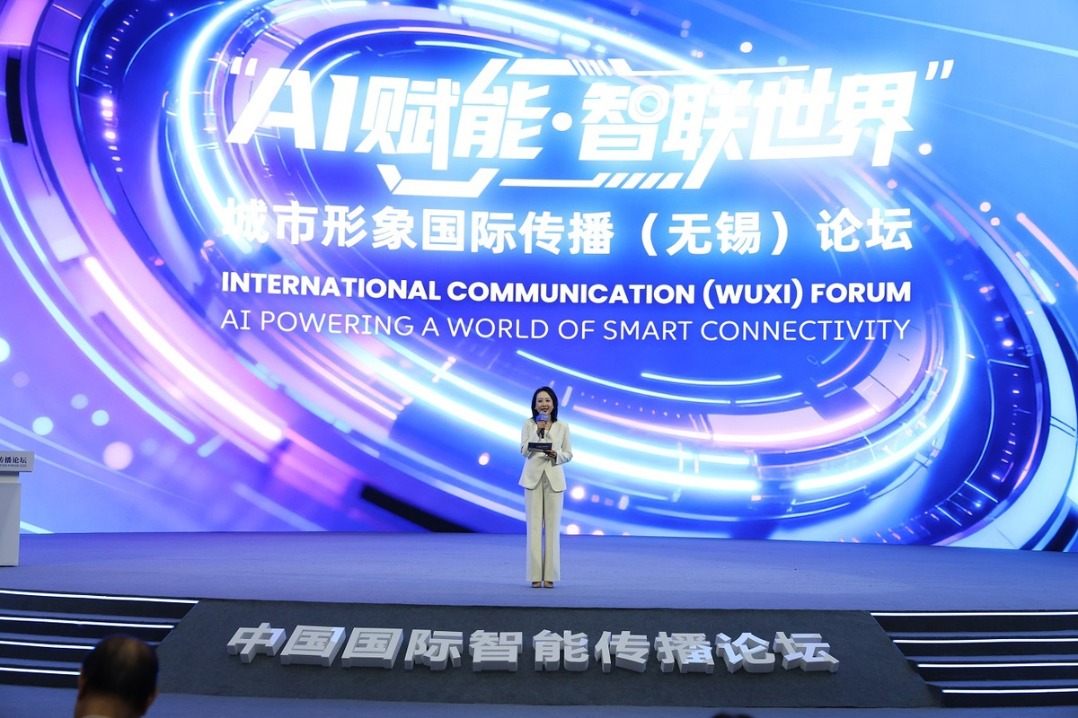
- Forum unites global experts to enhance city image communication
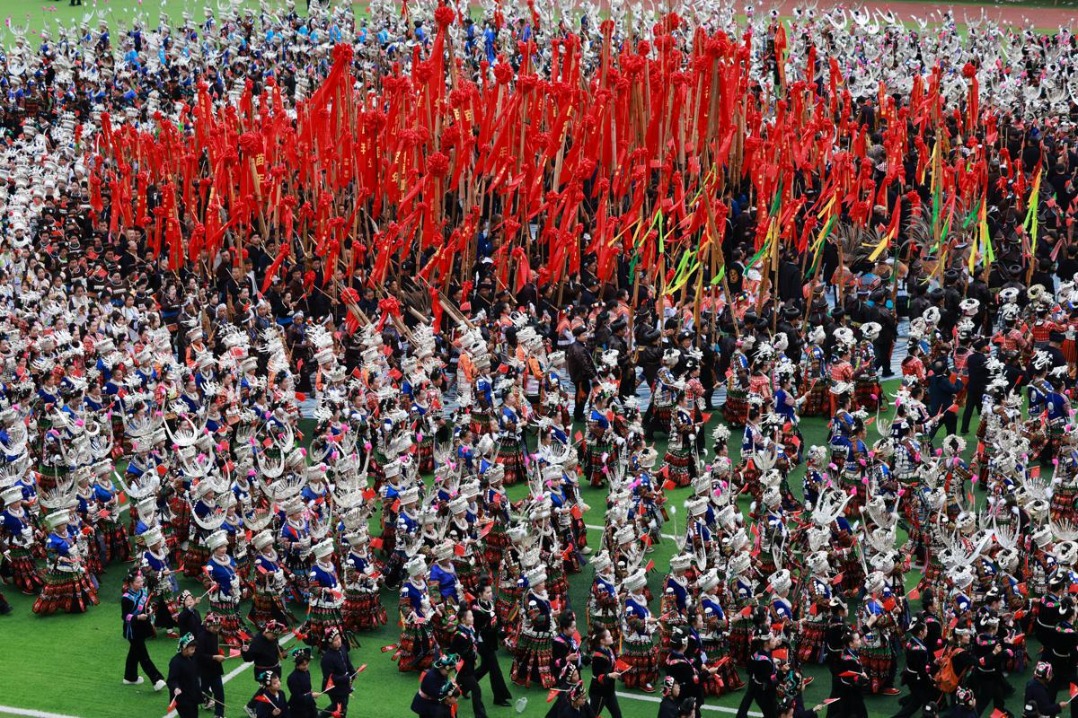
- Miao New Year celebrations get underway in Guizhou's Leishan county
- Mainland spokesman reiterates stand on Taiwan
- Fujian county's rural development becomes a big draw for Taiwan investors
- Nobel laureate in chemistry: Give young scientists more independence