What is the ultimate goal of Xi's reform?









BEIJING - Chinese leader Xi Jinping has sounded the clarion call for reform during the country's annual key political season, dispelling concerns about whether China's reform is "stagnating," or its economy is "losing steam."
"We must plan major moves to deepen reform to inject strong impetus into promoting high-quality development and advancing Chinese modernization," President Xi said at the annual sessions of China's top legislature and top political advisory body, or the "two sessions," which wrapped up on Monday.
China is currently at a critical juncture, where Xi is leading the country to realize the ambitious "Chinese modernization," while being confronted with major challenges, such as downward economic pressure following the COVID-19 pandemic, rising protectionism and suppression from Western nations, and risks associated with the real estate sector, local government debts, and some small and medium-sized financial institutions.
While addressing different issues, the country's reform campaigns under Xi's leadership share a common underlying pursuit.
Xi emphasizes that the ultimate goal of reform is for the people's well-being. He has pledged to make people's priorities his own and act on their wishes. This is different from the "capital first" stance.
He recognized that after more than 30 years of reform and opening-up, the principal contradiction facing Chinese society had undergone significant changes. "What we now face is the contradiction between unbalanced and inadequate development and the people's ever-growing needs for a better life," Xi said in 2017.
In response to this change, he advocates for coordinated and shared development, and is committed to achieving Deng Xiaoping's vision of "common prosperity."
When Xi assumed the Party's top post, there were significant disparities between China's eastern and western regions, and wealth inequality was severe.
He has transformed the poverty relief strategy, implementing "targeted poverty elimination." In less than 10 years, China eradicated absolute poverty in rural areas, a problem that had persisted for thousands of years in the country.
In April 2012, just months before Xi took the top office, a tragic incident occurred in Beijing's neighboring Hebei province, where a farmer cut off his leg by himself due to illness and concerns over unaffordable medical treatment. Many impoverished farmers had few ways to deal with serious illnesses at that time.
Xi has initiated reforms in the rural healthcare system to ensure that people in the vast rural areas have access to medical treatment. The campaigns have significantly reduced cases of illness-induced poverty. Almost all low-income people and individuals just lifted out of poverty in rural areas now have medical insurance.
In the early 2000s, Xi proposed in an academic paper bold reforms to the household registration system to eliminate various social and economic disparities as well as the division of the urban and rural labor markets caused by the system.
At that time, there was considerable controversy over whether or not to abolish household registration restrictions.
In 2016, the central government rolled out a plan to grant urban residency to some 100 million people from rural areas and other permanent residents without local household registration, which was fulfilled ahead of schedule.
During an inspection trip to Shanghai in 2023, Xi visited the apartments where migrant workers lived. He was happy to learn that migrants were settling down in the metropolis.
"Great! Stay, settle down, and strive for a better life," he said.
In response to demographic changes, China has adjusted its population and family planning policies accordingly. Reforms have been carried out to ensure better and more equitable education. Additionally, Xi has spearheaded the establishment of the world's largest social security system and initiated reforms in basic elderly care services.
With a belief that "people's health is the primary indicator of modernization," Xi called for studying and promoting the practice in the city of Sanming in Fujian province to address the challenge of healthcare reform.
Xi advocated for the comprehensive elimination of markups on drugs and medical consumables that had been in place for over 60 years, reducing patient healthcare costs. Government departments acted on his call and formed a work team to negotiate drug and consumable prices with pharmaceutical companies.
In a widely circulated online video of price negotiation in 2021, representatives from the National Healthcare Security Administration insisted that "no minority group of patients should be abandoned," and managed to cut the price of a life-saving drug for a rare disease from about 700,000 yuan ($97,550) per shot to 33,000 yuan per shot after eight rounds of intense negotiations.
Xi's reform in the cultural sector emphasizes enriching the "spiritual world" of the people as an essential requirement for Chinese modernization. This involves refining cultural industry planning and policies, and nurturing new cultural business forms and cultural consumption patterns.
As a result, the film industry has seen fast development in recent years. The number of cinema screens in the country has multiplied from about 13,000 in 2012 to over 86,000 now, the highest on Earth.
Another ground-breaking reform led by Xi occurred in the ecological domain.
When Xi took office as the general secretary of the Communist Party of China Central Committee in 2012, environmental pollution was one of the most common complaints among the public. At the start of that year, a river in Guangxi Zhuang Autonomous Region reported cadmium pollution, endangering the drinking water safety of over a million people. Several high-profile "not-in-my-backyard" incidents occurred across the country during the year.
Xi, known for environmental initiatives in Xiamen to clean up Yundang Lake and in Hangzhou to protect West Lake, established the Ministry of Ecology and Environment, set ecological and environmental protection as an inviolable "red line," introduced inspections on ecological and environmental protection by central authorities, and asked local officials to be responsible for the protection of rivers, lakes and forests as their "chiefs."
Under Xi's leadership, China has developed the world's largest carbon market and vowed to achieve carbon neutrality after carbon peaking in a much shorter time than developed countries. "Green and low-carbon development is the order of the day, and those who follow it will prosper," he said.
Xi believes that protecting the environment and ecology is vital to sustaining the Chinese nation's development and is also crucial for protecting the Earth, which is "our one and only home."

- National Games vibe is everywhere in Guangzhou
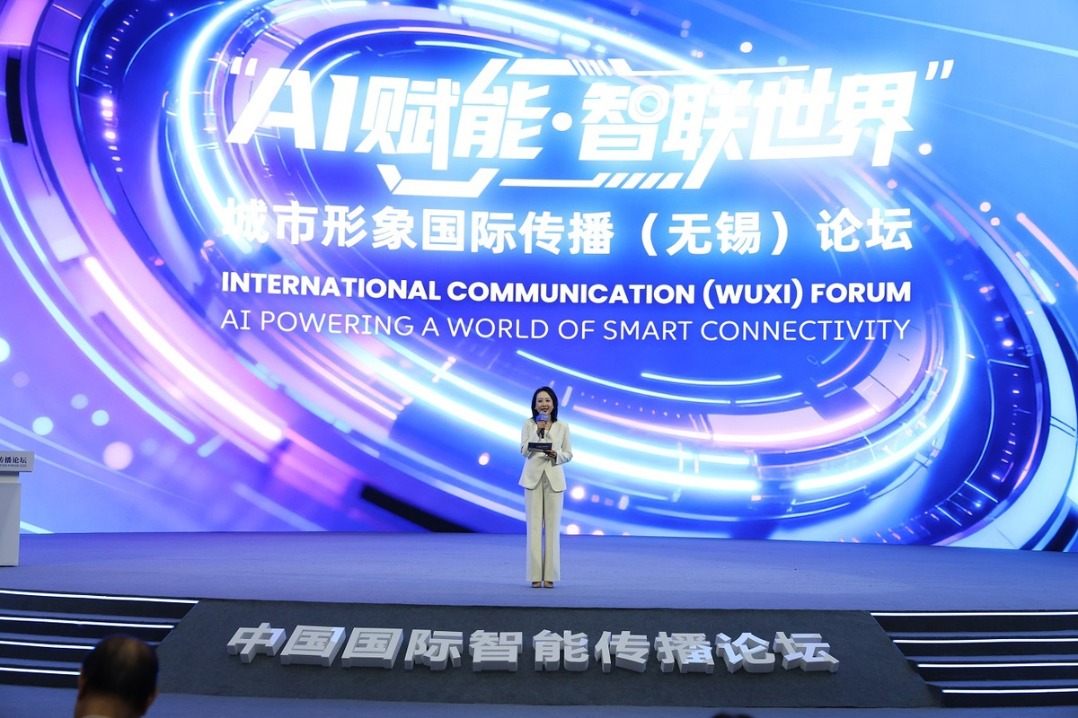
- Forum unites global experts to enhance city image communication
- Miao New Year celebrations get underway in Guizhou's Leishan county
- Mainland spokesman reiterates stand on Taiwan
- Fujian county's rural development becomes a big draw for Taiwan investors
- Nobel laureate in chemistry: Give young scientists more independence