Qualitative development a new benchmark for growth










Traditionally, GDP growth has been used to measure economic prosperity. But in doing so, economists often overlook important development factors such as social justice, environmental sustainability and quality of people's life.
But now, a new development paradigm is emerging. It is centered on qualitative development, and prioritizes sustainable and comprehensive growth. This aspect is particularly notable in the case of China, which has achieved remarkable economic growth in recent decades.
In the new landscape, China, as a global economic leader, seeks to harmonize this advancement with improvements in environmental sustainability and social inclusion. China's high-quality, innovation-driven development model, recognized by the international community, underscores the need to use economic growth to realize more systemic development.
China has been, gradually but certainly, adjusting its development model, as it focuses on reducing social disparity, fostering inclusion and improving the industrial sector. These efforts are aimed at enhancing the country's industrial competitiveness and retaining the workforce amid the transition to a digital economy.
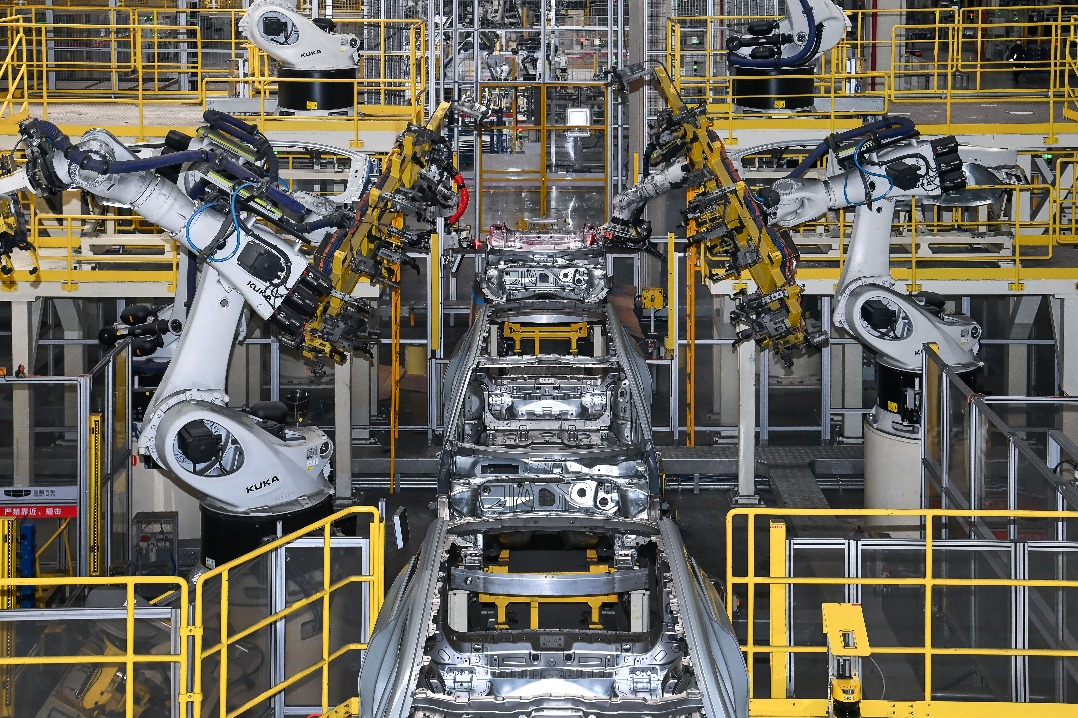
Technical and professional training, preparing workers to meet the existing and emerging industrial demands are now part of the education syllabus in China. Concurrently, a wave of innovation is sweeping through established industries, with investments in technology and digital infrastructure facilitating modernization, and enhancing the efficiency and long-term viability of industries.
In aligning with the new era, the public health sector focuses on safeguarding occupational health, and promoting a safer and more productive work environment. This multifaceted approach reflects China's commitment to harmonious development, which would allow economic growth to help improve people's wellbeing and train workers to thrive in an ever-evolving industrial landscape.
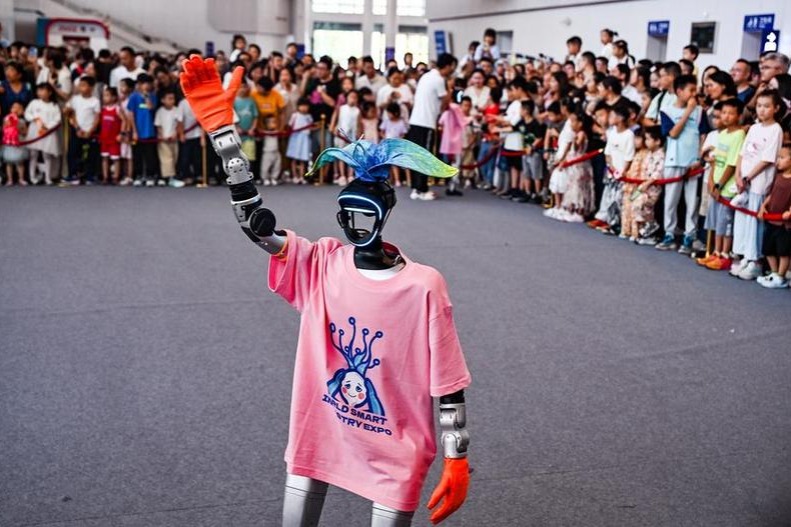
In the world of technologies, China has become the epicenter of innovation and digital revolution, driven by massive investments in research and development to reshape the country's economic and social structure. With a forward-looking vision, the government has channeled considerable resources into critical domains such as cloud computing, artificial intelligence (AI) and the internet of things (IoT), evident in large-scale initiatives like the expansion of the 5G network and the creation of smart cities nationwide.
One of the major milestones in this journey is the qualitative leap China has made in AI, with its applicability, among other things, helping revolutionize the agriculture sector and improve public health. Using the IoT to improve urban infrastructure redefines city management, making it more efficient and sustainable.
In the financial technology sector, China has been a pioneer, with innovative platforms leading the revolution in digital payment and financial services, which have made it easier for an increasing number of people to access financial services.
These advancements have raised China's status in the global economy and promoted digital and social inclusion. Investments in digital infrastructure in rural areas have made it possible for every community to participate in the digital economy. Such initiatives reflect China's commitment to the digital transformation of the economy which would outline the contours of a future society where technology will drive equitable and holistic development.
China remains committed to better protecting the environment and introducing initiatives that transcend conventional development paradigms. As a matter of fact, China has drastically increased investments in renewable energy, and diversified the solar photovoltaic, wind, and hydroelectric power projects, in order to minimize its dependence on fossil fuels and significantly reduce carbon emissions. These efforts are complemented by stringent environmental policies, which, for instance, limit the level of industrial emissions and promote the manufacturing and sale of electric vehicles and other green products.
The impact of these measures has been profound and multifaceted, extending beyond the mitigation of climate change. Chinese cities are witnessing a tangible improvement in air quality, which has helped improve the health and well-being of the people. Also, the progress toward sustainability has fostered new environmental awareness among the people, encouraging them to adopt sustainable practices at both individual and collective levels.
In the long run, the robust environmental policies will help preserve the natural ecosystems and help develop a sustainable and resilient development model, making it an inspiring example for other countries.
At the same time, China continues to play a vital role in global infrastructure development thanks to development programs such as the Belt and Road Initiative. This ambitious infrastructure development and investment initiative, extending from Asia to Europe and Africa, has bolstered China's trade connections and spurred economic development in regions which for ages have lacked investment.
Projects under the Belt and Road framework, including railways and ports, have had a significant impact on the local economies, as they have helped create jobs, stimulate growth and encourage regional cooperation. Indeed, the Belt and Road Initiative has played a crucial role in developing sustainable infrastructure, with China promoting renewable energy projects as an integral part of its environmentally-friendly agenda.
As such, the Belt and Road Initiative has become an engine for global development and a sustainable and integrated economic growth model, consolidating China's position as a global leader in infrastructure development.
The high-quality, innovation-driven development model that China adopted in 2023 shows that achieving progress without compromising on equity or environmental protection is possible. By harmonizing economic growth with social inclusion, technological innovation and environmental sustainability, China's approach to development offers invaluable lessons to the world.
China's development model also promotes social inclusion, facilitates technological innovation, better protects the environment and offers invaluable lessons to the world. This approach to development encourages investments in technology, education, healthcare and green infrastructure in a way that benefits the economy, society and planet Earth. More important, China's integrated and holistic development model can help other countries achieve sustainable and inclusive development, which shows it can meet the present development needs without harming future generations and growth prospects.
The author is director of the China-Brazil Research Center. The views don't necessarily reflect those of China Daily.
The views don't necessarily reflect those of China Daily.
If you have a specific expertise, or would like to share your thought about our stories, then send us your writings at opinion@chinadaily.com.cn, and comment@chinadaily.com.cn.