AI 'resurrection' of dead stars raises ethical, legal concerns
Families express anger over use of new technology, questions posed on infringement of rights









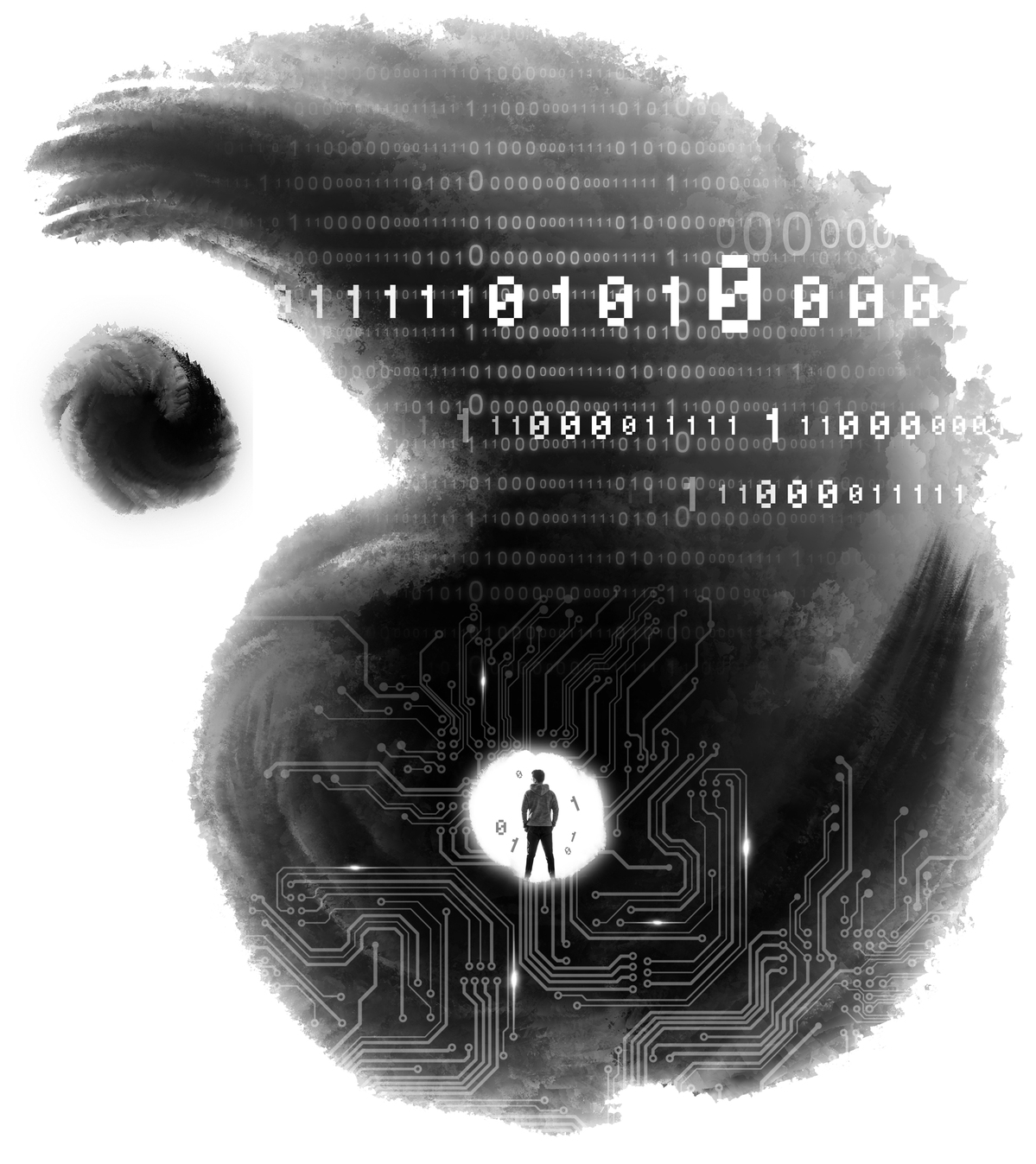
While some fans are excited by artificial intelligence bringing their dead idols back to "life", the families of the late stars have expressed anger about its use, and questions have been raised about breaches of legal rights.
In recent weeks, AI-generated videos of deceased celebrities, including Hong Kong-born diva Coco Lee and mainland actor Qiao Renliang, have gone viral on social media platforms, arousing huge public interest and generating heated debate on the legal boundaries of using AI technology.
Some of the videos open with greetings from the stars, such as: "Hello everyone, I'm Kimi, Qiao Renliang, and I haven't really left." Others feature well-wishes from celebrities, such as an AI-generated Lee declaring, "This is a time full of love and thanks, and I hope you all are well."
Some internet users have commented that the AI "resurrection" of the dead icons is a memorial for them. However, many of the deceased celebrities' families said the videos, produced without their consent, have made them feel uncomfortable and brought them further grief.
A number of unscrupulous operators have also used the technology to "revive" celebrities for profit. For instance, an AI-generated video of a late star lasting 30 seconds to 1 minute sells for 80 to 600 yuan ($11 to $83) online, according to a yicai.com report.
"Applying AI to commemorate dead people, including celebrities, requires permission from their families otherwise it's an infringement," said Zheng Ning, head of the Law Department at the Communication University of China's Cultural Industries Management School.
After obtaining the consent of the families, video producers also need to pay attention to the generated content. "If the generated image deviates too much from the actual person, or distorts to the image of the deceased, it may be suspected of violating the dead person's rights to portrait and reputation," she added.
Profiting from bringing dead stars back to life through AI is definitely an infringement, said Zhao Zhanling, a Beijing lawyer, who added that the families of the deceased have the right to ask online platforms to eliminate or block links to the AI-generated videos.
"If the internet service providers fail to do so, they will bear liability as well as those uploading the videos, in line with the Civil Code," he added.
Secondary damage
A recent search for information related to AI-cloned celebrities, found more than 50 topics on the Sina Weibo platform with many of them viewed millions of times.
One topic tagged "Qiao's father", which calls for ripping off the "mask of hypocrisy in the AI resurrection of celebrities", had been read more than 240 million times by the end of March.
Qiao Kangqiang, the father of Qiao Renliang who committed suicide in 2016, expressed his unhappiness with the AI-generated videos, saying he could not accept them and felt uncomfortable watching the AI depiction of his son.
"The videos were made without our knowledge and consent. It's like rubbing salt on our wounds," he told Chinese media outlets, adding that the content should be taken down by the platforms.
Lee's family also posted a statement through their lawyer in late March, requiring the internet platforms and the video makers remove AI-generated content about the late singer within seven days.
The widespread dissemination of such videos has seriously disrupted the work and life of Lee's family, and has also caused significant mental stress and damage to Lee's mother who is already upset by her daughter's death, the statement said.
A lawyer hired by the family stressed that cyberspace is not beyond the reach of the law, and in the statement called on netizens to respect other people's legitimate rights and follow legal boundaries relating to the internet.
The lawyer said Lee's fans should support their idol in a sensible manner, adding that respecting and protecting the deceased's family is the best way to honor them.
Finding boundaries
Sun Mingxi, a senior judge from the Beijing Internet Court, has followed the discussions about resurrected AI celebrities in recent weeks.
"This is indeed a new issue brought about by the development of the technology," Sun said.
She cited the Civil Code as a guide, noting that if the name, portrait, reputation, honor, privacy, body or other personality rights of a deceased person are damaged, the dead person's spouse, children, parents or other family members have the right to request those infringing upon the rights to bear civil liability.
The Civil Code provision allows the deceased's family, such as the parents, to initiate lawsuits because they may feel harmed by the infringement, she said.
Sun said for nonprofit purposes like artistic appreciation or to commemorate deceased ancestors, using publicly available portraits of dead people can be deemed as fair use. However, use for commercial purposes or to attract more online views both risk several rights infringements.
"It's essential to fully respect the deceased persons' pre-existing wishes, and to consider the legitimate interests and feelings of their family members such as spouses, parents and children, in the use of the portraits, as even without profits, public dissemination will also probably lead to infringement of privacy, reputation and other rights, or involve the spread of false information," she said.
Zheng, from the Communication University, said that using people's portraits without their permission to generate content through AI is illegal.
"In addition to civil lawsuits, the AI-generated content makers may also face administrative punishment in line with the Cybersecurity Law and cyberspace-related regulations," she added.
Zheng said the boundaries for the use of such technological applications should be maintained under the premise of ensuring the rule of law, protecting an individual's legitimate rights and setting ethical standards.
More to do
Digital "resurrection" through technology needs to be regulated and supervised, Zheng said, while suggesting the problem could be addressed by optimizing rules and strengthening industry self-regulation.
"The aim is to seek a balance between technological innovation and the protection of human dignity and values," she added.
Sun said as AI rapidly develops protection of the personality rights of the deceased is a big challenge, which calls for specific provisions under current laws.
Meanwhile, there is an urgent need to tighten supervision of data handling and service providers, with clear requirements set out for online platforms, Sun said.
"As technology continues to advance, AI may become a tool for everyone, giving each person the ability to 'resurrect' and 'create' a virtual person," she said. "Therefore, it's important for all of us to raise legal awareness to avoid using AI to infringe upon the legitimate rights of others, or even harm the public interest," she said.
China's current regulations on the application of AI have drawn basic boundaries for users of the technology and relevant service providers.
Measures issued by the Cyberspace Administration of China, the country's top internet regulator, for example, state that it is prohibited to use technologies such as AI to generate content that endangers national security, harms the national image, damages public interests, disrupts economic and social order or infringes upon people's personality rights and intellectual property rights.
Effective measures also must be taken in algorithm design, training data selection, model generation and optimization to prevent improper application of such technologies, with stronger protection for the rights of old and young people.




- Traditional medicine has key role in global scenario, SCO forum stresses
- China concludes 15th Arctic Ocean scientific expedition
- Global peace-loving representatives attend conference in Beijing
- Beidou technology revolutionizes daily life applications
- Former Shandong official given death sentence for taking bribes
- China unveils guideline to accelerate AI integration into transport sector