Scientific literacy rate rises to 14.1 percent









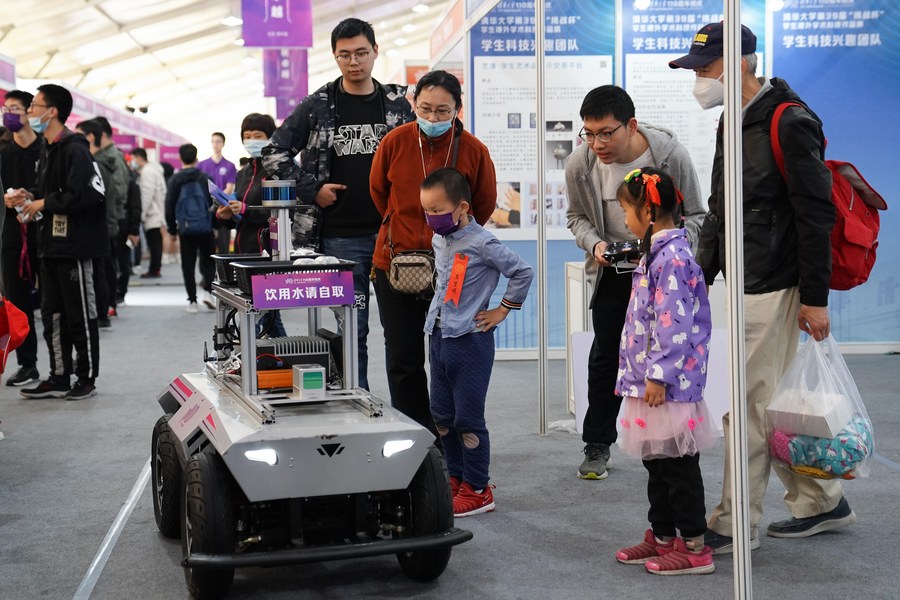
The proportion of Chinese people who are scientifically literate reached 14.1 percent last year, up 1.2 percentage points from 2022, according to a survey conducted by the China Association for Science and Technology.
The results of the survey, released on Tuesday, showed that the proportion of urban residents with scientific literacy reached 17.3 percent last year, while that of rural residents reached 9.2 percent.
The increase in scientific literacy among rural residents was higher than that of their urban counterparts, further alleviating an urban-rural imbalance.
The survey covered 31 provinces and regions and collected 289,000 valid samples from respondents aged 18 to 69, the association said.
The gap in scientific literacy levels among residents in eastern, central and western regions narrowed for the first time. Levels rose in all three regions, reaching 16.4 percent in eastern China, 13.1 percent in the central region and 11.5 percent in the west.
The results also revealed a continuous and rapid improvement in scientific literacy among women, further narrowing the gender gap by 0.66 percentage points. Last year, 15.7 percent of men were scientifically literate, up 0.9 percentage points over 2022, while 12.5 percent of women were scientifically literate, a 1.6 percentage point rise.
The scientific literacy rate of those aged from 18 to 39 was close to 20 percent, while it remained below 5 percent for those aged 60 to 69.
Forty-four percent of respondents with a bachelor's degree or higher were scientifically literate, compared with 17.7 percent of those with a senior middle school education and 2.9 percent of those who did not progress beyond primary school.
Television and the internet were the two main channels for respondents to get access to scientific and technological information. Just over 58 percent of respondents chose the internet as their primary channel for accessing scientific information last year, while the proportion who preferred television fell from 31 percent in 2022 to 26.8 percent.
The survey results show that China has a large population with at least basic scientific literacy, providing high-quality human resources for economic and social development, an association official said.
Over 400 million people have at least basic scientific literacy, forming an important labor resource and a high-quality talent base to propel economic and social progress, the official said.
While 14.1 percent of Chinese people were scientifically literate last year, that trails the level in major developed countries, which ranges from 20 percent to 30 percent, the official said, adding that China still needs to ramp up efforts to narrow the gap and strengthen its human resources base to accelerate technological independence.
China will accelerate the cultivation of digital talent to increase the effective supply of professionals in the next three years, meeting the demands of digital industrialization, according to an action plan released on Wednesday by the Ministry of Human Resources and Social Security.
The plan said digital technology engineers are an essential part of China's talent pool, and efforts will be focused on nurturing professionals in digital technology fields such as intelligent manufacturing, big data, blockchain and integrated circuits.
The ministry is exploring the establishment of a certification system for digital technology engineers, planning to train approximately 80,000 personnel in related skills each year.





- Interest in Turkiye soars among Chinese tourists after introduction of visa-free entry
- Yunnan e-bike fire probe identifies raft of failings
- Investigation report released on e-bike fire that killed 8 in Southwest China
- Understanding Xi's vision of China and the world through New Year message
- 'Artificial sun' experiment finds way to break plasma density limit
- China reports 20% rise in inter-regional trips on first day of holiday