A man of words
Memoir of a book editor and publisher reflects industry's vicissitudes over the past four decades, Yang Yang reports.










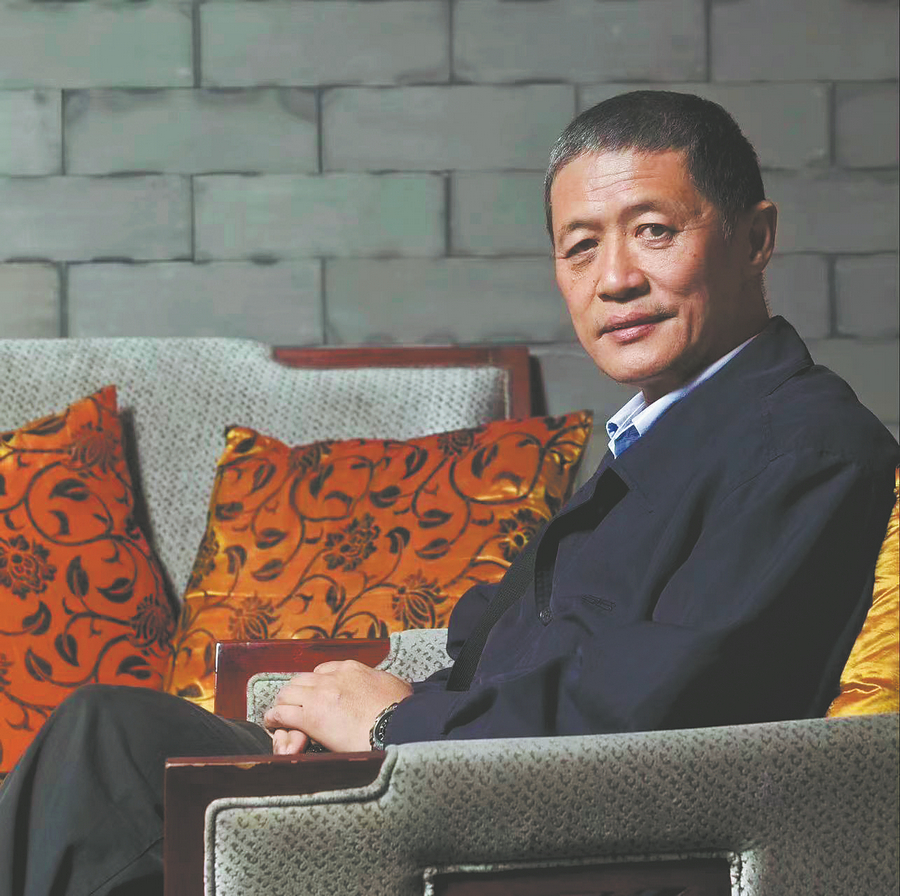
"My experiences in rural areas allow me to better understand life and people, which is useful in literary criticism since novels usually reflect reality," he says.
He was also coaxed toward his occupation because of his belief that books could advance social progress.
Li quotes the founder of the Zhonghua Book Company (established in 1912), Lu Feikui, who once said: "Publishing is a comparatively small industry. But it exerts the greatest influence on social advancement."
"This is an objective observation that I completely agree with," Li explains.
"Although media have developed rapidly, to my mind, books are still the most influential. Publishing is a very important industry that helps shape people's souls."
Even so, Li says a good editor must know how to sell a book nowadays, following the advent of social media, as livestreaming platforms have become the major channels to market books in China.
"That's why I've appeared in marketing activities on various channels. We need to adapt to the new requirements of the times," he says.
Li believes editors should have cultural ideals to publish books that advance social development. Even if they're mostly entertaining, they should convey enlightening ideas.
He did not hesitate to seize the opportunity to work at the People's Literature Publishing House, which is one of the country's leading publishers.
As one of the few university graduates at that time, Li joined the editing team, working on books about literary theory, as reading grew in popularity and the public wanted more books about cultural and art theory.
One of them was Zhongguo Xiandai Xiaoshuoshi (roughly, a history of modern Chinese fiction) by Yang Yi, a 30-something scholar who had just completed postgraduate school. Through Li's efforts, the three-volume book series brimming with over 1.5 million words became a textbook for liberal arts students at higher education institutions.
"We felt like we were fighting giant windmills like Don Quixote because many of the books on cultural and art theory we reviewed were underdeveloped and definitely needed revision," he says.
"Generally speaking, my 14 years at the People's Literature Publishing House nurtured me as a talent, if I may be called one."
In Yisheng Yishi, Li records the process of working on key books at the publishing house to trace his trajectory. He especially recalls how he shifted his attention from books about literary and art theory to best-sellers by Hong Kong and Taiwan writers, such as Li Ao and Anita Leung Fung-yee, and books with more diverse genres and topics. The section about the first stage of his career also includes two lawsuits related to the copyright of Qian Zhongshu's Weicheng (Fortress Besieged) and Leung's work.
In 1996, Li got a chance to join Joint Publishing HK as its deputy editor-in-chief, in a market driven by profits and efficiency. He grew from an editor to a publisher in eight years.
"My experience in Hong Kong broadened my vision and helped formulate some of my publishing philosophy," he says.
One particularly important ability Li says he improved during this period was design aesthetics.
"At the People's Literature Publishing House, we published mostly black-and-white books with few illustrations. But in Hong Kong, I was involved in the publishing of all kinds of books, which gave me a better sense of design," he says.
"You get a good book, and you need to find a good form to present it. It's about how to design the look, what kind of paper to use, how large it should be and so on. It actually reflects readers' preferences. It is an ability to create a book that everyone loves."
In 2005, Li returned to Beijing and became deputy general manager and deputy editor-in-chief at SDX Joint Publishing Company. It was there, he says, that his career peaked with the publication of influential books over the nine years before he retired. These include The Great Flowing River: A Memoir of China, From Manchuria to Taiwan by Chi Pangyuan, Shangxue Ji (roughly, memories of school) by He Zhaowu, Chen Yinke De Zuihou Ershinian (roughly, the last 20 years of Chen Yinke, an important historian and poet) by Lu Jiandong and The Memoir Tetralogy by Wang Dingjun, Yixue De Wendu (roughly, the temperature of medicine) by Han Qide, and Deng Xiaoping and the Transformation of China.
After retirement, Li became an adviser at the Commercial Press, where he continues to pursue social progress through book publishing.
"People ask me, how I could stick to one profession all my life," he says.
"It's because I feel fulfilled by my work."
Contact the writer at yangyangs@chinadaily.com.cn