Perils of ignoring ICT developments in auto industry









As a reporter who had been focusing on the information, communication and technology, or ICT, sector for about nine years, I never expected that one day I would write stories on the automobile industry.
However, strange are the ways in which convergence, synergy, and interconnectedness work. ICT and automobiles are more closely connected today than ever before, thanks to technological strides in artificial intelligence, chips, the internet of things, 5G and so on.
So, although combustion engines and car designs are not my cup of tea, I can't ignore such aspects of the automobile industry anymore. Around five years ago, ICT reporters began interviewing executives of carmakers. Among the topics they discussed were electric vehicles and driverless automobiles.
Roads and highways full of vehicles but minus emissions, traffic snarls and stressed-out drivers — this futuristic vision is materializing in China slowly but surely, as the country's autonomous driving industry sits on the cusp of a golden period of development.
Policies are becoming increasingly clear and open; technologies such as AI and their applications like algorithms are becoming more powerful; and, what's more, costs of crucial components are falling.
All these augur well for the healthy and robust development of the industry and commercialization of its products and technologies.
According to a report issued by BloombergNEF, China will operate the world's largest robotaxi fleet with about 12 million units by 2040, followed by the United States, which is expected to have around 7 million autonomous vehicles.
China has the potential to become the world's largest market for autonomous vehicles, according to consultancy McKinsey & Company, which estimates that such vehicles will make up for more than 40 percent of new vehicle sales in China by 2040.
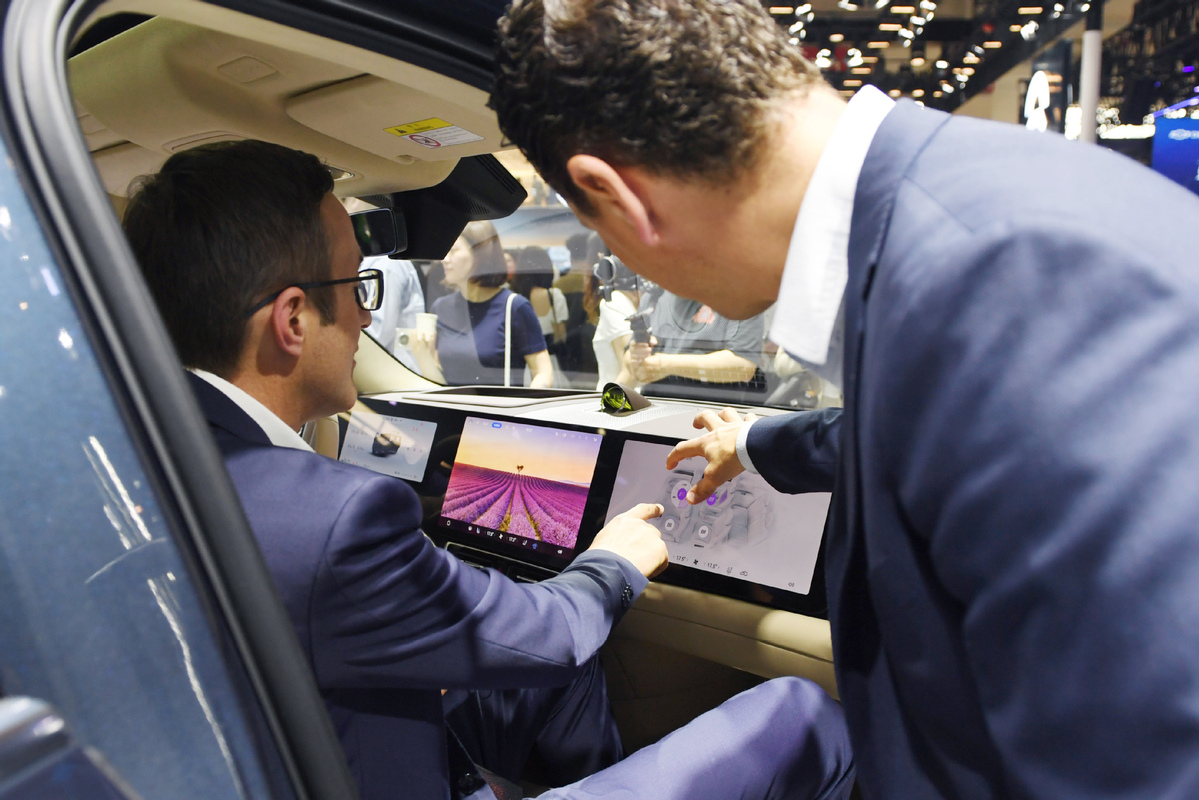
Eyeing this trend, a growing number of Chinese ICT and internet-based companies are partnering with automobile makers, in the hope of reshaping consumers' in-car experiences.
They want consumers to have access to all their smartphone apps via the panel or screen in their cars. Stated differently, once inside a car, you no longer need to use your smartphone. Tech-savvy, app-happy Chinese consumers couldn't have asked for more.
What's even more interesting, car companies such as Nio and Geely have also started developing their own smartphones for the same reasons as above. They hope consumers can use phones to remote-control their cars, such as turning on air conditioners in cars 30 minutes before they step out during the summer, so that the in-car temperature is cool in advance.
Such an interaction and competition between carmakers and ICT companies are far closer and more intense in China than in the rest of the world, as the country pioneers the electrification and intelligence trends of cars.
Andreas Urschitz, a member of the management board and chief marketing officer of Infineon, the world's largest auto semiconductor company, told me: "China has become a very fast mover and even the first mover, in particular, in the area of electrification, but also automated driving."
ICT and automobiles are increasingly intertwined these days. However, it does not mean companies in the two sectors can randomly expand their presence in each other's territories, as some have failed in their ambitions in the past, such as EV startup Byton and internet company LeTV.
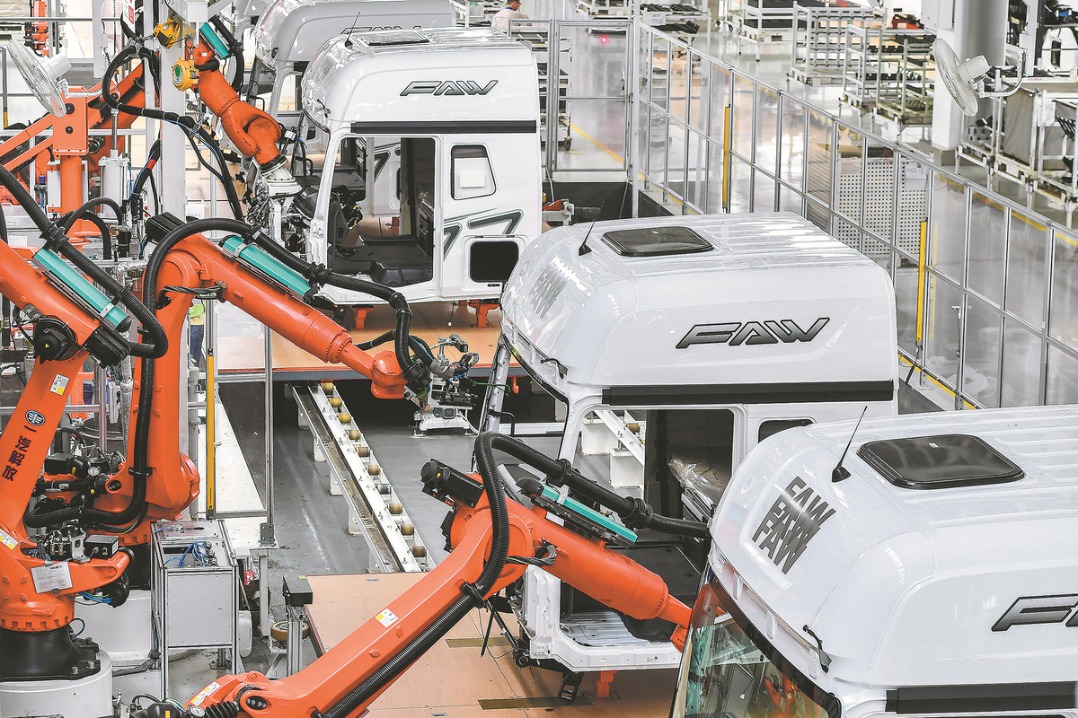
They had underestimated the complexity of manufacturing smart electric cars. Building an automobile production line entails high costs. Meeting the strict safety standards is not a piece of cake.
So, the lesson to be learned is this: irrespective of the close connection between ICT and automobiles, companies need to respect the complexity of an industry they know little about, especially in this age of cross-sector cooperation. For, any failure in doing proper homework could lead them to overstretch themselves.
That lesson applies to me and fellow reporters as well.
We need to pull up our socks. Before venturing out to write on automobiles, an ICT beat reporter needs to broaden his or her ken. Full disclosure: I consult many experts before writing reports and features on smart cars.