


Museum shines spotlight on cloisonne









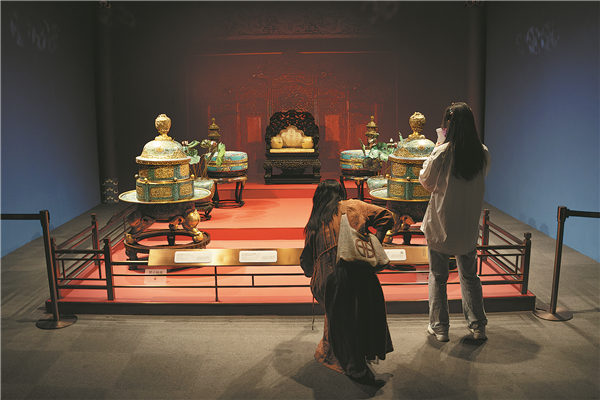
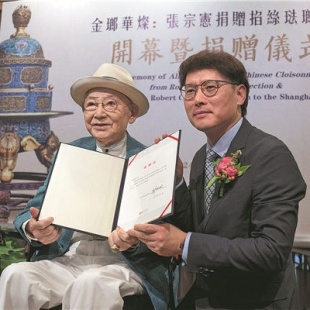
"Chang's gifts have helped the museum fill in a gap in our collection. To show our gratitude, we have decided to set up a special room for the permanent display of these fine objects," Chu says. "This is also the first permanent exhibition in China's public museums dedicated to the art of cloisonne enamelware. … We hope this will encourage more art lovers to donate fine objects from their collections to the museum."
Among the 55 objects, pieces from the Kangxi period (1662-1722) and the Qianlong period (1736-1796) are especially important, as they demonstrate the high level of cloisonne craftsmanship at the imperial palace.
Cloisonne is a decorative technique that involves soldering delicate metal wires bent into the outline of a pattern onto a metal surface and filling in the spaces with enamel paste.
The earliest examples date back to the Mycenaean period in southern Europe 3,300 years ago, and in China, cloisonne was widely made during the Ming (1368-1644) and Qing (1644-1911) dynasties, when it was used to produce a large number of fine objects in a variety of forms with distinctive Chinese aesthetics.
It is known as jingtai lan — literally "the blue of the Jingtai period" — because Chinese cloisonne enamelware reached its technical peak during the reign of Emperor Jingtai (1450-1457) in the Ming Dynasty.
The Qing Dynasty marked another peak in craftsmanship. During the reign of Emperor Qianlong, the production of jingtai lan underwent unprecedented development.
An office for workshops dedicated to the production of imperial utensils was established under the administration of the Yangxin Dian (the Hall of Mental Cultivation) at the imperial court. One of these workshops made cloisonne.