Ways to sharpen EV sector's competitive edge









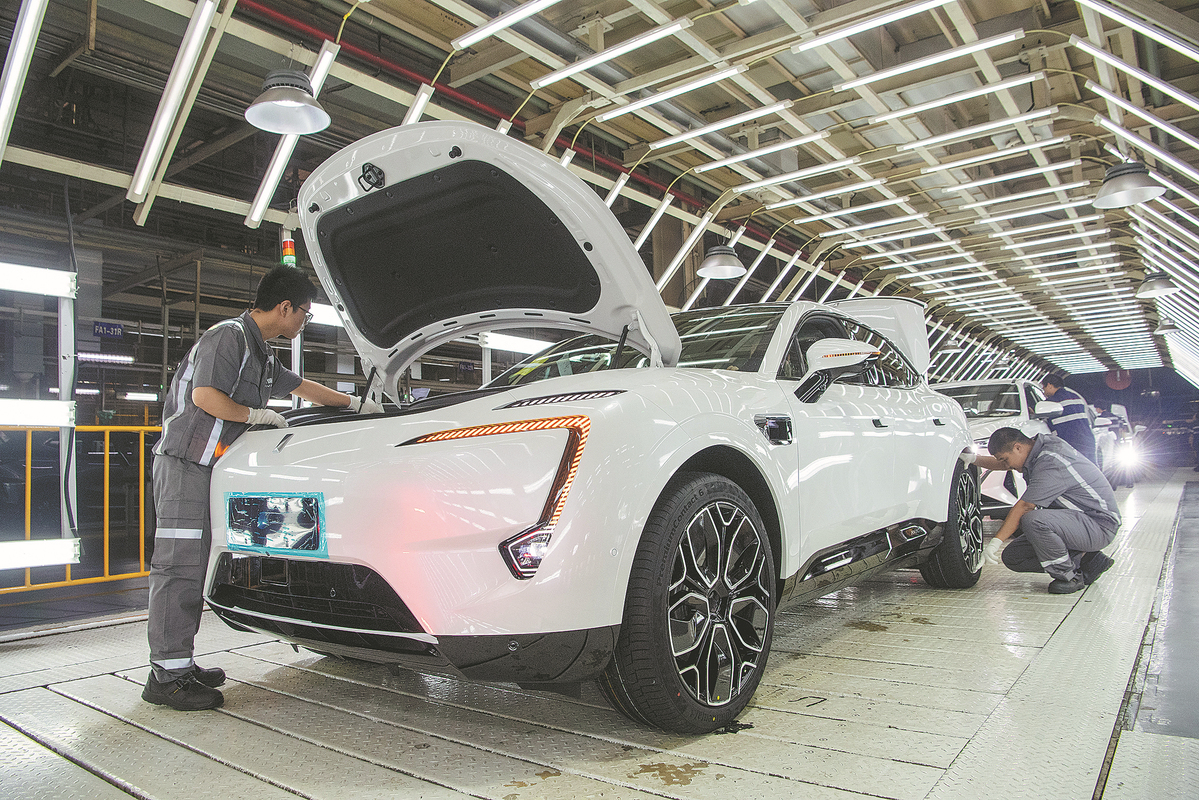
China's new energy vehicles (EVs) have emerged as global leaders, driven by the country's robust research and development capability and production capacity. However, some Western politicians and media have been hyping China's "overcapacity" in the EV sector, which is nothing but a ploy to use trade protectionist policies to overprotect their industries and contain China's industrial development.
There is nothing with China's EV production capacity and structure. According to China Association of Automobile Manufacturers data, in 2023, China's EV production and sales reached 9.58 million and 9.49 million units respectively, up 35.8 percent and 37.9 percent year-on-year, which is not surprising as China has been a global leader in the EV sector for nine consecutive years.
These figures reflect the continued healthy development of China's EV industry and increase in demand, with a balance between production capacity and sales. After all, global EV sales need to reach about 45 million units by 2030, nearly five times the level of 2023, for the world to achieve carbon neutrality and promote a green energy revolution, according to the International Energy Agency. This means the global demand for EVs is high, and China's EV industry faces no "overcapacity" problem.
Besides, China now accounts for the highest number of EV battery patents, with advance levels of key components such as intelligent computing platforms, smart cabins, sensors and wire control systems.
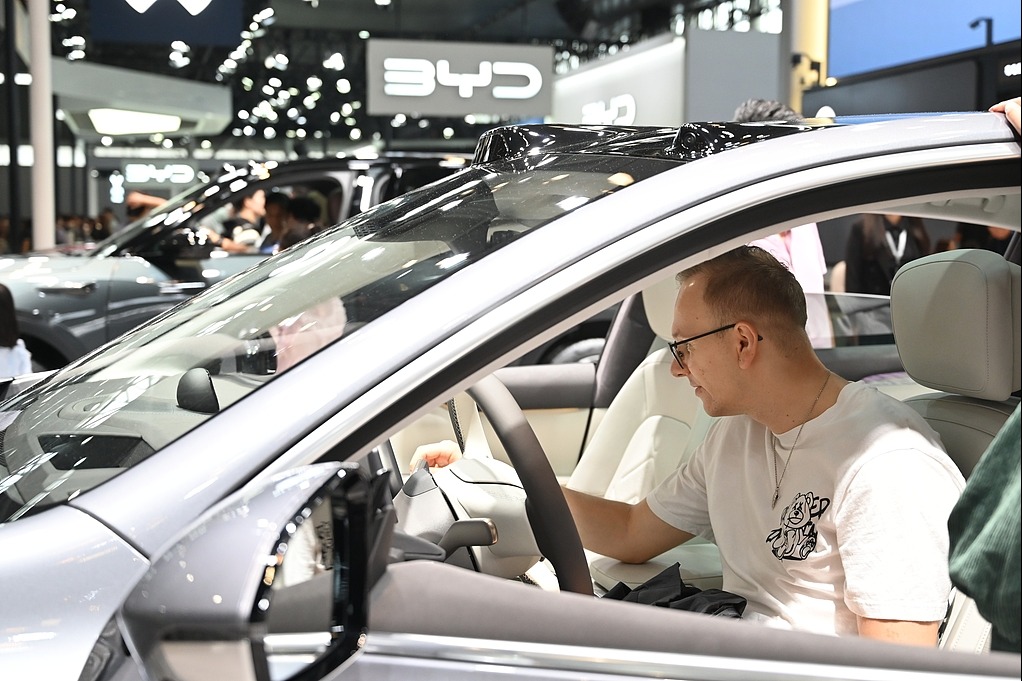
Take BYD for example. It is engaged in independent R&D of core components such as batteries, motors and electronic controls. Last year, BYD sold 3 million EVs, 61.86 percent more than in 2022, and had a capacity utilization rate of 159.5 percent. And thanks to technological innovations, the company has struck a dynamic balance between production capacity and market demand.
Notably, China has established a comprehensive and globally competitive EV industry chain with a strong carrying capacity and core advantages. The enterprises involved in the EV industry chain have established close cooperation, optimized the allocation of supply chain resources, and are promoting the coordinated development.
However, despite the overall positive development, China's EV industry faces some potential risks.
For instance, the rapid pace of technological upgrading may give rise to risks. The EV industry involves multiple technological sectors including batteries, motors and electronic controls and intelligent driving. Since technological advancement leads to the elimination of outdated technologies, enterprises need to continuously invest in R&D to survive in the market.
There are also risks related to the charging infrastructure for EVs. The construction of charging infrastructure in China does not match the pace of EVs' popularization. Although the number of charging piles has greatly increased in recent years, there still exist structural deficiencies. As a result, many people may find it difficult to regularly charge their EVs.
Recycling of power batteries, too, involves risks, because not all recycling channels are smooth and recycling technologies advanced, and improper treatment or disposal of used batteries could result in resource waste and environmental pollution and thus safety hazard. There are some gaps in the supervision of the battery recycling market, while due to the lack of clear laws, regulations and standards, some unscrupulous businesspeople could engage in illegal disassembly and refurbishment of recycled batteries, and selling them to unsuspecting consumers. That would not only violate the rights and interests of consumers but also undermine fair market competition.
To address these risks, the EV industry needs to take certain measures.
First, the EV sector should foster industrial evolution and improve the industrial landscape in order to further advance forward. As for enterprises, they can pave the way for breakthroughs in pivotal core technologies by intensifying their R&D, and thus steering the EV industry toward greater sophistication and eco-friendliness. They should also fine-tune their production capacity and product portfolios, and extend the industry chains toward premium segments to become more competitive.
Second, expanding the charging infrastructure network is key to improving the EV ecosystem. China must strategize the construction of charging facilities, with the focus on areas such as urban centers and highways. The rapid establishment of more charging piles and active involvement of social capital in infrastructure development will foster a diverse investment landscape. And the standardization of charging facilities will ensure compatibility across various EV brands and models, thus enhancing overall accessibility and usability.
Third, establishing a robust framework for power battery recycling is essential for mitigating environmental risks and fostering resource sustainability, while government intervention is necessary to delineate responsibilities and processes for battery recycling. Similarly, enterprises should be encouraged to participate in recycling initiatives and adopt a market-driven approach to recycling, and R&D budgets should be increased to make recycling more efficient and develop eco-friendly disassembly and material separation technologies so as to ensure safety in the recycling process.
And fourth, it is necessary to foster global collaboration and exchanges to raise the Chinese EV sector's global standing, and partner leading enterprises and research institutions to facilitate high-tech innovations, thereby boosting China's competitiveness in the EV sector. And promoting Chinese EVs at international exhibitions will widen their market reach and bolster the global market share.
Wang Jun is a professor at, and the dean of, the Institute of International Economic and Trade Research, Guangdong University of Foreign Studies; and Li Huiping is a PhD candidate at the same institute.
The views don't necessarily reflect those of China Daily.
If you have a specific expertise, or would like to share your thought about our stories, then send us your writings at opinion@chinadaily.com.cn, and comment@chinadaily.com.cn.