GBA facilitates robust SMEs' development









In the five years since China's plan for the development of the Guangdong-Hong Kong-Macao Greater Bay Area was published, the region's economic output has increased from 10 trillion yuan ($1.38 trillion) to more than 13.6 trillion yuan, and is likely to exceed 14 trillion yuan by the end of this year. Comprising the Hong Kong and the Macao special administrative regions and nine major cities in the Pearl River Delta, including Guangzhou and Shenzhen, the GBA is rapidly becoming a global economic powerhouse.
From the "world's factory", the GBA has transformed into a world-class bay area and city cluster. The region has also witnessed continuous innovation in its supply chains, which has prompted logistics companies to capitalize on the opportunities that emerged as a result and helped small and medium-sized enterprises to achieve rapid growth.
The GBA's increasing market integration has been reinforcing the transportation infrastructure, strengthening its role as a top-tier bay area and international innovation hub. In the first quarter of this year, the Guangdong-Hong Kong trade volume reached 252.04 billion yuan, up 14.1 percent year-on-year, with Guangdong's exports to the SAR growing by 11.9 percent, furthering the development of the GBA.
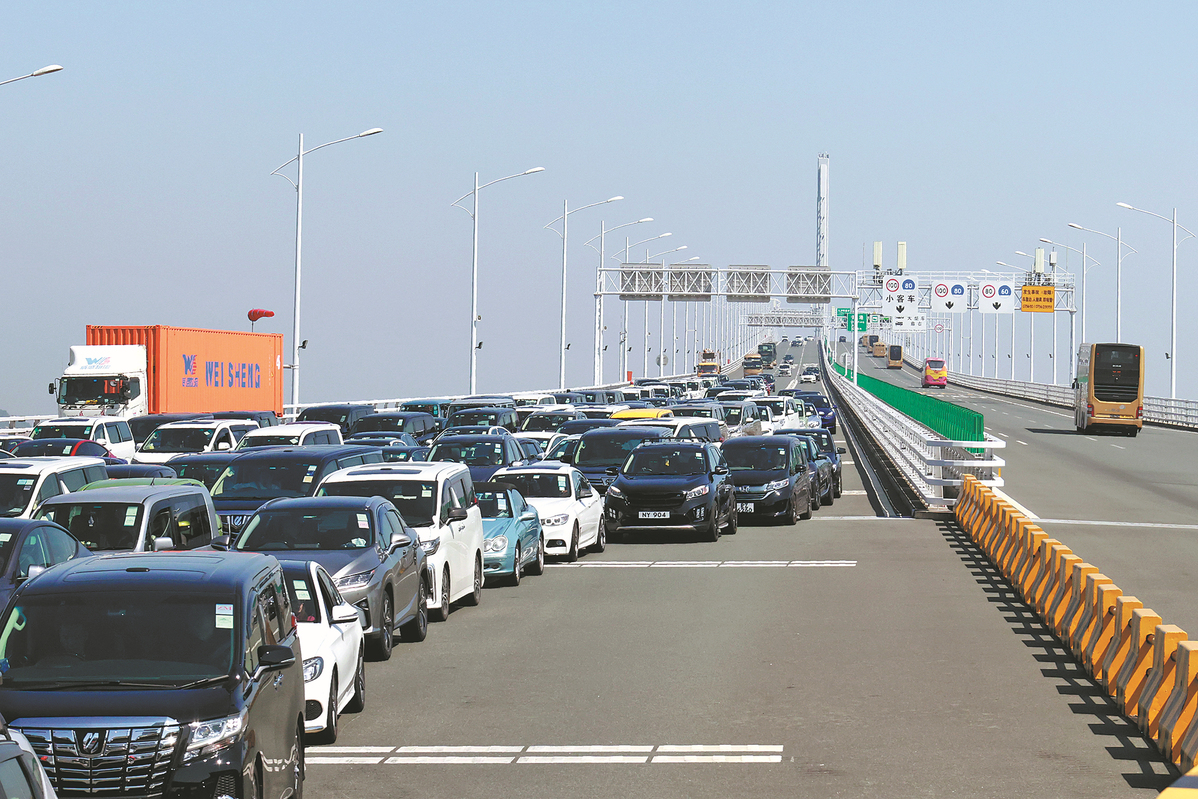
However, to further enhance the region's core competitiveness and seize on the business opportunities, it is imperative to ensure efficient and streamlined customs clearance and cargo flow. In 2018, the Guangdong, Hong Kong and Macao customs bureaus signed a memorandum on cooperative and mutually helpful arrangements for Hong Kong-Zhuhai-Macao bridge ports, with the aim of making customs clearance more convenient by establishing a liaison mechanism. Accordingly, the "Guangdong-Hong Kong-Macao Three-Places-One-Lock Scheme" was launched in March this year, enabling fast, automatic clearance at land ports through the use of e-locks and GPS technology. This will make the cargo clearance process more efficient at border crossings and reduce logistics costs for companies.
Also, easier access to the freight network will make it more convenient for SMEs to take advantage of the region's geography to operate in different locations and maximize their business values. But for that, logistics companies need to optimize the customs clearance process, strengthen infrastructure, and improve operational efficiency while complying with policies and meeting consumer demands.
Guangzhou, Shenzhen and Hong Kong have been the primary development engines of the GBA, and are indispensable to FedEx's growth strategy for the region. Consumers can swiftly connect with the global market through FedEx. For example, the FedEx APAC Hub at the Guangzhou Baiyun International Airport operates more than 200 international flights and 700 trucks per week, connecting South China and Hong Kong.
The integration of the logistics and information technology industries has given rise to smart logistics and digital technology, encouraging an increasing number of SMEs to leverage smart logistics applications to venture into the global markets.
In November 2023, Guangdong province released the "Three-Year Action Plan for Digital Greater Bay Area Construction" in order to promote smart connectivity and logistics data-sharing within the GBA. As a pilot city for international smart ports, Guangzhou has further improved its smart logistics system, which will facilitate the development of intra-regional and cross-border trade based on digital operation and management, intelligent facilities and equipment, and regularized cross-border cooperation.
Today, an increasing number of logistics companies are leveraging digital technologies such as artificial intelligence, big data and the internet of things to provide more efficient, stable and cost-effective cross-border logistics services. This will increase the transparency of the supply chains and improve operational efficiency, reducing the logistics costs for SMEs and paving the way for them to extend their operations to global markets.
The GBA is becoming the leading driving force behind the digital transformation of global trade. The region has seen new forms of trade, including cross-border e-commerce.
As companies in the GBA are subject to different administrative regulations, they need not only standardized logistics services, but also customized logistics solutions so they can easily handle online orders and shipments, meet the needs for transporting special items and heavy cargo, and increase their logistics efficiency and transparency.
An increasing number of logistics service providers are aligning their services with e-commerce platforms to meet the growing needs of SMEs and consumers. By leveraging their extensive industrial experience and market insights, logistics companies can also provide local SMEs with insights into relevant laws and regulations, updates on market developments, analyses of emerging trade patterns in cross-border e-commerce and more, enabling them to seize the business opportunities.
As one of the most dynamic and promising bay areas, the GBA has attracted businesses of all sizes from home and abroad thanks to the lucrative business opportunities it offers. The logistics industry needs to establish close cooperation with these companies by providing more efficient, diverse and smart services, optimizing the region's integrated and high-quality development, so as to achieve sustainable growth.
The author is vice-president of operations, Fed-Ex China. The views don't necessarily reflect those of China Daily.
If you have a specific expertise, or would like to share your thought about our stories, then send us your writings at opinion@chinadaily.com.cn, and comment@chinadaily.com.cn.