


Sculptor's work takes Chinese culture to the world










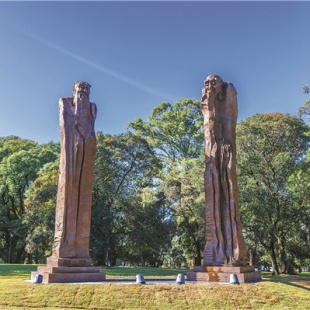
Montevideo Mayor Mauricio Zunino says the sculptures showcase China's profound cultural heritage, and embody great wisdom and value.
The two sages from 2,500 years ago have become a new feature in 300-year-old Montevideo, introducing a new cultural experience to visitors, he says, adding that it will strengthen cultural exchange between China and Uruguay, making the two countries intimate friends.
In the 1990s, while touring museums and antique markets in Western countries, Wu noticed that many of the depictions of Chinese people in art were outdated, rigid, and even deliberately caricatured. The stereotypes deeply saddened him.
Since then, he has been determined to create sculptures depicting outstanding figures from Chinese history, and to introduce these images to a global audience, showing the indomitable spirit and enterprising energy of the Chinese people.
To date, Wu has created over 600 sculptures of prominent figures in the fields of art, culture and science, more than 60 of which have been installed in 30 countries and regions worldwide.
His work includes ancient sages like Confucius, Lao Tzu, and Tang Dynasty (618-907) poet Li Bai, as well as pioneers of cultural exchange such as the monk Jianzhen, and Zen Master Yinyuan Longqi.
"There should be dignified Chinese figures standing tall in the world," says Wu. "These sculptures do not speak, but their images serve as a silent language and are symbols of Chinese culture."
In July 2022, Wu's bronze statue of Jianzhen, who is known as Ganjin in Japan, was unveiled at Shinobazu Pond in Tokyo's Ueno Park. The sculpture depicts the monk, who made six journeys to Japan to spread Buddhist teachings and Tang Dynasty culture, and who lost his sight during a stormy voyage.
According to Japanese seal carver Myohseki Shimura, the sculpture powerfully conveys the spirit of the blind monk, whose heart sees clearly. "It deeply moves everyone who sees it."
Wu voices confidence that sculptures depicting the inner virtues of Chinese culture are appreciated by everyone. "Seeing more of my dignified Chinese sculptures overseas fills me with joy. It's not only recognition of my work but also a testament to China's greatness."
Nikos Kazantzakis, the late giant of modern Greek literature who visited China twice, once said that "Confucius and Socrates were two masks that covered the same face of human logic".
More than 2,000 years ago, many philosophical and literary giants emerged during the golden age of ancient Greece. Among them was Socrates, who was often seen at the Agora in Athens, then a marketplace at the foot of the Acropolis, debating with thinkers, writers and politicians and communicating his ideas.
Roughly at the same time in China, far on the other side of the Eurasian continent, the period of ideological flourishing among the Hundred Schools of Thought — most notably Confucianism — was underway.
Wu's artwork, Divine Encounter — Dialogue between Confucius and Socrates, which now stands in the remains of the ancient Agora, has brought the Chinese sage to the Greek philosopher's hometown.
The statues of the two great philosophers from the East and the West stand side by side as if they have crossed the boundaries of geography and time and are having an exchange of ideas.
"Their intellectual worlds are connected. One emphasized the world of great harmony and advocated the idea that within the four seas, all men are brothers, while the other discussed the ideal form of state and sought to establish a just and orderly society," Wu says.
"This 'dialogue' between them symbolizes a new stage and a new model of cultural exchange and integration between the East and the West," he adds.
Apart from dialogue between philosophers from different cultures, there is also dialogue between artists.
Another artwork of Wu's, depicting Leonardo da Vinci in dialogue with Qi Baishi, is on display in Vinci, the town in the Italian province of Florence, which was the Renaissance master's birthplace.
"Mutual understanding among people comes from the dialogue of ideas," Wu says, adding that through dialogue between civilizations, different countries and ethnic groups can communicate thoughts, share emotions, enhance understanding, and seek common development.