Evolving Sino-Bangladeshi ties lead to promising future









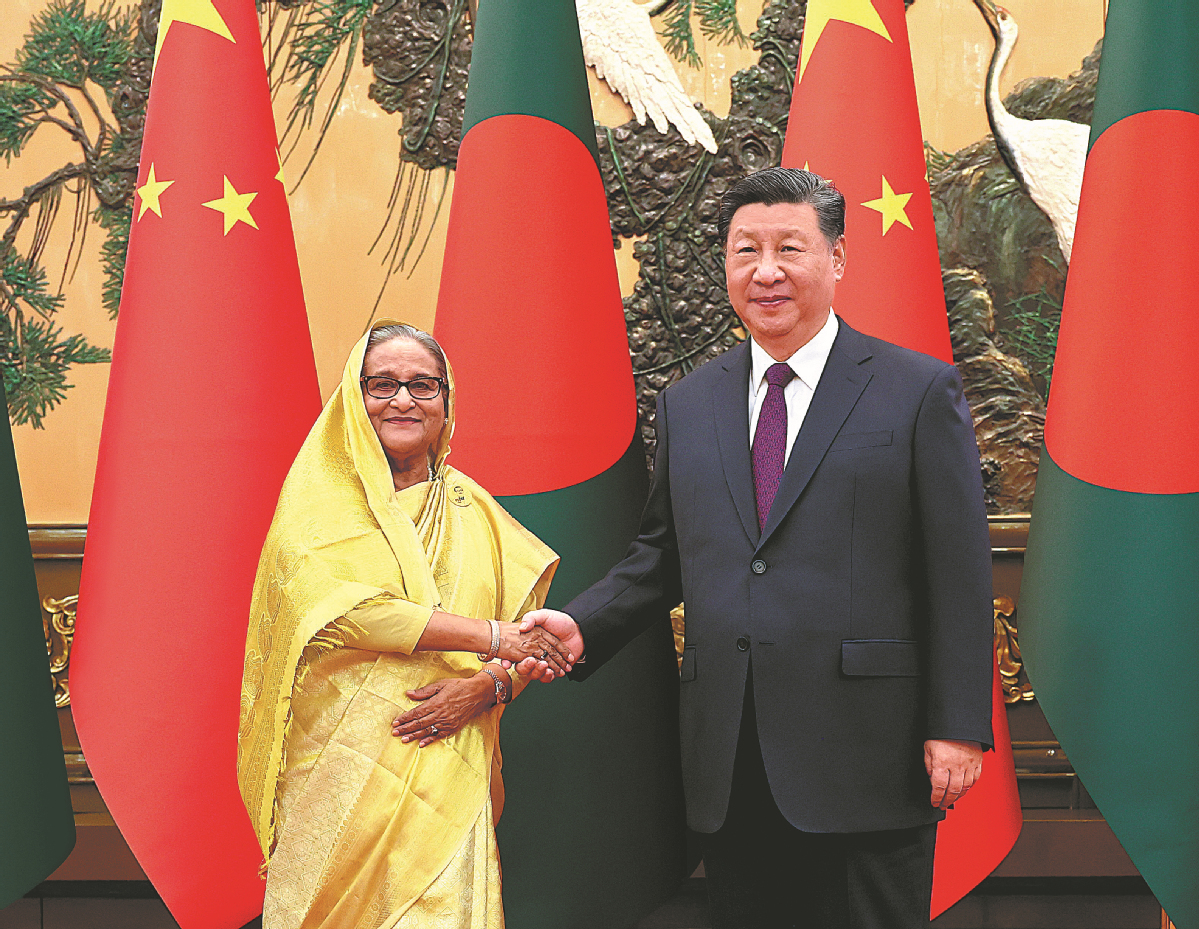
The bilateral relationship between China and Bangladesh has evolved significantly over the past decades, turning into a comprehensive strategic cooperative partnership characterized by economic cooperation, political mutual trust and alignment.
This dynamic relationship, forged by political leaders and diplomatic initiatives, continues to influence South Asia's socioeconomic and political landscapes. As both countries look toward the future, their partnership holds immense significance for regional dynamics and international collaboration.
Even before the two countries established diplomatic relations in 1975, China extended food aid to Bangladesh during the 1974 famine and invited Bangladesh to participate in the Canton Fair.
On Oct 4, 1975, China and Bangladesh officially established diplomatic relations. Since then, the two sides have always supported each other on issues involving core interests and major concerns.
In 1993, Sheikh Hasina visited China as the president of the Awami League party, which marked an important moment in China-Bangladesh relations. Her subsequent visit as prime minister in 1996 led to the flourishing of ties with China. In July 2019, the Bangladeshi prime minister officially visited China again and attended the 13th Summer Davos Forum.
Exchanges between the two countries have been close at all levels, and political mutual trust has grown over the years. In October 2016, President Xi Jinping visited Bangladesh and upgraded China-Bangladesh relations to a strategic cooperative partnership. The historic visit charted the course for the development of bilateral relations.
Hasina visited China from Monday to Wednesday. This was her fifth visit to China and her first in five years. The visit was of historic significance as it enabled the two sides to build on past achievements and elevate bilateral relations into a comprehensive strategic cooperative partnership.
Today, China and Bangladesh have a comprehensive framework for cooperation across multiple sectors, including trade and investment, infrastructure development and people-to-people exchanges. China and Bangladesh are committed to further strengthening their economic ties and fostering mutual development as two major developing countries.
The China-proposed Belt and Road Initiative has been instrumental in driving connectivity and infrastructure development in Bangladesh. Under the framework of the BRI, notable projects such as the Padma Bridge, the Payra Seaport and the Dhaka-Sylhet Expressway have fostered economic growth and sustainable development in Bangladesh.
Additionally, both countries have emphasized the importance of people-to-people exchanges, cultural cooperation and educational collaboration. These initiatives aim to enhance mutual understanding, artistic appreciation and academic advancement, further solidifying the foundation of bilateral relations.
Looking at the future, the prospective trajectory of China-Bangladesh relations holds immense promise. As global dynamics evolve, China and Bangladesh can deepen their alignment and cooperation across various domains. The partnership between the two nations is on track for further expansion and diversification, focusing on sustainable development, green initiatives and technological innovation.
In the economic sphere, both countries are expected to explore new avenues for trade and investment, leveraging each other's strengths and complementarities. Bangladesh's burgeoning textile and garment industry, combined with China's infrastructure development and manufacturing expertise, presents ample opportunities for collaboration and synergistic growth.
From a geopolitical standpoint, China and Bangladesh are expected to continue consolidating their partnership, exploring avenues for mutual security cooperation and regional stability. Given their shared commitment to a peaceful and stable Asia, both nations could have deeper dialogue on regional security architecture, counterterrorism efforts and maritime cooperation.
As global advocates for sustainable development and climate change mitigation, China and Bangladesh are poised to enhance their collaboration in environmental conservation, renewable energy and climate resilience. Leveraging collective expertise and resources, the two countries can play a pivotal role in addressing common ecological challenges and advancing the global sustainability agenda.
Culturally and academically, the prospects for China-Bangladesh relations entail fostering more profound cultural exchanges, promoting language learning programs and expanding educational partnerships. By nurturing a broader understanding of each other's cultural heritage and academic pursuits, the nations can cultivate a solid foundation for long-term friendship and cooperation.
As both nations look to the future, strategic steps focused on economic cooperation, balanced diplomatic relations, diversification of trade and technological and educational exchanges will be essential. Environmental sustainability, cultural diplomacy and participation in multilateral platforms will also be critical in ensuring that the relationship remains mutually beneficial and resilient.
Moreover, investing in human resource development, crisis management, humanitarian cooperation and leveraging soft power and public diplomacy will further strengthen bilateral ties. Establishing joint research and development centers, enhancing legal and regulatory frameworks, and being vigilant about geopolitical shifts are crucial for sustaining and advancing the partnership.
As Bangladesh continues its journey toward economic growth and development, leveraging China's economic prowess while safeguarding its national interests will be vital. With careful management and strategic planning, the partnership between the two countries can serve as a model for other developing nations navigating the complexities of global diplomacy. This evolving relationship, grounded in mutual respect and shared goals, promises significant economic growth and regional stability, benefiting both nations and the broader South Asian region.
The author is general secretary of the China Bangladesh Friendship Center and president of the Asian Club Limited.