Structural reforms key priority area
Measures seen as crucial to fostering new quality productive forces, development









Structural reforms to boost technological innovation and drive industrial upgrading will be among the key priorities of China's policymakers to foster new quality productive forces and promote high-quality development over the next few years, said economists and entrepreneurs.
They said the country will likely further deepen structural reforms and expand high-standard opening-up to revive confidence in its long-term economic trajectory, which will help tackle economic woes, foster new competitive edges and deal with pressures and headwinds from a more complicated external environment.
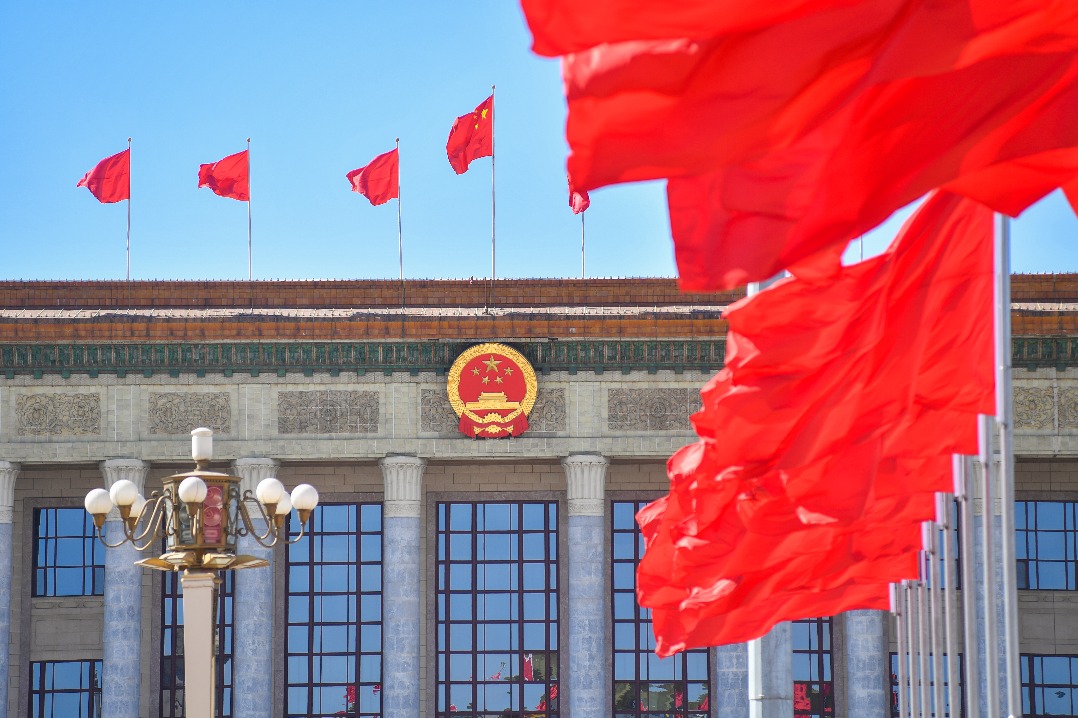
Their comments came as the market is eagerly awaiting clues about major economic strategies for the next few years from the ongoing third plenary session of the 20th Central Committee of the Communist Party of China, which is being held in Beijing from Monday to Thursday.
President Xi Jinping shed light on the likely economic priorities as he chaired a symposium in May in Jinan, Shandong province, that was attended by representatives from businesses and academia.
Xi, who is also general secretary of the CPC Central Committee and chairman of the Central Military Commission, stressed the need to further deepen reform across the board, with efforts centering on advancing Chinese modernization.
He said that China should take resolute steps to remove the ideological and institutional barriers hindering the advancement of Chinese modernization, and double down on its efforts to resolve deep-seated institutional challenges and structural issues.
Jeremy Zook, lead analyst for China at Fitch Ratings, said the country will primarily focus on reemphasizing many of the policy themes that have already been laid out by the central authorities for the medium term.
"These are a sustained focus on developing new high-value-added industries through investment and domestic technological innovation and enhancing domestic supply chain resilience," Zook said.
Robin Xing, chief China economist at Morgan Stanley, said China will likely sustain the economic framework that has taken shape in recent years, prioritizing choke points in supply chain self-sufficiency and tech innovation.
Senior China researchers and analysts said they believe the metric of China's success will be total factor productivity with a highlighted focus on new quality productive forces and new technologies.
Joe Ngai, chairman of management consultancy McKinsey China, said that he believes innovation will remain the biggest driver boosting China's economic growth in the long term.
"Innovation and technology will have to drive the future. And for us, these are the new quality productive forces," he said.
In an article published in early June in Qiushi Journal, the flagship magazine of the CPC Central Committee, Xi said the relations of production must be adapted to the requirements for developing productive forces, adding that new quality productive forces are providing powerful impetus and support for high-quality development.
He said that China needs to further reform the economic structure and scientific and technological systems to remove the bottlenecks impeding the development of new quality productive forces. And it also should expand high-standard opening-up and work to create a favorable international environment, he said.
Sun Xuegong, director-general of the department of policy study and consultation at the Chinese Academy of Macroeconomic Research, said,"We need to reform the scientific and technological system, education systems and talent systems to develop new quality productive forces and drive innovation."
Sun said he expects to see the accelerated building of a modern industrial system and a more enabling environment to foster leading companies featuring high technology, high efficiency and high quality, in a bid to boost advanced productivity freed from traditional economic growth modes and productivity development paths.
Tian Xuan, associate dean of Tsinghua University's PBC School of Finance, highlighted the need to address the pressing issues of hidden restrictions on market entry, regional protectionism and market segmentation, saying that more steps are needed to speed up the building of a more unified national market, promote the free flow of production factors such as talent, capital and data and provide a more level playing field for domestic and foreign companies alike.
"Such a series of institutional arrangements will help drive scientific and technological innovation, and leverage China's strength as a large economy with an ultra-large domestic market and a complete industrial system."
Zhu Guangyao, former vice-minister of finance, said that China needs to deepen reform and opening-up to promote innovation and facilitate the development of its private sector, to further unleash growth potential in new energy and artificial intelligence industries, leveraging its existing advantages.
"The country should provide more support to the private sector and deepen reform that encourages sci-tech research and industrial applications," Zhu said.
Anu Rathninde, president of Johnson Controls Asia-Pacific, hailed China's ongoing efforts to deepen reform and expand opening-up, saying that "as China's economy grows, the foreign enterprises grow and benefit equally".
He said that as long as the government is committed to supporting enterprises in innovation and upgrading through reforms and creating an environment where foreign and local companies can compete on a fair and equal footing, it will generate increasing growth opportunities for stakeholders both domestically and internationally, thereby boosting China's long-term development.




- Senior Xi'an official facing probe by China's anti-corruption watchdogs
- Philippines risks creating trouble for itself: China's defense ministry
- Newborn with congenital heart disease receives life-saving surgery in Yunnan
- Hong Kong charity signs diplomatic talent deal with Beijing university
- Aircraft carrier Fujian, commissioned
- Erdos offers 10,000 yuan subsidy for families having third child