First batch of satellites for network launched









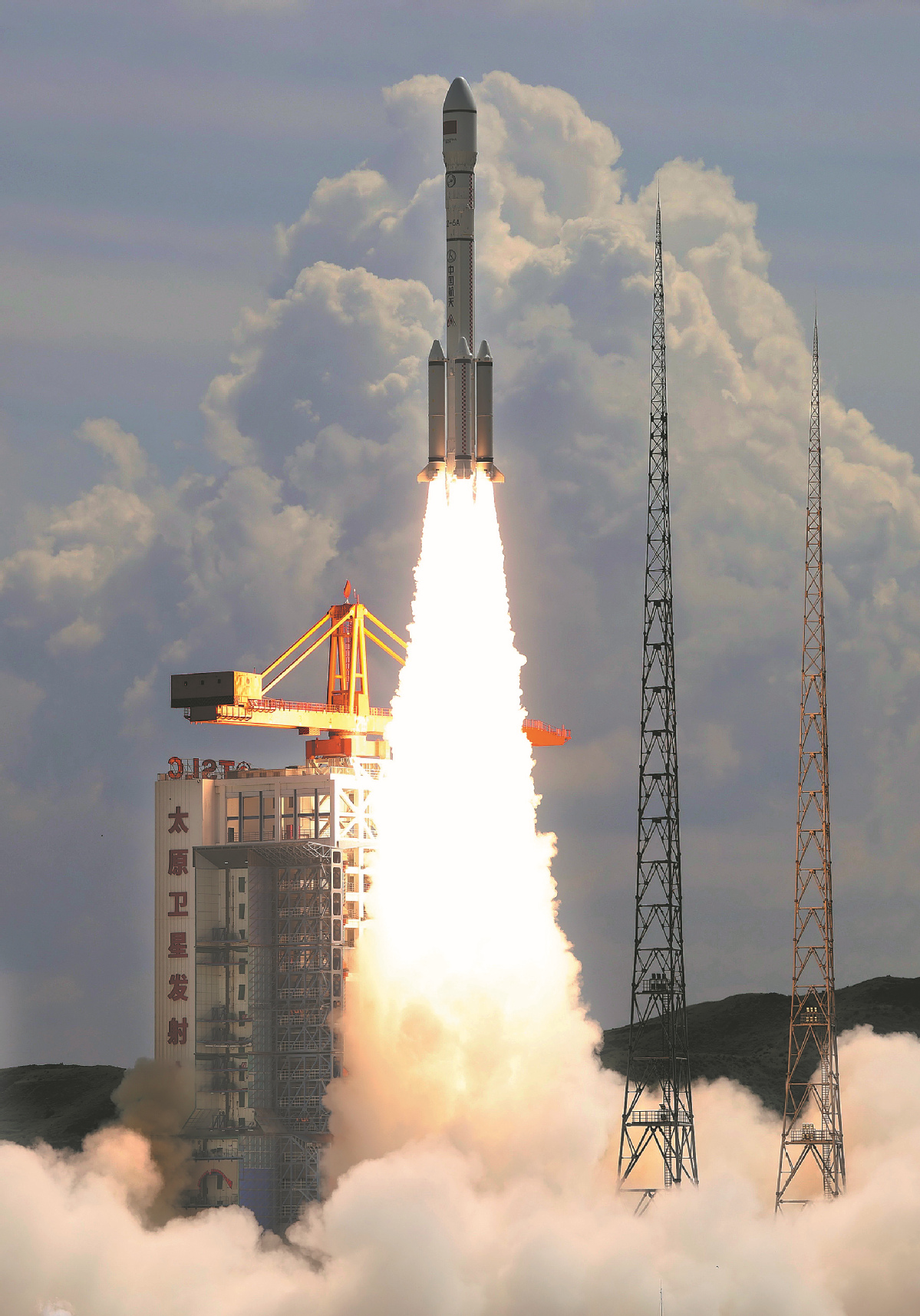
China launched a group of 18 communications satellites from the Taiyuan Satellite Launch Center in Shanxi province on Tuesday afternoon.
With a combined weight of 4.8 metric tons, the plate-shaped satellites, the first batch of the Qianfan network to be deployed in orbit, were carried by a Long March 6A rocket that blasted off at 2:42 pm and soon arrived in their preset orbit.
Developed by the Shanghai-based company SpaceSail, the Qianfan network will provide high-speed, secure and reliable broadband internet services to users around the world. It is designed to consist of as many as 10,000 satellites traveling in low-altitude orbits before the end of 2030, according to the company. The space-based system was previously known as the G60 network.
The first 18 satellites were designed and built by the Chinese Academy of Sciences' Innovation Academy for Microsatellites in Shanghai, which has also been given contracts for another 306 satellites in the Qianfan network.
According to the project plan, 648 satellites will be deployed by the end of next year to form the first version of the Qianfan network, which some observers have called China's answer to SpaceX's Starlink constellation.
Yang Yuguang, a senior space industry observer in Beijing and vice-chairman of the International Astronautical Federation's Space Transportation Committee, said on Tuesday that compared with satellites traveling in high-altitude orbits, low-orbiting satellites can respond to users faster, and can cover more places, especially those in high-latitude regions, so they are better suited for space-based internet networks.
However, building and running a massive low-orbit satellite system is never easy, he said, explaining that it requires state-of-the-art techniques to maintain the positional accuracy of a large group of satellites as well as reusable carrier rockets that can promise affordable launches.
State-owned and private rocket makers in China have been making all-out efforts to eventually develop reusable rockets to meet the rising demand from satellite companies, Yang said.
The Long March 6A rocket model was developed by the Shanghai Academy of Spaceflight Technology as a medium-lift launch vehicle. It consists of a 50-meter, liquid-propelled core booster and four solidfuel side boosters. The core booster has a diameter of 3.35 meters and is propelled by two 120-ton-thrust engines burning liquid oxygen and kerosene. The rocket has a liftoff weight of 530 tons and is tasked with transporting satellites to multiple types of orbit, including sun-synchronous, low-Earth and intermediate circular orbits.
Contact the writers at zhaolei@chinadaily.com.cn




- 'Separatist fallacy' of Lai Ching-te 'doomed to fail'
- Shanghai Symphony Orchestra rings in the new year
- New power station opens in Shanghai
- Series on Shanghai revolutionary sites airs
- Xu Beihong's horse-themed art exhibition opens in Shanghai
- China has enhanced social safety net: government minister