20-year-old biobank persists in efforts to prevent diseases









The China Kadoorie Biobank is set to begin its fourth follow-up investigation of people who participated in its epidemiological survey next year, continuing its efforts to monitor and study chronic diseases across the country as it celebrates its 20th year of existence.
Jointly established by Peking University and the University of Oxford, CKB has conducted a survey covering 513,000 participants in five urban and five rural areas of China. Since 2004, blood, urine, feces and saliva samples from subjects age 30 to 79 have been collected to create one of the world's largest biobanks, comparable to the UK Biobank.
Li Liming, principal investigator and director of the Peking University Center for Public Health and Epidemic Preparedness and Response, highlighted CKB's contributions to researching major chronic diseases such as stroke, coronary heart disease, cancer, diabetes and high blood pressure. These studies investigate the genetic, environmental and lifestyle factors that pose risks to the health of the Chinese population.
"The research aims to provide scientific evidence for the development of disease prevention strategies in China and introduce new treatment and intervention methods," Li said during an event marking the 20th anniversary of the biobank in Beijing on Saturday.
CKB conducts follow-up investigations every four to five years on about 5 percent of its survey participants to track long-term changes in their lifestyles, living environments and health conditions. The biobank is linked to the national death registry and major chronic disease surveillance systems, gathering information from clinical records and health insurance databases.
Since the survey's inception, CKB has recorded 93,000 deaths and 177,000 disease incidents, primarily strokes, heart disease and cancers, according to Li.
The biobank houses more than 2.5 million samples stored in ultralow temperature freezers and liquid nitrogen tanks. Its database, which holds 485 terabytes of data, has been secured with network safety protocols, and all data is anonymized to protect participants' privacy.
CKB data has led to the publication of 510 papers, 390 of which appeared in top medical journals such as The New England Journal of Medicine, The Lancet, JAMA and BMJ. Notable findings include evidence that moderate alcohol consumption does not prevent cardiovascular disease — as other medical studies have indicated — and, in fact, increases the risk of 61 diseases among Chinese men, including tumors and liver cirrhosis. Another study revealed that eating spicy food may reduce the risk of esophageal and rectal cancer.
The biobank also found that adopting healthy lifestyle habits, such as eating fresh fruit and staying physically active, can extend the life expectancy for men by 8.8 years and for women by 8.1 years.
Since 2016, the CKB Data Access System has been available to researchers worldwide. In December 2023, Peking University signed an agreement with BGI, a genomic sequencing company, to collaborate on the whole-genome sequencing, metagenomics and biochemical tests of the biobank's samples. As of Sept 1, 31.7 percent of the samples have been sequenced, according to Li.
Chen Junshi, an academician with the Chinese Academy of Engineering and co-chair of the CKB Executive Committee, emphasized the importance of integrating technologies such as big data and artificial intelligence into the project to contribute Chinese insights to global health initiatives. He also noted the project's commitment to using new media to enhance public health awareness and promote disease prevention strategies.
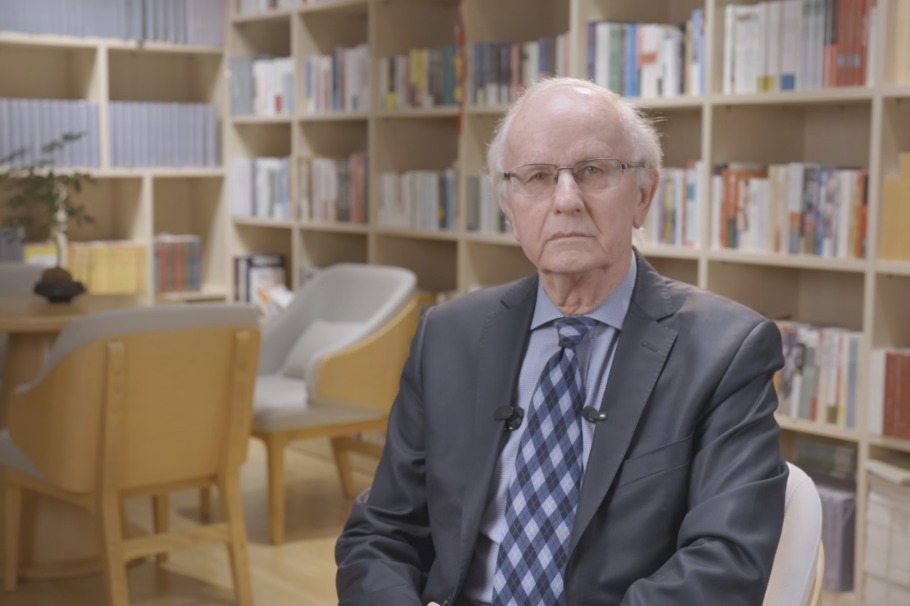
Richard Peto, co-chair of the CKB Executive Committee and emeritus professor at the University of Oxford, praised CKB for advancing research that benefits global well-being and called for increased international collaboration to further deepen medical research.




- Intl students showcasing global business acumen in Shanghai
- CPC expels former senior official of Guangxi
- Shanghai university unveils sustainable, efficient water treatment system
- Fire at auto business park in Jiangsu claims one life
- Magnitude 6.0 earthquake strikes Akqi county in Xinjiang
- Shenzhou XXI team to carry out first spacewalk