Nation honors rocket scientist posthumously









Wang Yongzhi, one of the most renowned rocket scientists in China who played a leading role in the country's manned spaceflight endeavors, has been given the nation's top honor posthumously.
According to an order recently signed by President Xi Jinping, Wang, who passed away in Beijing at 91 in June, was among the four distinguished figures awarded with the Medal of the Republic, China's top honor.
Wang was the second scientist in China's space community to be given the Medal of the Republic, following Sun Jiadong, a top rocket and satellite researcher who was awarded in 2019.
Born into an impoverished farmer's family in Changtu county, Liaoning province, in November 1932, Wang was the fifth of seven children. At age 7, he became the first person in his family to attend school. He studied very hard and was deemed by his teacher as a truly gifted student.
Once he reached middle school, his studies were interrupted due to his family's inability to pay tuition fees as well as disruptions from the War of Liberation (1946-1949).Thanks to his class master's persuasion and help, Wang was able to complete his studies and achieved high marks.
During the years at school, the young student witnessed the corruption of the Kuomintang government and the struggle for people's liberation and national independence that was led by the Communist Party of China, which eventually turned him a communist sympathizer and then a member of the CPC-led youth league.
In November 1949, right after the founding of the People's Republic, he joined the CPC at school.
Upon graduating from a middle school in Shenyang, capital of Liaoning, in 1952, Wang was admitted to Tsinghua University's aeronautics department to learn how to design combat aircraft.
One year later, Wang was selected to study in the former Soviet Union. He attended a Russian language training class at another university in Beijing before his departure.
In 1955, he arrived at the Moscow Aviation Institute to study aircraft design. However, two years later, Wang changed his major after learning that China needed some students to learn how to design carrier rockets and ballistic missiles.
In the summer of 1961, Wang graduated from the Moscow institute and returned to China.
He was assigned to the Ministry of National Defense's Fifth Academy — now known as the China Academy of Launch Vehicle Technology — to begin his career as a missile designer.
At the academy, Wang took part in the research and development of six types of ballistic missiles, including the DF-2, China's first domestically developed ballistic missile, and the DF-22, a long-range ballistic missile model whose development was later abandoned. Most notable was his role as the deputy chief designer of the DF-5, China's first intercontinental nuclear-capable missile that remains one of the nation's strategic deterrence pillars.
Wang also participated in the design of two carrier rocket models, laying the groundwork for China's future spacefaring ambitions.
In 1978, he was given a prominent position at the general design department of the China Academy of Launch Vehicle Technology.
He was named deputy head of the academy in 1980 and then became its president in 1986.
As president, the scientist guided the design and production work of new types of missiles and rockets and also played a leading role in Project 863, which was a national high-tech project launched in November 1986.
In 1991, Wang was promoted to deputy head of the former Ministry of Aerospace Industry's science and technology commission. There, he was the chief designer of a number of rockets and missiles.
The following year, he was named the first chief planner of the nation's manned space program, despite the fact that he was already 60.
In an interview with China Central Television, Wang recalled that he knew that the post would bring him a great deal of pressure.
However, he told the State broadcaster: "The project was to realize the Chinese nation's dream of flying into heavens. So I must persist no matter how big the pressure could be."
In 1994, Wang was transferred to the former Commission for Science, Technology and Industry for National Defense and was given the military rank of major general. The move was made to better position him to head the manned space program.
He was also elected one of the founding academicians of the Chinese Academy of Engineering that year.
Under the scientist's leadership, the country succeeded in its first manned spaceflight in October 2003, established a robust research and manufacturing infrastructure for manned space programs and trained a large group of skilled spacecraft researchers and engineers.
For his valuable contributions to China's space program, Wang received the nation's top science and technology award in 2004.
In October 2005, he saw the success of China's second crewed spaceflight.
In 2007, Wang was relieved of his post of chief planner, but he did not retire and instead, was appointed head of planners for the nation's space station.
"What the motherland needs determines the direction of our efforts," he told CCTV in an interview. "The universe is infinite, and humanity's exploration is boundless. When you look back upon the past, what we've done might seem to be no big deal. The generations after ours will undertake new missions that will be more magnificent."

- National Games vibe is everywhere in Guangzhou
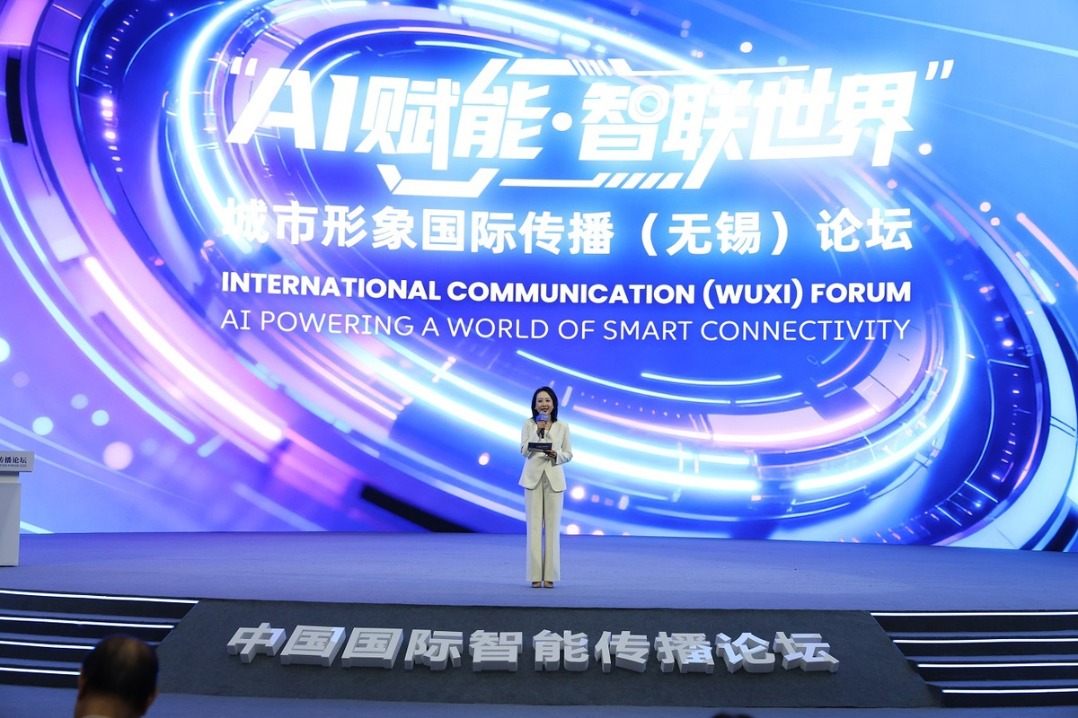
- Forum unites global experts to enhance city image communication
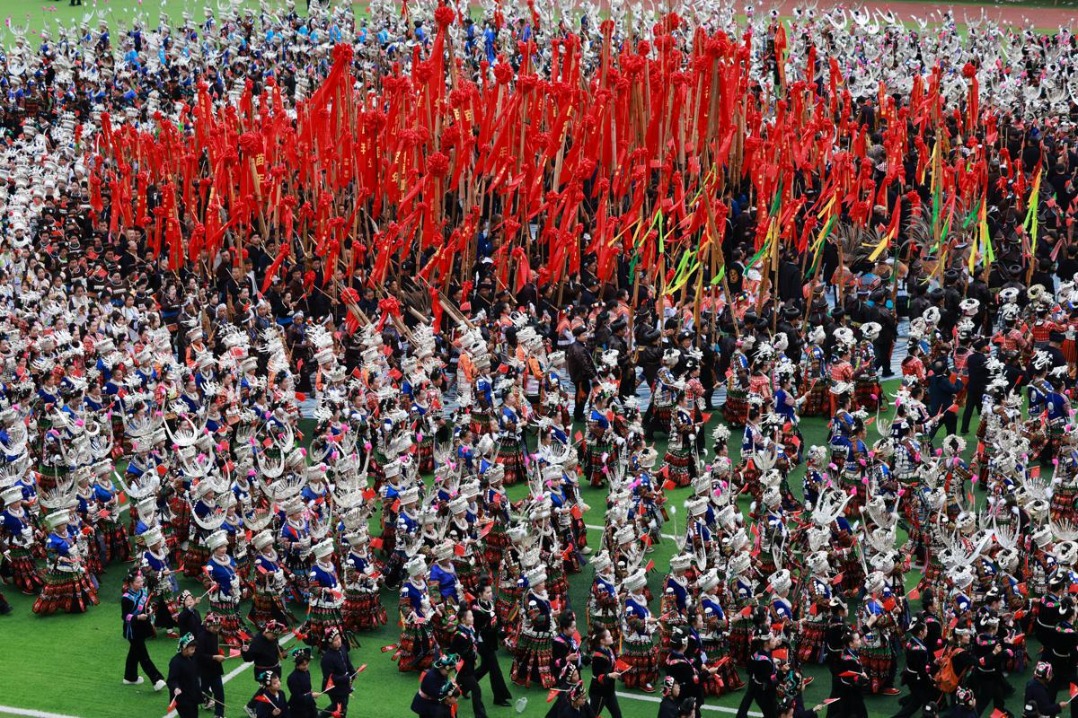
- Miao New Year celebrations get underway in Guizhou's Leishan county
- Mainland spokesman reiterates stand on Taiwan
- Fujian county's rural development becomes a big draw for Taiwan investors
- Nobel laureate in chemistry: Give young scientists more independence