X-ray images, lunar farside soil shed more light on moon









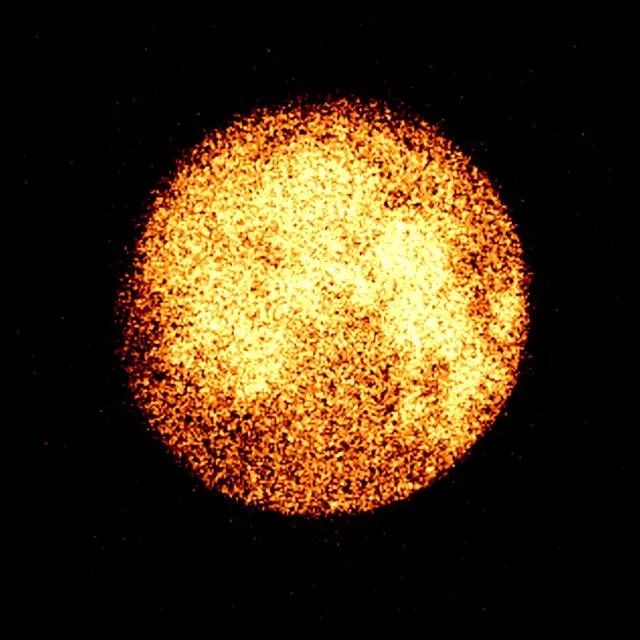
The Einstein Probe X-ray astronomical satellite transmitted X-ray images of the moon back to Earth on Tuesday, which was Mid-Autumn Festival.
This marks the first time that Chinese scientists have obtained a complete X-ray image of the moon using a self-developed space telescope.
X-ray fluorescence radiation generated by lunar elements excited by X-rays from the Sun can reveal the distribution of various elements on the lunar surface, said Chen Yong, a researcher at the Institute of High Energy Physics of the Chinese Academy of Sciences.
Since the X-ray characteristic energies of different elements are distinct, studying X-ray images of different energies on the lunar surface can uncover the presence of multiple elements. However, this X-ray radiation cannot penetrate the Earth's atmosphere.
As a result, scientists typically utilize specialized X-ray satellites for observations outside the atmosphere, he added.
This year's Mid-Autumn Festival fell when the moon was near its perigee in the Earth-moon orbit, so the moon appeared about 14 percent larger than a typical full moon and shined brighter, earning it the title of "supermoon". This presented a great opportunity for astronomical observations.
In another lunar-related development on Tuesday, Chinese scientists revealed the nature of the lunar farside samples returned by the Chang'e 6 mission in a paper published in the National Science Review, illustrating how it exhibits distinct characteristics compared with previous lunar samples.
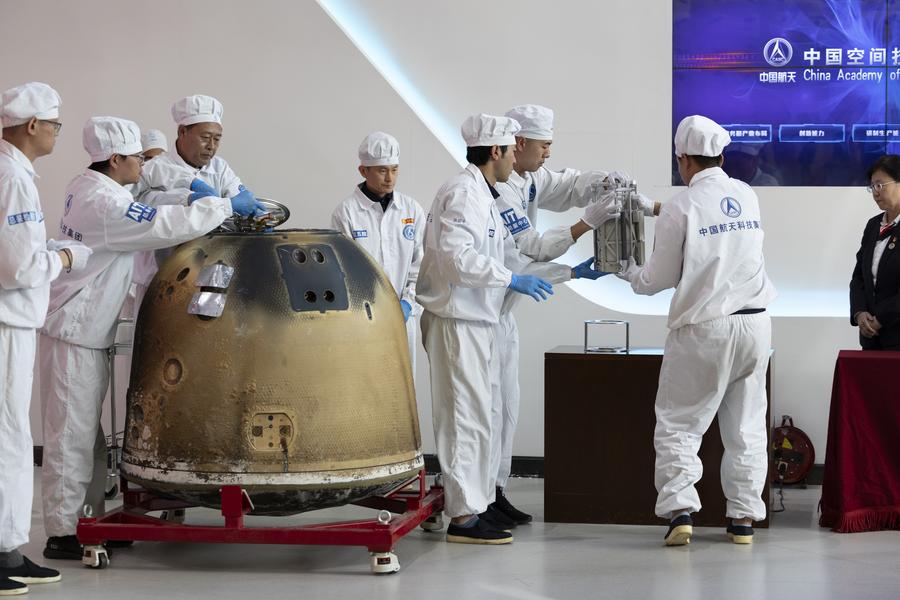
The Chang'e 6 lunar probe in June took 1,935.3 grams of soil samples from the South Pole-Aitken basin, the largest, deepest and oldest impact basin on the moon, marking the first time that scientists collected samples from the far side of the moon.
The samples returned by the Chang'e 6 provided direct evidence for studying the early evolution of the moon, farside volcanic activity and impact history, according to the paper's authors.
The study was co-authored by a team led by Li Chunlai from the National Astronomical Observatories of the Chinese Academy of Sciences, Hu Hao from the China Lunar Exploration and Space Engineering Center of the China National Space Administration, and Yang Mengfei, an academician of the Chinese Academy of Sciences.
The researchers examined the physical, mineralogical, petrographic and geochemical properties of the lunar samples from Chang'e 6, and found that the soil has a lower bulk density and true density compared with Chang'e 5 samples, which were collected from the moon's nearside. This indicates a looser structure with higher porosity.
The study also found that Chang'e 6 soil is a mixture of local basalts and nonbasalts, and contains diverse lithic fragments, including local mare basalt, breccia, agglutinate, glasses and leucocrate.
"These local mare basalts document the volcanism history of the lunar farside, while the nonbasaltic fragments may offer critical insights into the lunar highland crust, South Pole-Aitken impact melts, and potentially the deep lunar mantle, making these samples highly significant for scientific research," the study said.
Soil samples collected from six Apollo missions, three Luna missions and the Chang'e 5 mission have been essential to learning about the moon, and with the new findings, scientists have gained a greater understanding of the moon's evolutionary history.
For example, the study of Chang'e 5 lunar samples has indicated that magmatic activity existed until 2 billion years ago, challenging the prevailing understanding from the Apollo missions, which suggested that lunar magmatism ceased 3 billion years ago, according to the paper.
Through further in-depth research on these precious samples, there is potential to deepen people's understanding of the internal structure, material composition, and formation and evolution processes of the moon, thereby advancing the vibrant development of lunar and planetary science, according to the research team.




- China launches new satellite
- China's railway passenger trips hit new record in first 11 months
- Wondrous Xinjiang: High on the plateau, guardians keep watch over pristine wilderness
- Ningxia students recreate masterpiece with paper-cutting
- China's railway network hits record 4.28 billion trips
- HK blasts 'despicable' Western smears after Jimmy Lai verdict