Neo-Chinese fashion shines on international catwalks
Designers pay homage to their roots by drawing upon traditional culture and countryside










Both Chinese and international artists have appreciated Shao's recent designs. Chinese singer Hua Chenyu wore SISIO at his concert, and US singer Cyndi Lauper also purchased one of her pieces.
"If I can keep going, eventually more people will notice my brand and the ideas I convey," she said.
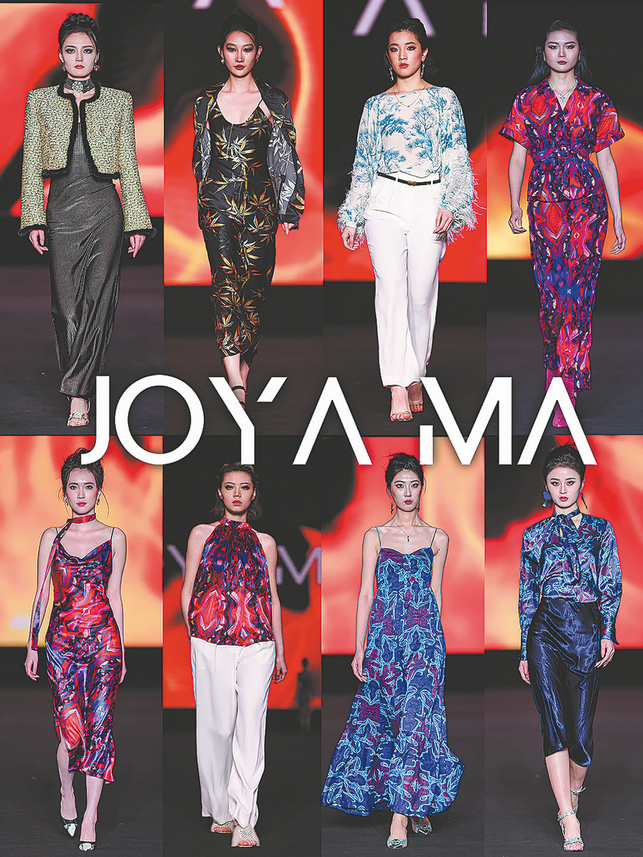
Joya Ma, designer and founder of her eponymous brand, explained her approach to fashion design to China Daily.
"I want to bring Chinese culture, my Chinese heritage and the culture of the Asian minority community to the world. I hope that everyone can enjoy and appreciate the beauty, and I wish for all women to be able to wear it," she said.
Ma's brand, JOYA MA, was founded in New York, a hub for fashion and different cultures. "It's a place where I can truly be myself," she said.
She was born in Los Angeles but has spent her life in New York, Shenzhen, Hong Kong, Arizona and traveling, which has informed her work.
"Empowering women to express themselves boldly and fearlessly" is one of her main messages, and is aimed especially at Chinese women.
Ma also aspires to promote her brand as a luxury label that can stand shoulder-to-shoulder with big names in the industry.
"Many major luxury brands incorporate elements of Chinese New Year in their designs," she said. Influential celebrities and bloggers often choose to wear clothing with Chinese elements during traditional festivals, on stage, or the red carpet.
"With Asian American culture gaining more influence internationally, people who share my Chinese heritage find a deeper connection in my work, which is why they choose my designs," she said.
Ma's brand has been featured at multiple Asian American charity galas. Her latest collection, Dragoness, presented at Beijing Fashion Week, celebrates Chinese New Year with bold designs that include elements such as the traditional qipao, cutouts and lace.
Ma's work also integrates many Western elements. She said that her interest in abstract art has led her to use bold, vibrant colors in her designs, challenging perceptions of "Chinese style".
"Chinese elements can be combined with modern aspects to create many breakthroughs. Even though my designs are inspired by Chinese style, I want to innovate further so that the clothing can better align with the international market," she said.
"Chinese elements take on different characteristics when mixed with local cultures around the world," she said. "As I've traveled and lived in different places, I've noticed that people's perceptions of Chinese culture can be quite different. The challenge in designing clothes is figuring out how to create pieces that resonate with people everywhere, and that's something I'm always working on."
Also, as a Chinese American, she wanted to not only showcase her clothes but also share the stories behind each Chinese element she incorporates. She explains the history and significance of these elements to her audience.
Reflecting heritage
Su Hanwei, founder and chief designer of Maison De Hoe, told China Daily that she wants her brand to reflect her heritage.
"Living abroad, I'm naturally seen as a Chinese designer. So, I really want to promote and embrace my Chinese DNA and culture, and also, being a woman, is another identity of me," she told China Daily. "Creating this brand took a lot of time and (much) reflection for me. As a designer, I had to think about which topics would remain constant and important to me."
In addition to the neo-Chinese approach that draws from Chinese history and philosophy and new methods of reimagining Chinese traditional clothing, Su's brand, Maison De Hoe, incorporates elements of the Chinese countryside and the metropolis of New York City.
"A vibrant part of modern Chinese culture comes from the time of our grandparents, (which is) deeply rooted in rural farming traditions," she said.
Some of her design inspirations come from Northeast China squaredancing, along with the lace covers people used to protect their furniture from dust, and also enamel bowls, cups and basins with intricate designs that were popular in China in the 1980s and 1990s.
"These seemingly rural elements are nostalgic items for Chinese seniors and are often featured in videos that young people watch today. People of all ages have different interpretations of 'rustic culture'," she said. "This artistic expression reflects a kind of ideological resonance among contemporary Chinese youth. It conveys this in a humorous way.
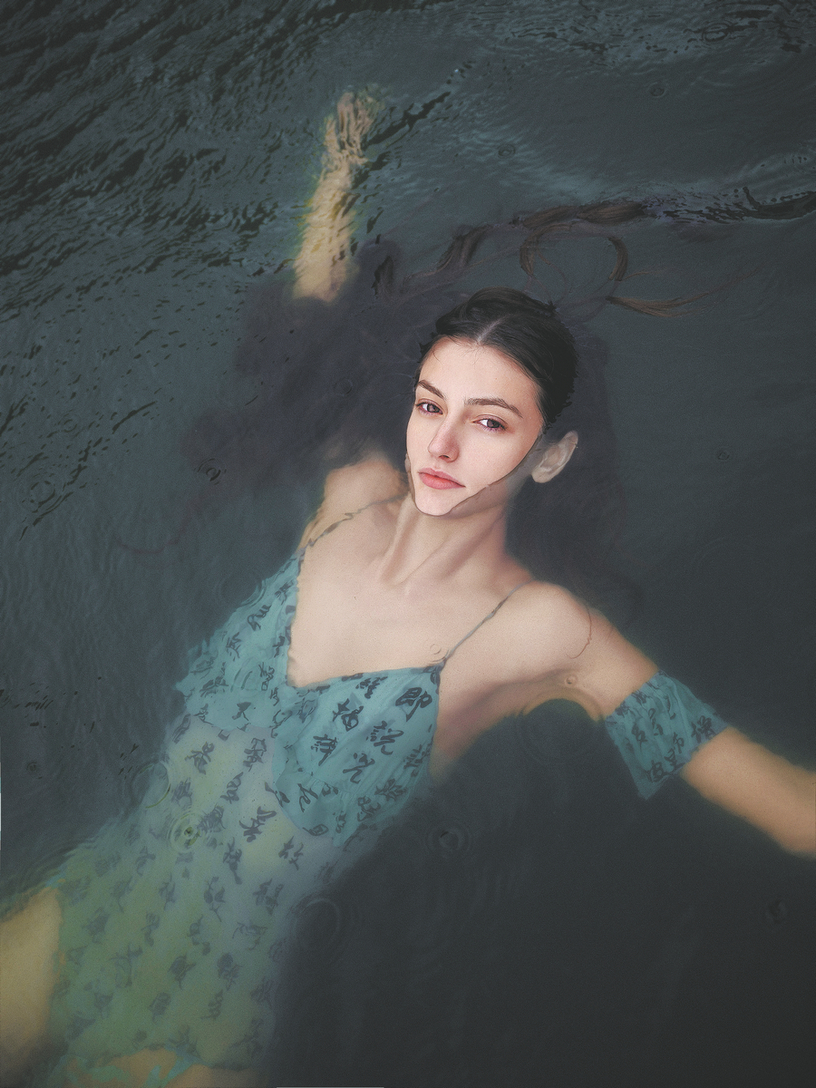
"In recent years, Chinese fashion has started to gain international recognition. When people talk about new Chinese style, they often refer to qipao frog buttons and hanfu. But the current culture is sometimes overlooked, and they are the fashion elements that are most innovative, everyday and widely used in modern society and short-video platforms," she said.
The brand has also been featured on catwalks in New York and Paris, featuring music by the Chinese rock band Second Hand Rose. The band blends traditional Chinese elements, such as suona, a woodwind instrument, and drums, with Western rock music, creating a unique fusion that complements her clothing.
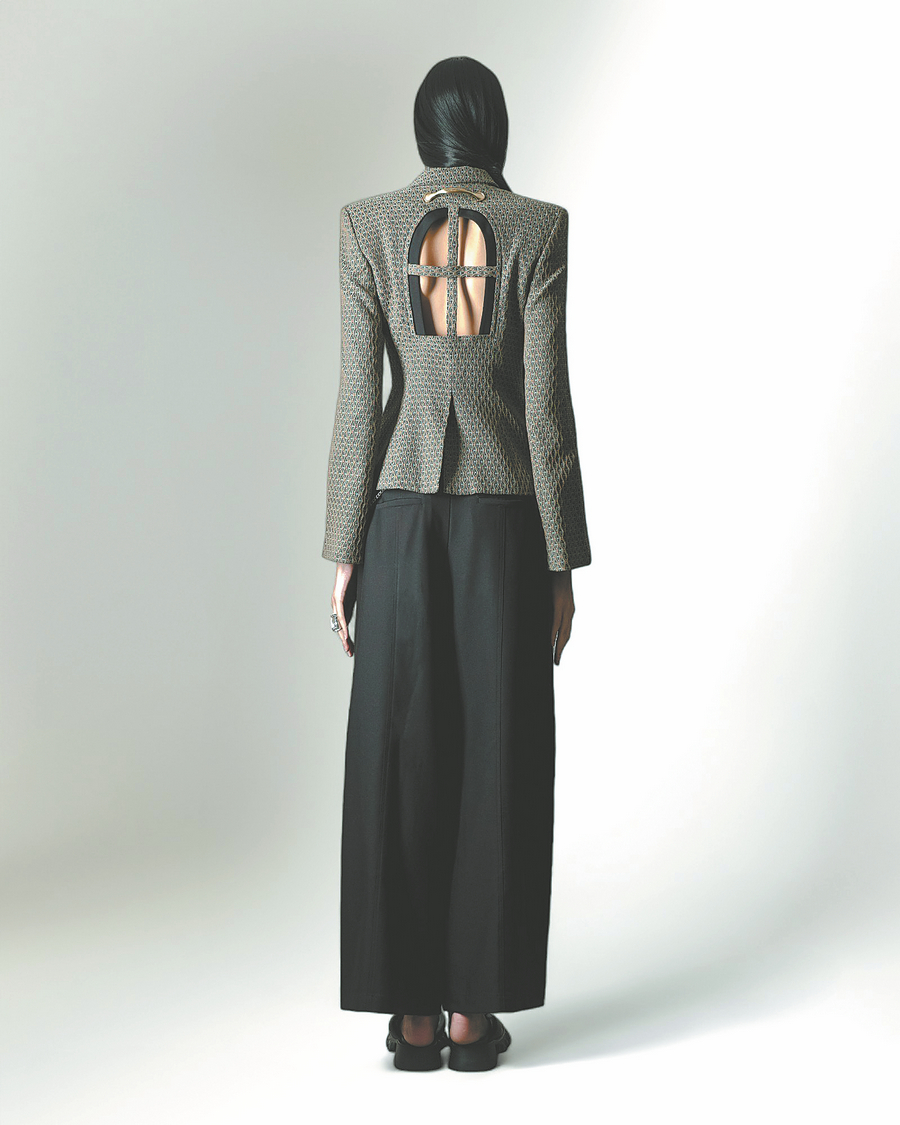
Su's designs also feature a cutout window on the back of the outfit, resonating with audiences worldwide by evoking rural culture.
"I was born in the countryside and when I was left alone at home, my connection to the outside world was through the window. I'd watch from the living room, stare outside, or watch TV and now we look at our phones to see what everyone else is up to," she said.
"So, I hope this window design becomes a gateway for cultural exchange between China and the rest of the world, allowing our clothing and Chinese culture to reach a wider audience."
"The rural culture of China countryside can be fashionable," she said. "This allows foreigners who may not be familiar with China to better understand Chinese farmers and agricultural culture, as well as the more grounded fashion culture that Chinese youth are starting to embrace."