China's bid to help green transition good for the world









When I attended a seminar on climate change in Brussels on Tuesday morning, the biggest question on my mind was how the rising geopolitical tensions have undermined global solidarity and cooperation in the fight against climate change.
Jean-Marc Jancovici, an expert on low-carbon economy, soberly reminded the audience that global temperatures had already risen more than 1.5 degrees Celsius from the pre-industrial levels, a harsh reality that some scientists sounded the alarm in July.
While climate change is regarded the biggest threat to the planet and, therefore, humanity, the United States has over the past years tried to portray China, including China's green industry, as its biggest threat. The US has been engaging in zero-sum games by claiming China's green products pose a national security threat to the US and the rest of the world.
US President Joe Biden's announcement in May, imposing 100 percent tariff on Chinese-made electric vehicles, 50 percent on Chinese-made solar cells and 25 percent on EV batteries and parts are typical protectionist moves that hurt China's green industry, as well as US consumers by denying them affordable but quality green products.
As a result of such policies, the US' green transition will slow down and become costlier.
Similar is the case of Canada, where Prime Minister Justin Trudeau's government blindly follows in the US' footsteps.
The European Union, too, has decided to impose tariffs up to 35.3 percent on Chinese-made EVs despite a sharply divided vote. The good news is that the EU and China are continuing their negotiations in order to find a solution and avoid a potential trade war.
A European Commission spokesperson did not directly address my questions when asked if such tariffs would slow down the EU's green transition, especially its goal of phasing out new fossil fuel cars by 2035, a big concern for many European experts.
Just last week, the European People's Party, the largest political party in the European Parliament which European Commission President Ursula von der Leyen belongs to, posted a message on its website urging the EU to change its planned ban on combustion engines.
The fact that both the US and the EU have been undermining and fearmongering about Chinese-made green products is something that should be discussed at the 29th UN Climate Change Conference scheduled for Nov 11-22 in Baku, Azerbaijan.
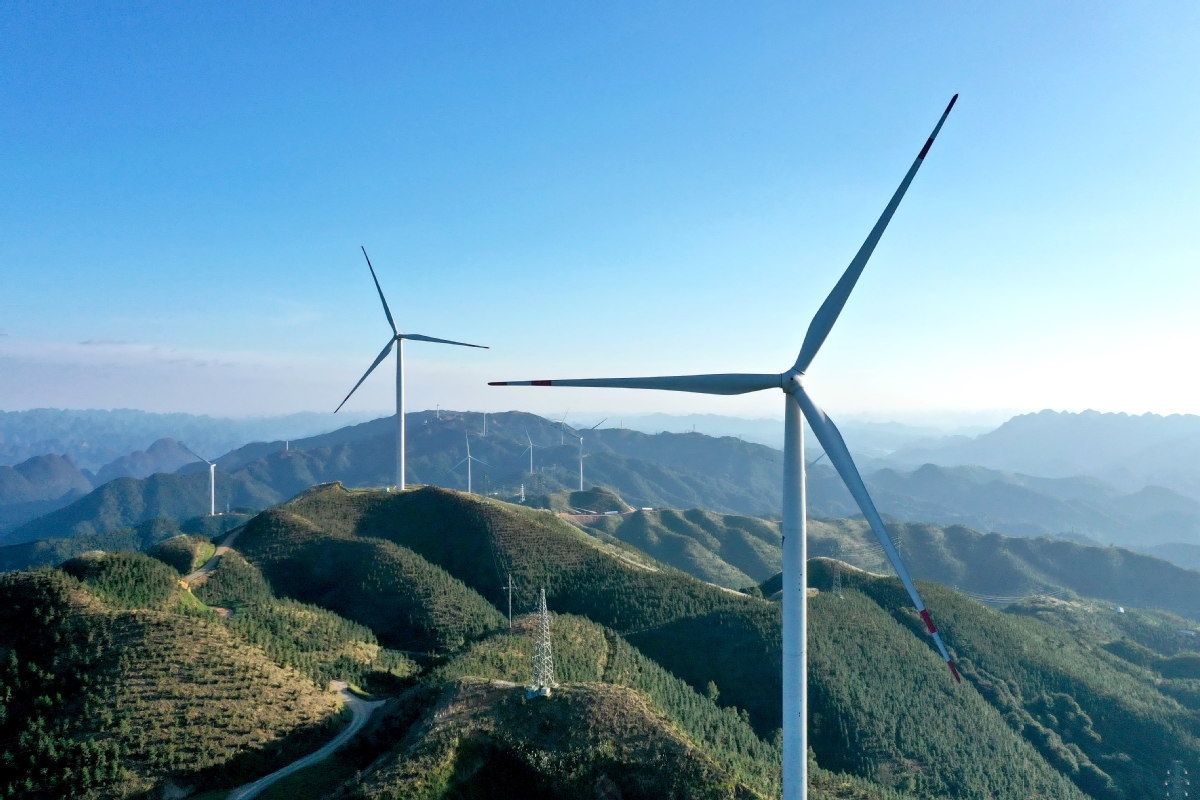
China has demonstrated its firm determination to continue its green drive, and has achieved phenomenal success in its low carbon transition over the past more than a decade. The fruitful result is reflected in the latest report of the International Energy Agency, which was issued last week, that China will account for almost 60 percent of all renewable capacity installed worldwide between now and 2030. That would make China home to almost half of the world's total renewable power capacity by the end of this decade.
But China's potential contribution to the rest of the world in terms of renewables has been greatly hampered by the trade barriers erected by the US and some other countries.
US Treasury Secretary Janet Yellen has blamed China for so-called overcapacity, but many experts I have talked to have said that there is no such thing as "overcapacity", but "undercapacity" when it comes to meeting the huge global demand for green products.
Worse, the US' protectionist measures have hurt the limited mutual trust that existed between the two largest economies. It is true that John Kerry and John Podesta, former and current US climate envoys, have held several talks with their Chinese counterparts. But such talks have often been marred by Washington's strategy to curtail China's economic and technological rise, particularly in the green industry.
Sino-US cooperation led to the finalization of the historic Paris Agreement in 2015 and its signing in 2016. The US should reflect on that spirit, and immediately stop sabotaging China's green and renewable industry. Because climate change, not China, is the biggest threat to the US and the world.

The author is chief of China Daily EU Bureau based in Brussels.
chenweihua@chinadaily.com.cn