



Film celebrates teen court prodigy's painting masterpiece










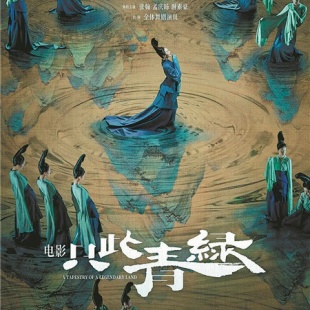
A Tapestry of A Legendary Land, a dance film inspired by the famous landscape scroll painting Qian Li Jiang Shan Tu, or A Thousand Miles of Streams and Mountains, is now screening in theaters across China.
Released nationwide on Oct 1, the film tells the story of a cultural relic researcher who, while immersed in studying this nearly 12-meter-long scroll, travels through centuries to connect with the artist and understand how the masterpiece was created.
The painting from the Northern Song Dynasty (960-1127) is the only surviving work of prodigy court painter Wang Ximeng. It depicts a panoramic view of mountains and rivers and is celebrated as a hallmark of blue-green landscape painting, a style that uses mineral-based pigments like malachite (green) and azurite (blue) to create bold, vibrant colors.
In 2021, the theatrical dance show A Tapestry of A Legendary Land premiered to positive reviews. It gained widespread popularity across the country after parts of the show were staged during the 2022 Spring Festival Gala and became a hit.
The film, an adaptation of the original dance show, was produced with the same cast and creative team from the stage production. It has raked in over 40 million yuan ($5.6 million), making it the third highest-grossing domestic musical film on the Chinese mainland and earning an 8 out of 10 rating on the popular film platform Douban.
"Using dance to express the artistic conception of traditional Chinese painting is an excellent idea. The film achieves a harmonious blend of style and color, creating a visually stunning experience," commented a netizen on Douban.
The directors of the film, who also helmed the dance show, expressed hope that the movie could serve as both an extension of the show and an interpretation of the painting. The film uses blue and green — the painting's most distinct characteristics — as its base colors, featuring no dialogue to emphasize the dance performance.
"Not using dialogue in the creation of the film was a significant challenge," says Han Zhen, codirector of the film, noting that they made the choice out of respect for dance and the dance show.
"We believe that Chinese culture possesses a unique ability to convey genuine emotions and resonate with audiences through silent performances," adds Han, who is also a very experienced choreographer.
She believes that film is an excellent medium for promoting traditional culture. "The immersive experience of cinema allows the audience to truly appreciate the unique beauty of this unparalleled painting," Han says, adding that she hopes their film will create more opportunities for integrating the film and dance arts.
For the cast members, who have performed in 600 shows across 71 cities over the past three years, appearing in the film allows their performances to endure longer and reach a wider audience.
"I'm grateful to have my youth captured in this film. As we grow older and experience more challenges or injuries, I'm unsure how much longer I can continue to dance on stage," says Xie Suhao, who portrays the cultural relic researcher in the production.
Zhang Han, who portrays Wang Ximeng, the gifted painter believed to have died shortly after completing the masterpiece at just 18 years old, expects the film to reach "the widest and farthest audience", far beyond the limited number of viewers able to see the dance show in theaters.
According to Jing Xiaoyong, chairman of China Oriental Performing Arts Group, a coproducer of both the film and the dance show, China needs to develop its dance films and promote dance and music productions as a means of fostering international exchange.
"From online literature to internet-based films and stage productions, art knows no boundaries," says Jing, adding that the production company aims to explore more innovative approaches to revitalize traditional culture.




















