Destination from history to treasure










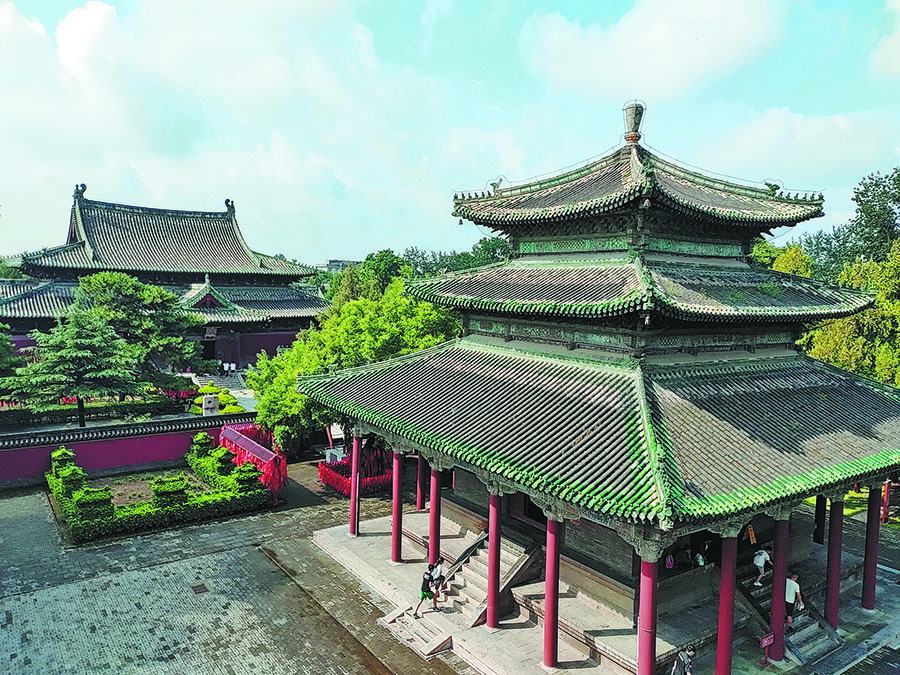
Greater number of tourists are discovering the charms and architecture of ancient Zhengding, reports Zhang Yu in Shijiazhuang.
One day as the sun was setting in April 1933, Liang Sicheng (1901-72), the architect, architectural historian and educator, also known as the "father of modern Chinese architecture", arrived at Zhengding Railway Station by train from Beijing. The journey was the beginning of his exploration of the ancient county of Zhengding in Shijiazhuang, Hebei province.
"I was struck by the grandeur of Zhengding within minutes of arriving, which came as a surprise to me. However, at the time, I was unaware that amid the densely packed houses there were many treasures waiting to be discovered," Liang was quoted as saying in Pindu Zhengding ("savoring Zhengding"), a book by Sun Wanyong, a former Party secretary of the county.
Located about 250 kilometers southwest of central Beijing, the ancient county that took Liang 10 hours to reach in the 1930s sits beside the Hutuo River in the northern part of Shijiazhuang city.
With a long and impressive history, Zhengding was designated a national historical and cultural city by the State Council in 1994.
Setting it apart from many other ancient downs and cities in China, Zhengding is remarkable in that many of its ancient buildings have survived war and natural disasters.
Within the small historical county, which covers less than 10 square kilometers, there are dozens of ancient structures, including 10 national-level key cultural heritage protection units, five provincial-level cultural protection units, and more than 7,600 cultural artifacts in the local museum collection. Today, 38 ancient buildings still exist in the county seat.
Zhengding was mainly known for its "nine towers, four pagodas, and eight major temples, along with 24 ornamental archways", evidence of its abundance of famous historical sites dating back to as early as the Sui Dynasty (581-618).
The "four pagodas" refers to the four ancient pagodas in four temples, while the "eight major temples" were those built during Zhengding's prosperous historical periods, as early as the Sui and Tang (618-907) dynasties, and were renovated throughout history. Five are still well-preserved.