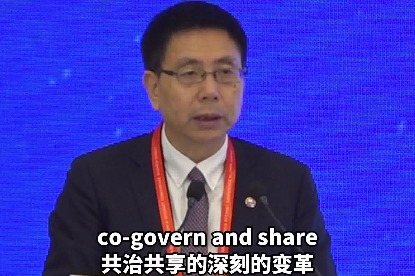
Breakthroughs and prospects of trade-in deals for consumer goods










China has issued 300 billion yuan ($42 billion) in treasury bonds as a stimulus package to support large-scale equipment upgrades and trade-in deals for consumer goods. It is recommended that the government further strengthen coordination between fiscal subsidies and financial services, and continuously expand the scope of trade-in products.
The country has encouraged trade-in deals for consumer products, including automobiles, household appliances and home furnishings, to boost consumption and thereby economic growth, as per the guideline released by the State Council, the country's Cabinet, in March.
Multiple regions have introduced policies and measures such as auto replacements and home appliance trade-in deals, and positive results have been achieved in improving consumption growth in some areas and product categories.
In the first half, the contribution rate of final consumption to economic growth reached 60 percent, said the National Bureau of Statistics. Yet, compared to services consumption, the recent downward trend in goods consumption has been more pronounced.
From January to June, the consumption of grains, edible oils, tobacco, alcohol and communication equipment maintained accelerated growth, while spending on home appliances, furniture, building decor and automobiles showed relatively sluggish performance.
The importance of activating consumption of some key categories of products has become increasingly demonstrated. Based on industry statistics, the annual domestic sales scale of home appliances has been around 850 billion yuan in the past decade, showing no significant growth over the period.
It has become increasingly important to drive a comprehensive consumption recovery by activating spending on upgrading consumer products. Currently, the number of household appliances owned by Chinese families has exceeded 3 billion units.
During the period from 2009 to 2012, the government issued subsidies to promote sales of home appliances in the countryside. A decade later, these products have entered a peak period of replacement.
If calculated based on an annual replacement rate of 10 percent, the potential sales of the market sector could exceed 500 billion yuan. In such a context, the importance of fiscal support to encourage consumers to trade in old products for new ones has become more prominent.
First, it is recommended that the government develop standardized plans for the implementation of trade-in policies and clear up uncertainties.
Previously, there were some unclear verification standards for the uploading of data for trade-in deals and for invoice issuances, thus requiring participating companies to pay advance money first. Such a phenomenon has reduced the participatory interest of both businesses and consumers.
Good practices and policy implementation in various regions should be summarized to help formulate guidelines for the implementation of the trade-in policy at the national level.
Possible areas of improvement include clarifying requirements for accounting and invoice issuance practices, unifying standards for government subsidies, and determining the proportion and upper limit of advance payments by enterprises and e-commerce platforms.
This would help ensure the implementation of the policy as a whole, raise consumer interest in participating in trade-in deals, and maximize the overall effect of the policy.
Second, the government may further improve the coordination mechanism between fiscal subsidies and financial services, and expand the effectiveness of the policy.
It is suggested that the People's Bank of China, the country's central bank, establish a consumer goods trade-in refinancing program. Or, the PBOC could expand the coverage of technological innovation refinancing programs to support commercial banks to provide loans for the trade-in of smart and green consumer goods.
In addition, it is recommended that the government provide subsidies for financial institutions' loans related to trade-in deals, and thus share the risk pressures of financial institutions.
In addition, platforms and enterprises are encouraged to carry out credit sales based on the consumption scenarios of trade-in deals.
Third, the government should continuously expand the scope of trade-in products and promote effective connections between trade-in deals and the development of new quality productive forces.
Market research shows that consumers are most willing to conduct trade-ins for large-scale household appliances such as air conditioners, refrigerators, washing machines and televisions. The category is followed by electronic devices such as mobile phones, tablets and computers.
When replacing old products, green energy-saving products and smart trendy products have proven the most popular.
It is recommended that different regions across the nation gradually expand coverage of products for trade-in deals based on upgrading demands among consumers.
The scope of products could expand from household appliances, home furnishings, automobiles and electric bicycles to high value-added and fast-updating categories such as computers and mobile phones, especially high-end, intelligent and green consumer products.
The trade-in of consumer goods, together with large-scale equipment upgrades, are encouraged to become important levers to develop new-quality productive forces in the country, and thus effectively stabilize supply and demand cycles.
The writer is vice-president and chief economist at Chinese e-commerce firm JD.
The views do not necessarily reflect those of China Daily.