


Homegrown AI tools play key role in preserving cultural heritage









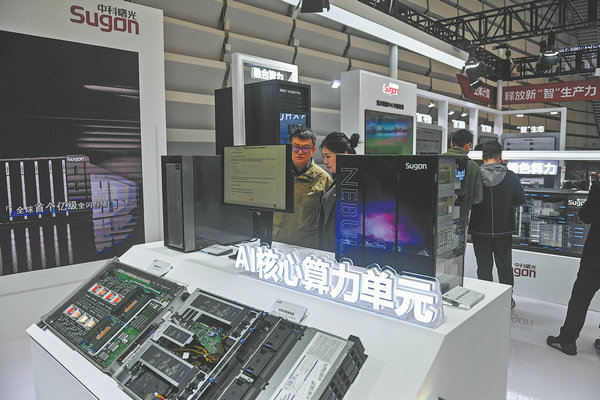
China has filed and launched more than 180 AI generative content models that can provide services to the public, according to an official from the Cyberspace Administration of China in August.
Out of over 1,300 AI large language models globally, China accounts for more than 30 percent, making it the second-largest contributor after the United States, according to a white paper on the global digital economy released in July by the China Academy of Information and Communications Technology.
Generative AI is set to add an estimated $7 trillion to the global economy, with China expected to contribute nearly a third of this amount, accounting for approximately $2 trillion, as shown by a McKinsey report.
Beyond facilitating entertainment creation for online users, AIGC tools are being increasingly applied across diverse scenarios in China. The preservation and promotion of cultural heritage is one of them.
A homegrown generative AI tool coded Jimeng, developed by Byte-Dance, has been employed to craft a fully AI-generated sci-fi short drama aimed at promoting ancient Chinese culture, the first of its kind in the country.
Sanxingdui: Future Apocalypse, released in July, follows a near-future narrative in which protagonists venture into a digitally reconstructed ancient Shu kingdom dating back over 3,000 years to avert an impending civilization crisis.
The 12-episode series employed multiple generative technologies, including AI script-writing, concept and storyboard design, image-to-video conversion, video editing and media content enhancement.
Leveraging its proprietary multimodal large-scale model, Sheng-Shu's AI engineers analyzed extensive collections of ancient mural data from Yongle Palace in Shanxi province, the largest Taoist temple in China.
The 800-year-old temple's murals are beset by problems like color fading, dust and deterioration. Their grand scale, distinctive style and rich intricacy significantly complicate restoration efforts.
Engineers have trained the AI with Chinese mural art data, allowing it to comprehend and replicate the distinctive style of those murals, from colors to brush techniques.
This enabled automated restoration tasks like digital coloring and filling in missing details. AI can mimic the brushwork of mural painters to redraw the facial features of deities in the murals, says Tang.