


Bringing history back to life









Imperial mountain resort reclaims former glory as a number of buildings undergo renovation, Wang Ru reports in Chengde, Hebei province.
It was once common practice for the rulers of China's Central Plains to build defensive walls, many of which later became part of the Great Wall, against nomadic incursions from the north. These structures did not always effectively prevent harassment from the north, but they did draw a line between settled agricultural society and the nomadic way of life, although the mixing between the two never ceased.
Qing Dynasty (1644-1911) Emperor Kangxi and his grandson Emperor Qianlong, who are credited with ushering in a golden age in Chinese history, appeared disinterested in this approach. Instead, they decided to build a new landmark to encourage the forging of bonds.
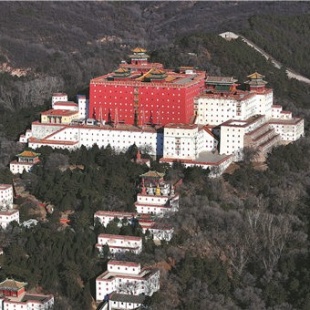
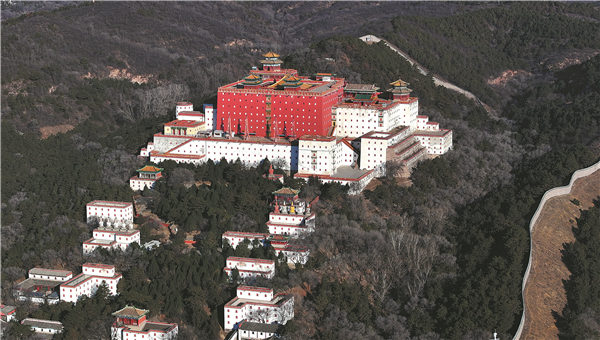
This was accomplished through the construction of a mountain resort and surrounding temples in what is now Chengde in Hebei province.
The resort offered the imperial family respite from summer heat and was located strategically on a pass between the capital, present-day Beijing, and nomadic groups to the north. Adopting a strategy of governing through exchange, Qing emperors received political leaders and religious figures at the resort. The 12 adjacent temples were designed in Tibetan and Mongolian styles to forge connections with other ethnic groups, and in this way, promote the unification and stability of the dynasty.
The resort, which took 89 years to complete, became the dynasty's second political center and to serve it, Chengde city gradually took shape. In 1994, the mountain resort and its outlying temples were listed as a UNESCO World Heritage Site.
Following the end of the Qing Dynasty, Chengde became the scene of great destruction. Renovation began in the 1970s, the work spanning more than four decades, according to Yu Yang, 39, director of the engineering center at Chengde's cultural heritage bureau.
For the first three decades, restoration was carried out within the resort, to reinstate its historical ambience, save buildings from collapse, and improve the overall environment.