Chinese scientists develop research platform for 'artificial sun'









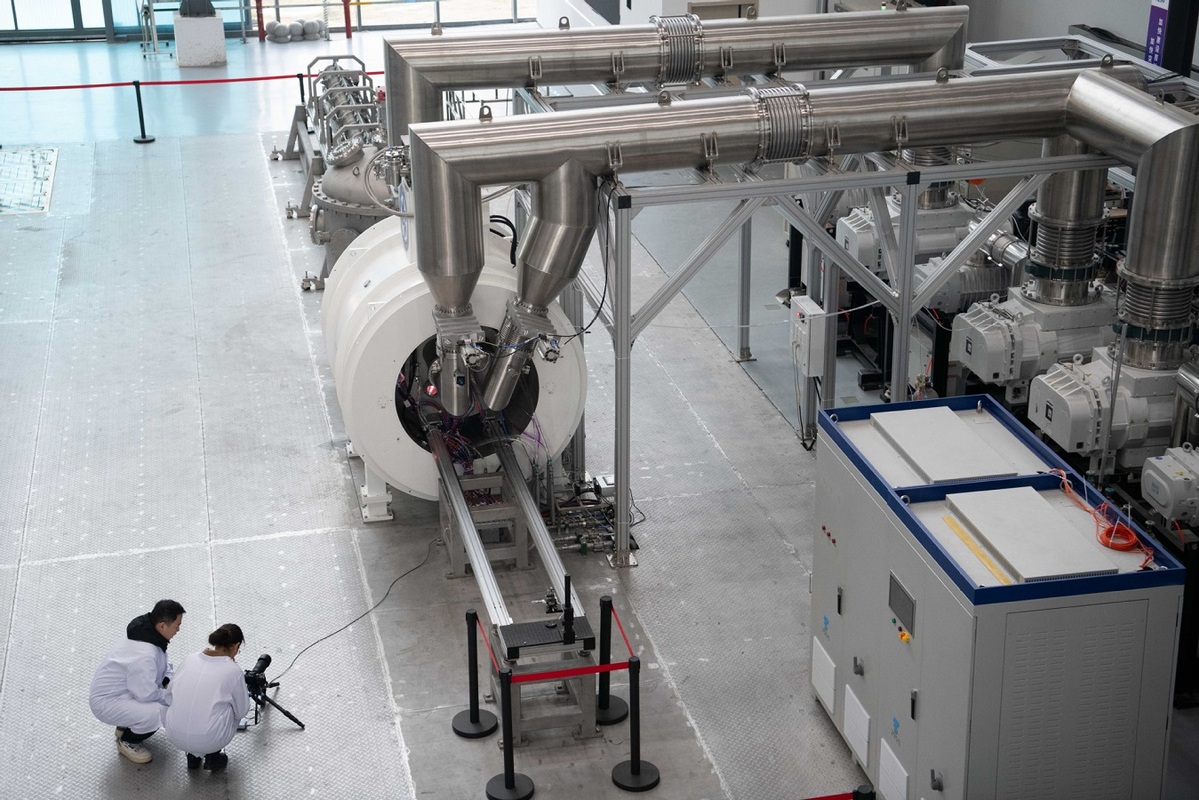
Since the mid-20th century, scientists have been dedicated to the study of experimental devices for controlled nuclear fusion. These large scientific devices, known as "artificial suns," have nuclear fusion reaction mechanisms similar to those found in the sun.
However, one of the greatest challenges in their development lies in creating tough materials that can withstand the bombardment of intense plasma particles on reactor walls.
"For the 'artificial sun' to generate electricity continuously for extended periods, it is crucial to develop materials capable of enduring the extreme conditions within the reactor. This requires a highly advanced experimental environment to test plasma-facing materials," said Zhou Haishan, a researcher at the Advanced Study Institute of Physics with Plasmas (ASIPP) under the Hefei Institutes of Physical Science. ASIPP is also home to EAST (Experimental Advanced Superconducting Tokamak), China's flagship fusion device that has set multiple world records in nuclear fusion energy research.
Zhou noted that it took the team more than five years to overcome significant technical challenges in developing SWORD.
According to Zhou, SWORD's successful development is poised to support research on China's next-generation experimental fusion reactors. The device will also be available for international collaboration.



- Probe identifies cause of tragic Hebei nursing home fire
- Safety breaches, substandard materials, management failures caused Fuzhou accident: report
- Cutting edge UAV completes maiden flight in Sichuan
- Hainan registers record flow of foreign visitors
- Hebei discovery sheds light on development of Stone Age tools
- Lion parade sparks debate at Anhui zoo