


A journey through history and across waters
Exhibition of porcelain relics sheds light on colonial South America's trade and cultural links with imperial China









"The aim of this exhibition is not only to share this collection and preserve its legacy in Salta but also raise funds," says Campero de Larran, adding that it was the museum's management that "proposed showcasing this collection to make it accessible to a wider audience".
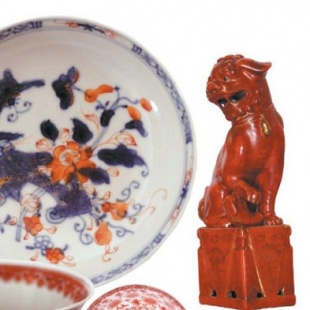
While the fragments dug up in Esteco are owned by the Museum of Anthropology in Salta, the complete pieces on exhibition are from the Mascias-Moinaria art collection, which includes 60 examples of Chinese art and was donated to the HOPE Foundation, which supports children with cancer. A parallel goal of the exhibition is to publicize the collection and, perhaps, find a buyer to raise funds for the foundation.
The pieces on loan to the exhibition originated in China and have been linked to similar items that were present in Salta, according to Ignacio Villaran, director of the Argentina-China Studies Center at the Faculty of Social Sciences of the University of Buenos Aires.
At first glance, Salta is an unlikely place for a repository of Chinese history, while historical Chinese artifacts may be an unlikely repository of efforts to preserve Salta's own legacy.
Some of the earliest exchanges between South America and China emerged out of the porcelain trade.
Chinese porcelain made its way to the Americas starting in the 16th century through the Manila Galleon trade route, a trans-Pacific route used by Spanish galleons from 1565 to 1815, linking the Americas with Asia by connecting Mexico with the Philippines. It was used to transport luxury goods such as spices and porcelain in exchange for silver. At the time, Esteco I was at the heart of Spain's vast colonial holdings in the continent — Argentina did not declare independence until three centuries later.
The porcelain items were primarily circulated in Argentina during the Ming and Qing dynasties, according to Villaran.
"Most of the pieces on display were likely crafted toward the end of the Ming Dynasty at the earliest, but predominantly during the Qing Dynasty, spanning the 18th and 19th centuries," Villaran says.
Aside from porcelain, traders moved silk and spices along routes that spanned the globe starting in China, traveling westward to Europe, and then on Manila Galleon sailing vessels across to the Americas.