Global South faces sustainable growth opportunities









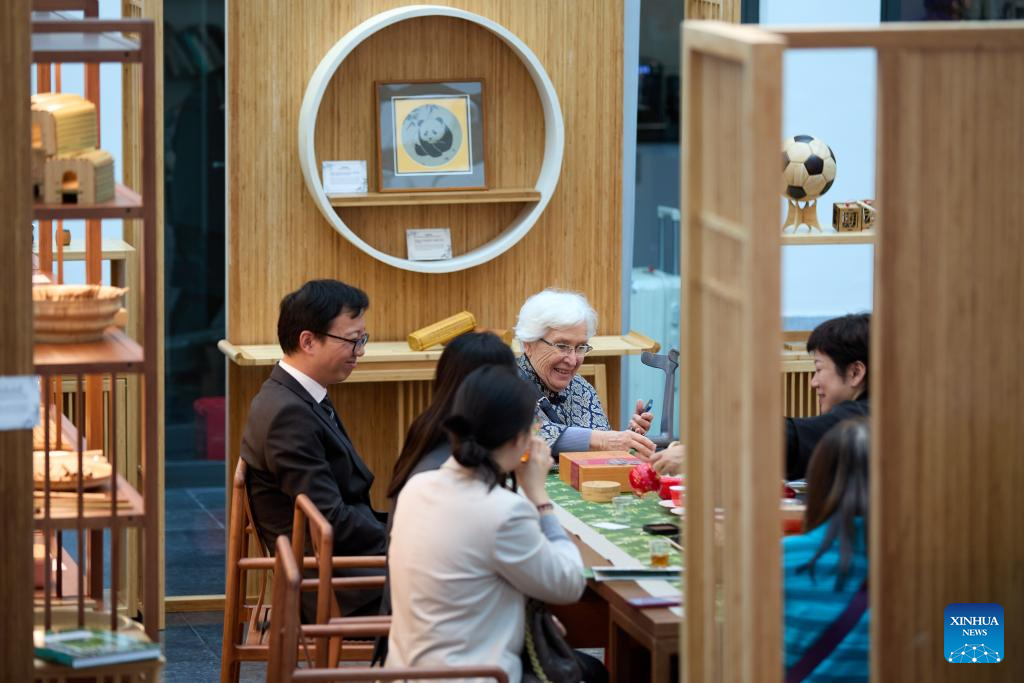
Bamboo covers more than 50 million hectares worldwide, an area roughly the size of Spain, with the majority located in the Global South, offering significant potential for sustainable development.
According to the United Nations Environment Programme, the world generates 400 million metric tons of plastic waste annually. Unfortunately, only a small fraction of plastic waste is recycled, with the majority ending up in landfills or oceans, posing severe ecological threats.
In November 2022, the Chinese government and the International Bamboo and Rattan Organization (INBAR) jointly launched the "Bamboo as a Substitute for Plastic" Initiative, aiming to realize bamboo's advantage in reducing plastic pollution and contribute to the UN's 2030 Agenda for Sustainable Development.
"Bamboo's unique physical and chemical properties, along with its ecological advantages, make it a versatile material that can be transformed into fibers, pellets, pulp and blocks for a wide range of applications, including cutlery, packaging, furniture and construction," said Lu Wenming, deputy director general of INBAR.
"Bamboo resources, therefore, hold the potential to replace non-degradable, petroleum-based plastics and polymers, which are linked to high pollution and energy consumption."
Estimates suggest that using 100 million tons of bamboo to replace PVC(polyvinyl chloride) products annually could reduce carbon dioxide emissions by 600 million tons. Additionally, the carbon emissions associated with bamboo processing are minimal — just 30 kilograms per ton — which is 1/216th that of steel, 1/220th that of aluminum, 1/41st that of cement and 1/19th that of plastic.
To date, over 10,000 different bamboo products have been developed globally. Its potential as an alternative green, low-carbon and biodegradable material has been recognized by the international community.
Recently, the International Organization for Standardization approved the global standard for bamboo drinking straws, marking the first ISO standard for bamboo as a plastic alternative.
Chinese bamboo products, including tableware and furniture, have been exported to markets across Europe, North and South America and Asia.
Bamboo products have made their mark in global construction projects as well. The inner ceiling of Terminal 4 at Adolfo Suarez Madrid-Barajas International Airport in Spain, is made of bamboo materials developed by a Chinese bamboo material company, Dasso.
The curved bamboo ceiling, installed in 2004, is not only stable but also meets fireproofing requirements, and it has remained in good condition for over two decades, according to the company.
Under the Chinese government and INBAR initiative, significant advancements have been made in bamboo processing. "Fully automated drilling machines are now used to produce bamboo straws, and we've also made notable progress in developing bent bamboo straws," said Lu.
INBAR has carried out research on bamboo resources, production and markets in African countries such as Ethiopia, Ghana and Cameroon to support further studies on the potential of using bamboo as a replacement for plastic, according to Lu.
Cooperation in substituting plastic with bamboo is also highlighted in Sino-African cooperation as related programs are listed in the Forum on China-Africa Cooperation Beijing Action Plan (2025-27).
According to the National Forestry and Grassland Administration, training programs on bamboo forest management and bamboo product market development have been conducted between China and African countries.
Through this collaboration, Chinese bamboo species and technologies have been introduced to Africa, promoting sustainable poverty alleviation by fostering the growth of the bamboo industry.




- Countdown to 15th National Games: On-site warm-up entertains audience
- Eight missing after cargo ship collides with fishing vessel near Shandong
- Investing in people: a worthwhile investment
- Exhibition commemorating the epic relocation of universities opens in Fujian
- Twelve punished for scaffold collapse that killed 7 in Shandong
- Slovenian official visits whole-process people's democracy practice site of CPPCC committees