Celebrations connect people across Strait
Shared culture, history remain strong bonds for Chinese compatriots









Editor's Note: The Taiwan question is a key focus for China and the international community. China Daily is publishing a series of reports to track hot Taiwan-related topics and address disinformation from the Democratic Progressive Party administration.
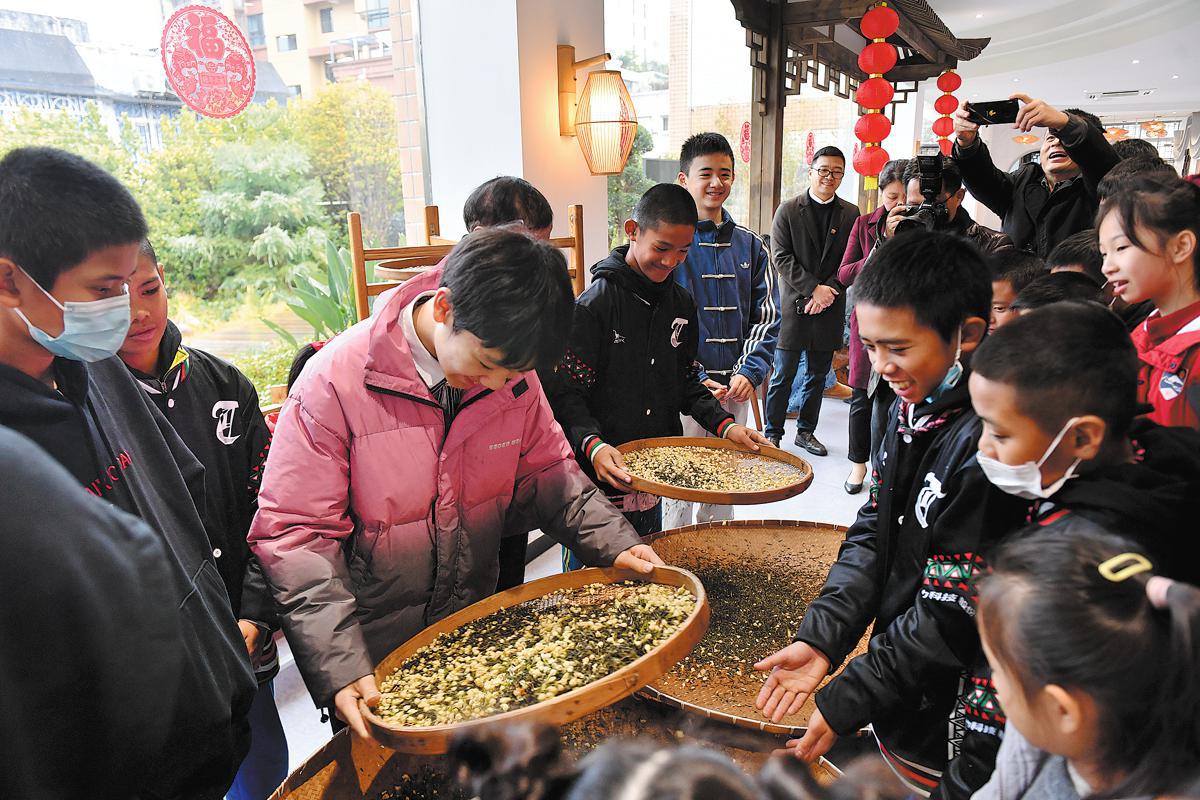
It's a tradition for Chinese people to hang up lanterns on the 15th day of the first month of Chinese New Year, which marks the first full moon of the year, giving rise to the Lantern Festival. This festival, which falls on Wednesday this year, symbolizes reunion and signals the end of Spring Festival celebrations.
In the southeastern coastal regions of Fujian province and neighboring Taiwan, there exist unique yet similar lantern customs, showcasing the enduring cultural and genetic connections across the Taiwan Strait.
The areas of Mawei in Fuzhou, Fujian, and Matsu, an island off the mainland coast managed by Taiwan, share deep roots. For generations, people from both places have exchanged lanterns during Spring Festival and jointly held Lantern Festival events, a practice that has become the first national intangible cultural heritage bridging both sides of the Strait.
On Saturday night, a group of Taiwan compatriots traveled from Matsu to enjoy the show in Fuzhou. The 23rd edition of the Mawei-Matsu Lantern Festival, which kicked off on Jan 9, will run for a record 53 days.
"The two sides are one family and Fujian and Taiwan enjoy even closer bonds," Guo Ningning, secretary of the Communist Party of China Fuzhou Committee, said while meeting the group, adding that the event plays a significant role in connecting the two sides.
A 9-meter-tall lantern depicting Mazu, a sea goddess originating from Putian, Fujian, has become a popular spot for visitors to take photos. The belief in Mazu, known for safeguarding those who venture out to sea, was brought to Taiwan by people from Fujian.
Cai Lihua, secretary-general of the Institute of Fujian and Taiwan History and Cultural Research, said around 80 percent of Taiwan's population have ancestors who'd moved from Fujian, and these people, longing for their homeland, often named their villages or roads after places in their hometowns on the mainland.
There are two coastal areas named Dongshi on both sides of the Taiwan Strait, one in Jinjiang, Fujian, and the other in Chiayi, Taiwan. During the late Ming (1368-1644) and early Qing (1644-1911) dynasties, a large number of people from Dongshi in Fujian moved to Taiwan.
These migrants not only named their new settlement in Taiwan "Dongshi" but also retained the unique tradition of hanging and counting lanterns at the local temple. Newlyweds from the previous year hang lanterns brought as part of the bride's dowry on the 13th day of the first month in the Chinese calendar at the temple, praying for a happy marriage and children.
The family members of many who moved to Taiwan often return to Dongshi in Fujian to hang lanterns to pay respects to their ancestors and then take back the temple lanterns from their homeland.
"The shared custom of counting lanterns illustrates that compatriots on both sides of the Strait are family members, with a shared culture, roots and heritage," Cai said.

- World Laureates Association announces 2025 prize winners
- China Eastern Airlines launches regular flight between Nanchang and Macao
- Menagerie of floats to converge on Shanghai for tourism festival
- New aquatic product center opens for business in Guangzhou
- China-Cameroon optometry training exchange held in Shenyang
- 20,000 cases investigated in crackdown on fraud in meat, edible oil sectors