DeepSeek a wake-up call for global AI industry









In the ever-intensifying global race for artificial intelligence supremacy, the United States has long been the dominant force. But anyone still operating under the assumption that China is merely playing catch-up needs to wake up. China isn't just competing; it is innovating, and it is doing so in ways that could fundamentally reshape the global AI landscape.
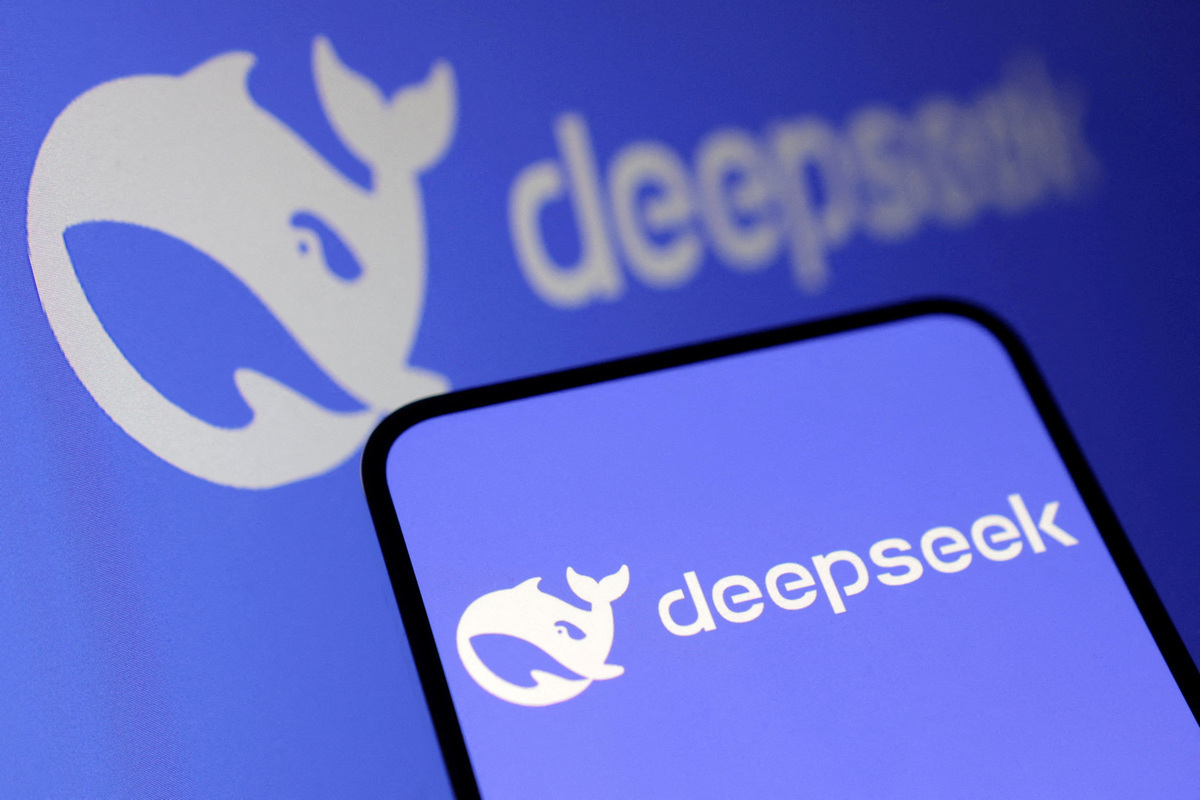
The latest example is DeepSeek, a Chinese AI startup that has achieved something remarkable — high-performance AI with dramatically lower costs and resource consumption.
DeepSeek's breakthrough should be a wake-up call for those who continue to dismiss China's technological rise as derivative or State-subsidized mimicry. What this company has accomplished is more than just a technical feat; it is an alternative blueprint for the future of AI, one that is more efficient, open and sustainable. If the US and the rest of the world fail to acknowledge and engage with this kind of progress, they risk being left behind.
For many years, much of the AI world has revolved around a simple equation: more money plus more computing power equals better AI. The largest US tech firms such as Google, OpenAI and Meta have thrown billions of dollars into training increasingly powerful models on massive clusters of high-end graphics processing units or GPUs. It is a brute-force approach that has worked, but it also might be unsustainable both economically and environmentally.
Enter DeepSeek. This startup, founded in 2023, has taken a different path. Instead of relying on the usual hardware arms race, Deep-Seek optimizes its software and algorithms to reduce computational needs. Earlier this year, the company unveiled DeepSeek-R1, a cutting-edge AI model trained on just 2,048 Nvidia H800 GPUs, a fraction of what companies like OpenAI use. The cost? Only $5.6 million. Compare that to the over $100 million routinely spent by the leading US companies, and the implications become clear: China is not just building AI capability, rather it is doing it in a smarter way.
More importantly, DeepSeek has committed to open source much of its technology, a move that stands in sharp contrast to the increasingly closed models developed in the West. This openness potentially fosters more collaboration, accelerates innovation, and democratizes access to AI values that the US tech industry itself once championed.
For too long, the conversation around China's AI progress has been framed in adversarial terms as a driver of geopolitical competition rather than a technological revolution that benefits all of humanity.
But that mindset is limiting and, frankly, outdated. The truth is that China has become an essential player in the global innovation ecosystem, not just as a selective competitor, but as a true contributor.
Consider the broader AI landscape. China has produced some of the most sophisticated AI applications, from Baidu's Ernie model to Huawei's AI-driven chip optimizations. Its researchers regularly publish world-class papers in top AI journals and are invited to speak at major international AI conferences. And its vast domestic market allows for rapid deployment and testing of AI at a scale unmatched anywhere else.
DeepSeek's success is a wonderful example of some important broader trends. By proving that AI breakthroughs do not require endless financial resources, the company is challenging the status quo not just in China, but globally. It shows that AI can be more accessible, environmentally friendly and inclusive.
What lies ahead
The knee-jerk reaction from some corners of Washington and Silicon Valley has been to dismiss or downplay DeepSeek's achievements. Many naysayers have already downplayed DeepSeek's approach. That would be a mistake. The US still leads in foundational AI research, but if China continues to innovate at this pace, that US lead could shrink very quickly.
Instead of trying to stifle China's AI progress through restrictions and bans, the smarter move would be to engage with it. There is room for collaboration, particularly in areas where AI poses shared challenges: ethics, safety, bias mitigation and climate impact. DeepSeek's efficiency-first approach should be seen as an opportunity for AI development everywhere, not just in China.
Moreover, if the US really wants to stay ahead, it needs to rethink its own AI strategy. Realistically, throwing massive resources at bigger, more expensive models is not a viable long-term solution. What DeepSeek has done is optimizing software to do more with less; its approach should inspire similar efforts in AI development in the US.
The AI revolution is not going to be won or lost by a single country. It is too big, too complex and too important for that. The future of AI should be a collaborative effort, not a zero-sum game. China is no longer just following in the footsteps of the US; it is carving its own path and, in some ways, potentially leading the way.
The sooner the rest of the world acknowledges this, the better. AI progress is not about the dominance of one nation over all the others. Ultimately, it is about technological advancement that benefits everyone. If DeepSeek's innovation regarding AI has any lasting meaning, it is that the next phase of AI development will be cheaper, more efficient, and more open. And that is something worth paying attention to for the US and many other countries.
The author is nonresident fellow of the Quincy Institute for Responsible Statecraft, a think tank based in Washington, DC, the United States. The views do not necessarily reflect those of China Daily.