Devotion to Mazu stretches from Fujian to Taiwan
Shared culture sees followers of Song Dynasty sea goddess remain faithful across the waves










Editor's Note: The Taiwan question is a key focus for China and the international community. China Daily is publishing a series of reports to track hot Taiwan-related topics and address disinformation from the Democratic Progressive Party administration.
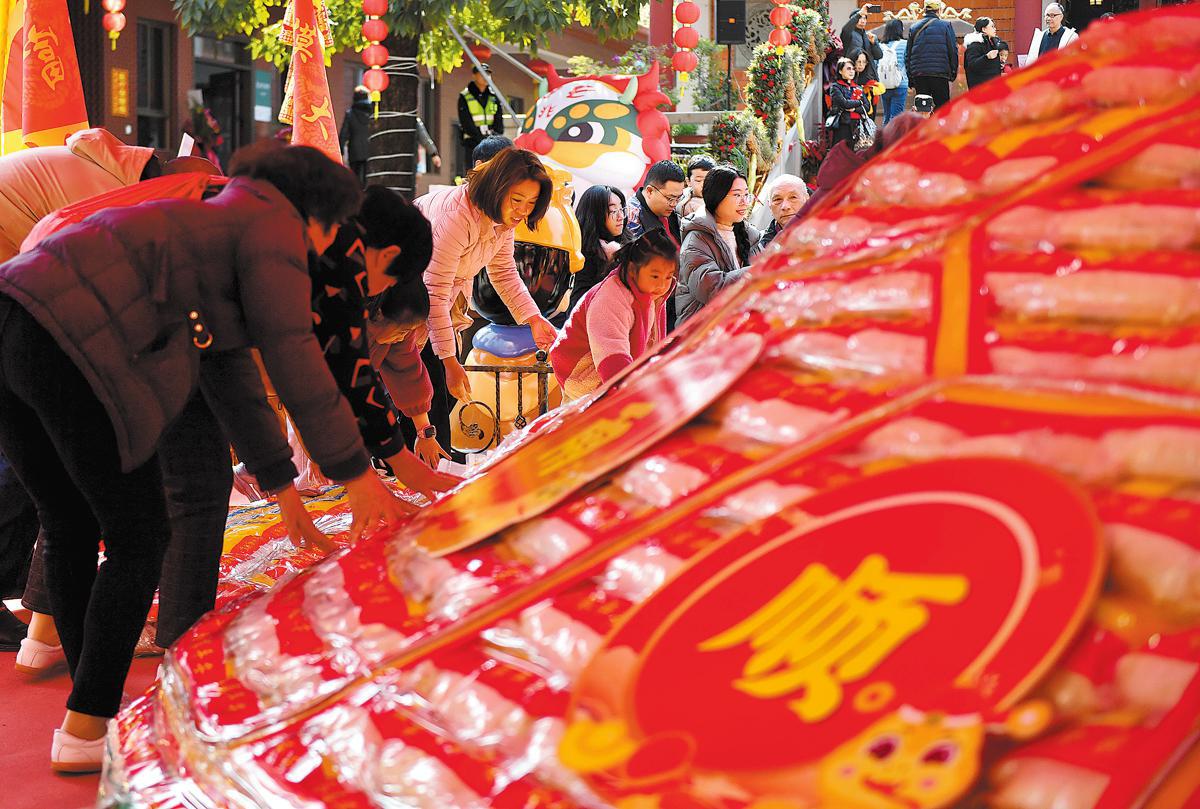
The fervor for folk beliefs is unparalleled in East China's Fujian province, and during the Ming (1368-1644) and Qing (1644-1911) dynasties, faith in a rich tapestry of deities crossed over the sea to Taiwan as people moved to the island, forming a cultural bridge between the two shores. Among these, the most revered deity is Mazu, the goddess of the sea.
Vibrant celebrations take place in Taiwan to mark Mazu's birthday on the 23rd of the third month in the Chinese calendar. These festivities epitomize the widespread devotion to the goddess. The grandest of these festivities is the annual Dajia pilgrimage, set to start late in the night of April 4 at Dajia Jenn Lann Temple in Taichung, where devotees embark on a sacred journey spanning 300 kilometers over nine days and nights, drawing tens of thousands of worshippers each year.
Mazu, originally named Lin Mo, was born on Meizhou Island in Putian, Fujian province, during the Song Dynasty (960-1279). Revered for her miraculous abilities to calm storms and rescue troubled ships, she became a symbol of protection and salvation for seafarers, leading to the construction of temples in her honor.
Since the late Ming Dynasty, Fujian people have journeyed to Taiwan, often carrying Mazu idols for protection during the perilous voyage across the Taiwan Strait. Upon safely reaching Taiwan, they established temples to worship Mazu, spreading her following across the island as the most prevalent folk belief.
There are over 500 Mazu temples across Taiwan, and the Meizhou Mazu Temple in Fujian is recognized as their ancestral temple. To celebrate Mazu's birthday each year, devotees from all corners of Taiwan form pilgrimage groups to pay homage to the deity at the temple on Meizhou Island.
Wu Kun-tsai, a history professor at Chiayi University in Taiwan, said that Mazu believers come from all walks of life, transcending political affiliations and gender.
"It's a common practice in Taiwan for families to worship together. When I was young, I walked seven kilometers to visit the Chao-Tian Temple in Beigang to pray," he said.