Book encapsulates legacy of cross-Strait family bonds









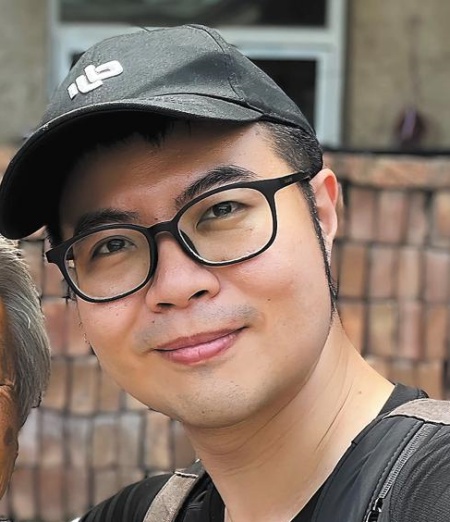
Chang Yu, a young writer from Taiwan, has spent a decade traveling between the two sides of the Taiwan Strait, visiting relatives, collecting old photographs and writing a book about his family's journey, seeking their roots on the Chinese mainland over the past three generations.
The writing process for Chang was more than mere storytelling, but a spiritual practice of rekindling connections with his ancestors.
"I hope to inspire more people to turn their gaze toward their homeland and ancestors, and be more willing to listen to the stories of the older generation," he said.
His book, titled Huangtu Family, was published in December, and literally means "a family from the yellow earth". This symbolic name reflects the ancestral origins of his Taiwan family, tracing back to the lands of Henan province in the Yellow River Basin.
Chang's inspiration sprang from poignant childhood memories of his grandfather's behavior. He vividly recalls his grandfather's joy upon receiving letters from Henan, a province that held deep significance for their family.
His grandfather, a soldier born in Qixian county, Henan, was among the Kuomintang troops forced to retreat to Taiwan in 1949 amid the tumult of cross-Strait conflicts lasting for decades. He married and had children in Taiwan, unable to return to the mainland.
The pivotal year of 1988 marked a significant turning point. With the reopening of cross-Strait family visits, Chang's grandfather seized the opportunity to return to his roots in Henan. His symbolic gesture of bringing back a vial of water from the Yellow River encapsulated the essence of his homeland, a cherished memento that remained by his bedside until his final days.
"For him, preserving items carrying the essence of home held deep significance," Chang said.
Chang's perception of the Yellow River evolved over time. A chance encounter in the summer of 2014 with a Henan-born taxi driver during a visit to Peking University shattered preconceived barriers.
"When I mentioned that my ancestral roots were in Henan, the taxi driver warmly responded with a fellow villager greeting and engaged in a friendly conversation with me. In that seemingly casual moment, I was deeply moved," Chang said.
"Even though I had never been to that land, just because of the geographical connection of ancestral roots, I felt the warmth of human connection. This sparked my interest in Henan, how our family came from there to Taiwan, and how my grandfather returned to seek his roots."
With just a ticket and a backpack, Chang boarded a train to his ancestral home in Henan. When he arrived in a small village in Sanmenxia and inquired, "Is Zhang Xiulan here?" A weathered elderly woman stood before him, initially stunned, then warm tears streamed down her face as she embraced the young man she had never met before.
"My grandfather had passed away, and I had never been here before. Our families had been disconnected for so many years. Why did this elderly lady recognize me at first sight?" This scene left a lasting impression on him. The old lady was his grandfather's sister.
Through the narratives of the elders, in scattered old letters and photographs, blurry memories slowly became clear.
"In Taiwan, my grandfather was a relatively lonely old man burdened with his past, but in Henan, he was a person who returned to invest and bring glory to the family."
Chang gradually understood the hidden sorrows, loneliness and yearning of his grandfather. He decided to piece together the long-buried fragments of stories and write a book to share more positive energy across the Strait.
After its publication, one of the author's friends found a long-lost fellow soldier of his grandfather, surnamed Wu, from Zhejiang province, who at the age of 93, still remembered the training experiences he shared with Chang's grandfather. In a heartwarming exchange, Chang connected with his grandfather's old friend, now residing in Taipei.
Yuan Xiaobo, the book's editor, highlighted the scarcity of opportunities for veterans like Chang's grandfather to return to their mainland hometowns, with only about 3,900 of the 600,000 Taiwan veterans who originated from the mainland still alive today.
He said Chang had fulfilled his grandfather's longing to return home and immortalized his legacy in the book, serving as a valuable reference for families with similar experiences across the Strait.
zhangyi1@chinadaily.com.cn